Free CXC Caribbean History Paper 1 May/June 2015 past paper from 2015. Includes a worked answer key. Open the PDF, take a timed test, and study with AI on Caribbean AI.
Answer keys are free on Caribbean AI. View the answers to every past-paper question at no cost - no payment needed - with step-by-step worked solutions and instant AI marking available on Premium.
CSEC Caribbean History Paper 1 May/June 2015 - Free CXC Past Paper with Answers
Free CXC Caribbean History Paper 1 May/June 2015 past paper from 2015. Includes a worked answer key. Open the PDF, take a timed test, and study with AI on Caribbean AI.
Opening the interactive papers…
Every question from this paper as text. See the answers and worked solutions. Questions are the property of the Caribbean Examinations Council; Caribbean AI is not affiliated with CXC.
Which of the following statements is TRUE of BOTH Jamaica and Cuba at the time of Columbus' arrival in the Caribbean?
They were not inhabited.
They were inhabited by Tainos.
They were inhabited by Mayas.
They were inhabited by Kalinagos.
Which of the following BEST describes the religious practices of the Kalinagos and Tainos?
Nature worship and animal sacrifice
Protective magic and animal sacrifice
Nature worship and ancestor worship
Long periods of fasting and ancestor worship
Which of the following statements are TRUE of the Kalinagos? I. They adopted many Taino customs. II. They were skilled sailors and fishermen. III. They fiercely resisted the Spanish invaders.
I and II only
I and III only
II and III only
I, II and III
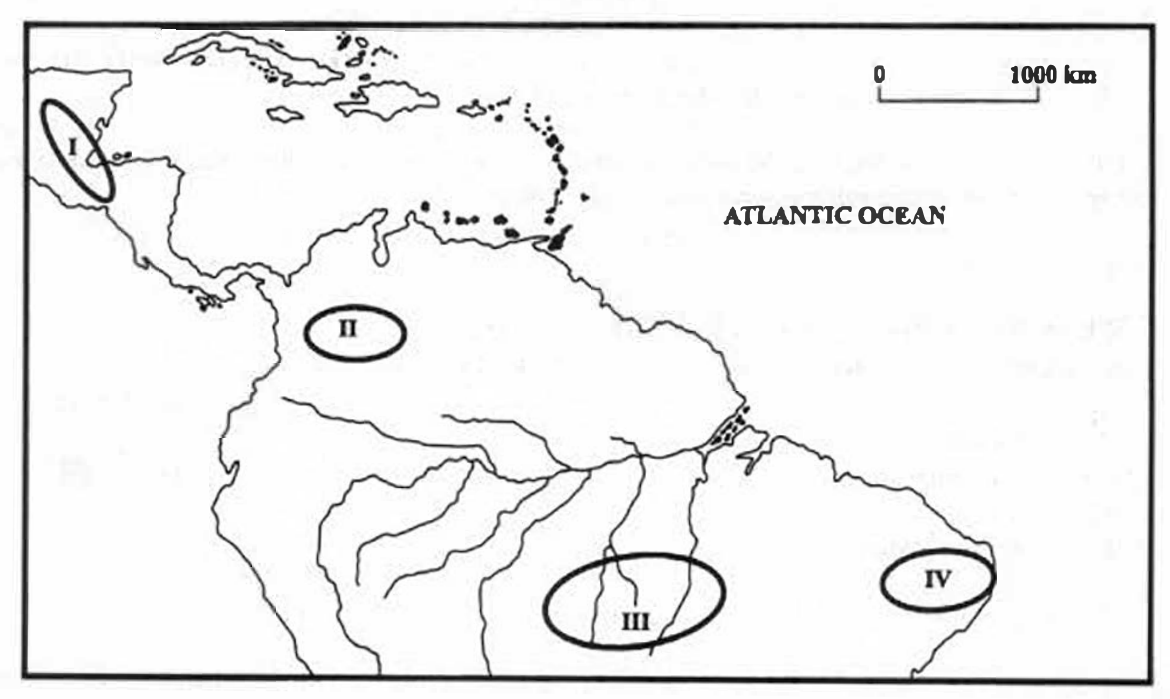
The area where the Kalinagos lived before they migrated to the Caribbean islands is labelled
I
II
III
IV
Which of the following did the Maya use as money?
Cocoa beans
Copper bars
Gold nuggets
Cowrie shells
Christopher Columbus sailed west MAINLY because he wanted to
discover the Americas
find a passage to the East
compete with the English
prove that the world was round
Which is the correct order of the 15th century European social groups from MOST to LEAST powerful?
Merchants, priests, peasants, kings
Kings, priests, peasants, merchants
Priests, kings, merchants, peasants
Kings, priests, merchants, peasants
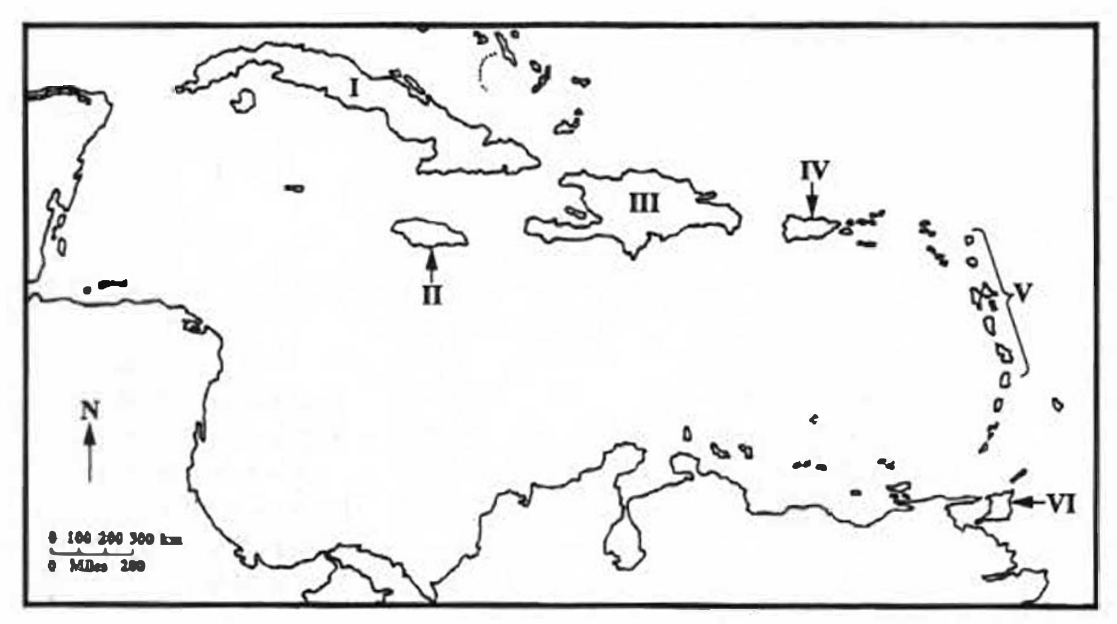
On which of the following islands was the first Spanish settlement established?
I
II
III
IV
In which century were the English most successful in establishing settlements in the Caribbean?
Fourteenth
Fifteenth
Sixteenth
Seventeenth
The MAIN aim of the English and French in establishing colonies in the Caribbean was to
mine gold and precious minerals
convert the natives of the Caribbean
produce tropical crops for the mother country
relieve the mother country of excess population
Tobacco ceased to be the staple crop of the early English colonists in the Caribbean MAINLY because
the European demand for tobacco declined
there was not enough labour for growing tobacco
there was a decline in the quality of Caribbean tobacco
Caribbean tobacco could not compete on the European market
Which of the following groups of items was used by Europeans for the purchase of Africans on the Slave Coast?
Grain, mirrors, salt
Grain, knives, palm oil
Cutlasses, salt, palm oil
Gunpowder, iron pots, beads
The term 'barracoon' is BEST associated with the
cultivation by captive persons in Africa
trade in captive persons on the African coast
housing of enslaved persons in the Caribbean
punishment of enslaved persons in the Caribbean
Which of the following means of protest were used by captive Africans during the Middle Passage? I. Attacking the crew II. Committing suicide III. Complaining to the captain
I and II only
I and III only
II and III only
I, II and III
Which of the following is TRUE of enslaved persons in the British Caribbean?
They were encouraged by their owners to educate themselves.
They were allowed to raise a family without the owner's permission.
They were allowed to own small properties without the owner's permission.
They were encouraged by their masters to farm on small provision grounds.
An enslaved African in the British Caribbean who stole from the owner was LEAST likely to be
whipped
mutilated
charged a fine
placed in the stockade
A MAJOR cause of the 'Bussa Revolt' of 1816 in Barbados was the
activity of free blacks and coloureds
belief that emancipation was being delayed
influence of Sam Sharpe's revolt in Jamaica
shortage of provisions for the enslaved Africans
Which of the following factors contributed to the success of the Maroons in Jamaica and Suriname in their resistance to slavery?
I. Large size of the two territories II. Nearness of difficult and remote terrain III. Cooperation of free coloureds
I and II only
I and III only
II and III only
I, II and III
The free coloureds of St Domingue revolted in 1790 because they
wanted to prevent the enslaved Africans from revolting
were dissatisfied with their status in society
wished to assist the enslaved Africans
supported the King of France
Which of the following enslaved persons were MOST likely to use poisoning of owners as a means of resistance?
Artisans
Domestics
Field hands
Factory workers
Which of the following was the MAIN purpose of the policy of Amelioration?
To maintain the established system of enslavement
To put an end to enslavement in the British Caribbean
To introduce a new supply of cheap labour to the British Caribbean
To improve the conditions of the enslaved in the British Caribbean
Which of the following groups was the FIRST to amend the policy of Amelioration?
The Humanitarians
The Anglican Church
The West India Lobby
The British Government
Which of the following was NOT a requirement of the Apprenticeship System?
Apprentices were to be trained to become skilled labourers.
Planters were to provide food and clothing for the apprentices.
Apprentices were to work the first forty hours of the week for no wages.
Praedials were to continue working for their former masters for six years.
Stipendiary Magistrates were persons originally sent out from Britain to ensure that
the courts of the colonies were in order
there were no abuses of the Apprenticeship System
the illegal trade in captive Africans was brought to an end
planters were correctly compensated for the loss of their enslaved Africans
Which of the following organizations did NOT support the abolition of slavery?
The Quakers
Amis des Noirs
The Clapham Sect
The Colonial Church Union
Which of the following groups was MAINLY used by British Caribbean planters as immigrant workers in the period after 1833?
Indians
Africans
Chinese
Europeans
Indian indentured labour was introduced into the British Caribbean in order to
help keep the colonies peaceful
ease the labour problems of the planters
help introduce new crops into the colonies
prevent the freed Africans from getting jobs
Which cultural elements did indentured workers from Madeira bring to the British Caribbean?
Indian
African
Chinese
Portuguese
The MOST significant contribution of the Portuguese immigrants to the economy of the British Caribbean in the 1800s was in the
provision of estate labour
introduction of rice growing
development of the retail trade
formation of Portuguese associations
The majority of immigrants brought to work in the British Caribbean in the years between Emancipation and the First World War were employed as
labourers
shopkeepers
small farmers
factory hands
Help in the formation of free villages in Jamaica came MAINLY from
planters
missionaries
local assemblies
Stipendiary Magistrates
There were more free villages in Jamaica than there were in Barbados MAINLY because
in Jamaica more land was available for settlement
in Barbados the freed Africans did not want to leave the plantations
the Jamaican planters encouraged the freed Africans to set up free villages
freed Africans in Jamaica had more money to buy land than freed Africans in Barbados
Which group of territories contained the MOST Crown land?
Antigua, Grenada, Guyana
Barbados, Grenada, Trinidad
Antigua, Guyana, Jamaica
Guyana, Jamaica, Trinidad
Which of the following BEST describes a British Caribbean peasant proprietor in the period after emancipation?
Someone who worked on a large farm.
Someone who worked for very low wages.
Someone who sold ground provisions in the market.
Someone who cultivated plots of land on his/her own account.
Which of the following crops was MOST likely to be sold in a peasant market?
Cotton
Tobacco
Sweet potatoes
Sugar cane
The policy by which the United States government was actively involved in directing the financial affairs of the Caribbean between 1905 and 1930 was known as
Dollar Diplomacy
Operation Bootstrap
the Big Stick Policy
the Good Neighbour Policy
Which of the following was the IMMEDIATE cause of the United States declaration of war against Spain in 1898?
The United States took over Panama.
The U.S.S. Maine was blown up in Havana harbour.
The United States was angered by General Weyler's atrocities.
The United States was angered by Spanish invasion of Cuba.
Which of the following was the aim of the Monroe Doctrine of 1823?
All enslaved persons in Cuba would be freed.
Puerto Rico would be protected by the United States.
The United States would oppose European intervention in the 'New World'.
The United States would uphold the independence of Caribbean territories.
Which of the following Caribbean territories was NOT occupied by the United States military forces in the early 1900s?
Cuba
Haiti
Jamaica
Dominican Republic
The MAIN reason for United States' interest in Panama in the first decade of the 20th century was to
provide greater opportunities for trade
provide employment for Americans in Panama
improve the relationship between the two countries
improve communication between the Atlantic and the Pacific
In their efforts to improve working conditions around 1900, workers in the British Caribbean MOST often resorted to
strikes
rioting
arson
picketing
Which commission was sent to investigate conditions in the Caribbean as a result of the 1930s disturbances?
Foster Commission
Moyne Commission
Norman Commission
Deane Commission
Which of the following statements are TRUE of education for MOST Caribbean blacks in the early 20th century? I. Opportunities for education were limited because they were poor. II. Very few blacks were allowed admission to the best schools. III. Their education followed the pattern of the British system.
I and II only
I and III only
II and III only
I, II and III
Which of the following statements is TRUE of trade unions in the British Caribbean?
Before the 1930s, no trade union existed in the British Caribbean.
By 1910, trade unions in the British Caribbean had gained legal recognition.
After the 1930s, trade unions in the British Caribbean became stronger and more numerous.
Trade unions were formed in the British Caribbean only after legislation recognizing them was passed.
Which of the following trade union leaders is NOT correctly matched with the territory he worked for?
Clement Payne – Barbados
Alexander Bustamante – Jamaica
Nathaniel Critchlow – Belize
Uriah 'Buzz' Butler – Trinidad
In what order did the following countries gain political independence? I. Guyana II. Jamaica III. Grenada
I, II, III
II, I, III
II, III, I
III, II, I
By the referendum of 1961, Jamaica decided to
withdraw from the federation
change its federal representative
change the site of the federal capital
reduce its financial contribution to the federation
In which order did the following stages in the movement towards independence in British Caribbean territories take place? I. Introduction of the party system II. Election of a prime minister or premier III. Achievement of universal adult suffrage IV. Full internal self-government
I, II, III, IV
I, III, II, IV
II, IV, III, I
IV, II, III, I
One feature of the 1958 Federation was that the government of each individual territory would
cease to exist
continue as before
share power with the federal government
hand over power to the federal government
The British West Indies Federation of 1958 was established because
French Caribbean colonies had begun to federate
the old representative system proved to be useless
the crown colony government had given West Indians experience in running their affairs
West Indian leaders felt that independence would be achieved faster through federation
'Colonialism' may be described as the
spread of Roman Catholicism worldwide
settlement and exploitation of one country by another
assistance given to developing countries by developed ones
large-scale killing of native people by a more powerful group
Which of the following was passed to ensure that the Indians were NOT kept in "cruel and humble servitude"?
The Asiento
The Code Noir
The Laws of Burgos
The Deficiency Laws
Which of the following statements correctly compares indentured labourers and enslaved persons?
Neither indentured labourers nor enslaved persons could legally own property.
Neither indentured labourers nor enslaved persons were paid wages by the estate owners.
Enslaved persons could not give evidence against their owners; indentured labourers could.
Children of indentured labourers, like children of enslaved persons, were the property of the estate owner.
Which of the following countries have NEVER been colonized by Spain?
Cuba and Jamaica
St Kitts and Antigua
Trinidad and Hispaniola
Panama and Puerto Rico
In which order were the following groups introduced as the MAIN source of labour in the British Caribbean?
I. Africans II. Indians III. Chinese
I, II, III
I, III, II
II, III, I
III, II, I
What is the CORRECT order of the abolition process?
Apprenticeship, emancipation, amelioration, abolition of slave trade
Emancipation, apprenticeship, abolition of slave trade, amelioration
Amelioration, emancipation, abolition of slave trade, apprenticeship
Abolition of slave trade, amelioration, emancipation, apprenticeship
Which of the following statements is TRUE of Cuba in the 1800s?
It had become a major sugar producing territory.
Logwood production had become a major industry.
Tobacco had replaced sugar as the leading product.
Indigenous Indians were the major source of agricultural labour.
Which of the following statements describes universal adult suffrage?
The right of all citizens of a specified age to vote
The right of educated people to govern a country
The right of blacks and non-blacks to share political power
The right of people with a given amount of property to run for elections
In which chronological order did the following industries develop in the Caribbean?
I. Petroleum II. Tobacco III. Sugar IV. Banana
I, II, III, IV
II, III, I, IV
II, III, IV, I
III, II, I, IV
In which chronological order did the following disturbances take place?
I. The Morant Bay Rebellion II. The Haitian Revolution III. The Demerara Revolt IV. The Christmas Rebellion
II, III, IV, I
III, II, I, IV
IV, II, III, I
I, II, III, IV