Question 4 (25 marks)
Write a story based on the picture below.
Your answer in this section should be approximately 400 to 500 words in length. You MUST write in Standard English. However, dialect may be used in conversation.
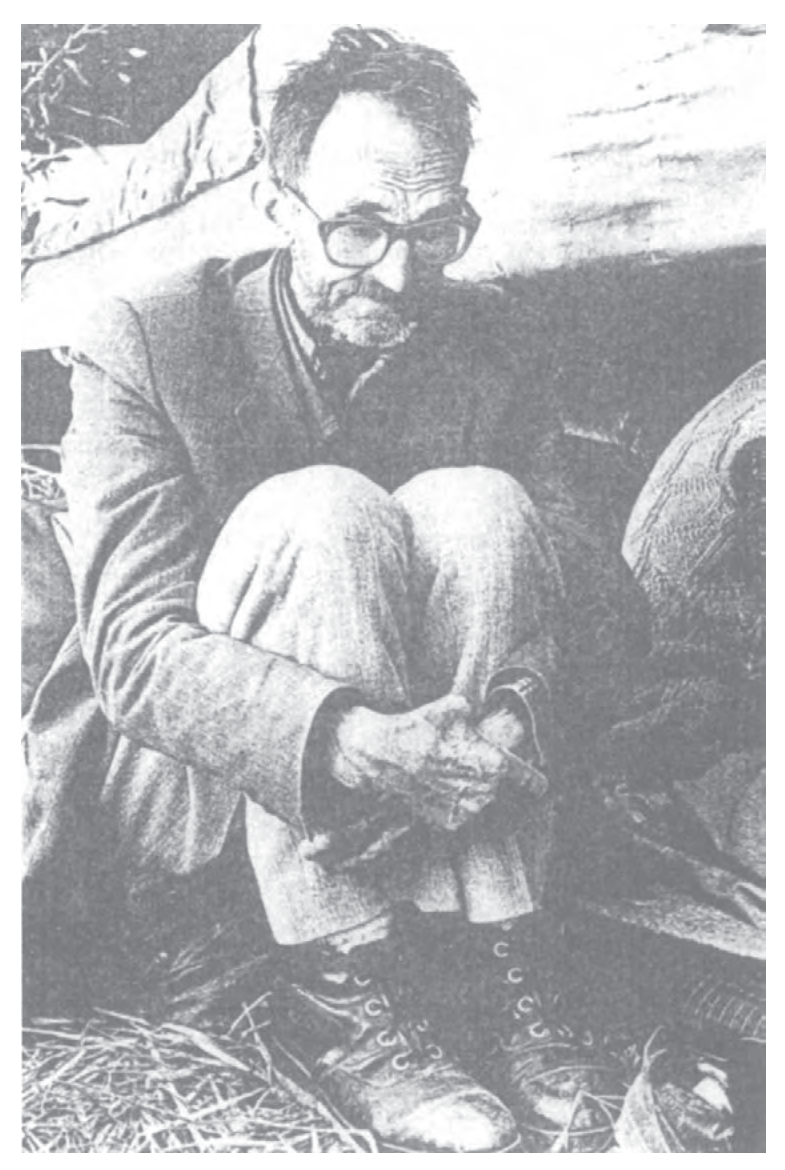
[25 marks]
Free CXC English A Paper 2 May/June 2004 past paper from 2004. Includes a worked answer key. Open the PDF, take a timed test, and study with AI on Caribbean AI.
Answer keys are free on Caribbean AI. View the answers to every past-paper question at no cost - no payment needed - with step-by-step worked solutions and instant AI marking available on Premium.
CSEC English A Paper 2 May/June 2004 - Free CXC Past Paper with Answers
Free CXC English A Paper 2 May/June 2004 past paper from 2004. Includes a worked answer key. Open the PDF, take a timed test, and study with AI on Caribbean AI.
Opening the interactive papers…
Every question from this paper as text. See the answers and worked solutions. Questions are the property of the Caribbean Examinations Council; Caribbean AI is not affiliated with CXC.
Summarise the following passage in not more than 100 words.
The International Organisation for Migration (IOM) divides international migrants into two major groups: those who migrate of their own free will, leaving to study, work or join their family abroad, and those who flee to escape persecution, conflict, repression or natural disasters. The two categories fairly rapidly become interdependent.
Migrant flows are always from the poorest countries with a low probability of employment towards less poor and more dynamic countries where there is an opportunity to find some sort of job. Over the last few years, international migration has intensified, with the media referring to the "regionalisation and globalization" of migration. As if to illustrate the phenomenon, the media recently reported the plight of Nigerians prepared to take on the desert to seek a better life in Libya.
In recent months, Europeans have become aware of the demographic downturn and the ageing of the population that will set in over the next few decades. The dearth of manpower in certain sectors is becoming a serious problem in numerous countries, requiring a rethinking of the zero-immigration policies that have prevailed in recent years.
What are the effects of migration in the country of origin? Funds sent by migrants to families back home often play a considerable part in the development of the local economy. However, when highly qualified people leave their home country, the investment made by the developing countries in their higher education is lost. To remedy this, programmes have been set up to encourage immigrants to return, so that they can contribute to the economic development of their home country. The problem is increasingly affecting India and countries in Africa. It will persist as long as there is a labour shortage in wealthy countries, in sectors hungry for highly qualified personnel and offering attractive salaries.
Aya Kasasa, "Dossier Migration," The Courier, July - August 2001 p. 29.
[25 marks]
Read the following extract carefully and then answer all the questions set on it.
Now, none seem worked. There was no need to. Generations of Parillon men had done better than comfortably well in merchandising and inter-island shipping. It had not been expected of the women of their family and generation that they take paying jobs. So the sisters volunteered time with the Red Cross, the Lionesses and Friends of the Library. In addition, the youngest taught piano lessons once a week to children of neighbours. In this way, they took part in Tortola's community life. Always, however, they maintained an aloofness, an air of superior apartness that let others know they were only mimicking out of a sense of noblesse oblige. Cocooned in these trappings, they were quite unaware that to the other islanders they were anachronisms, pitied for being still single and childless. Now that they were past middle-age and their hair had greyed and the flesh hung softly from their arms, they were brought to have to eke out, life had passed them by, with what their neighbours said.
They were accustomed to living a certain kind of life, however, and they lived it oblivious to the meanderings of their neighbours. In fact, it never occurred to them that they were objects of pity. Envy they could imagine, but certainly not pity.
Eugenia O'Neal, "The Parillon Sisters," The Caribbean Writer, p. 104.
[13 marks]
To whom or what does "none" (line 1) refer?
[1 mark]
How does the writer rate the performance of the Parillon men in their business activities?
[2 marks]
What did the Parillon women do instead of working for pay?
[2 marks]
Identify TWO words/phrases in the passage which show the attitude and behaviour of the Parillon women in the general Tortola community.
[2 marks]
Why is "noblesse oblige" (line 8) put in italics?
[1 mark]
Write TWO different words which express the image the writer creates by the use of the word 'cocooned' (line 8).
[2 marks]
What does the writer mean by "they were thought to have lost out" (line 11)?
[2 marks]
What does the word "whisperings" (line 13) tell us about the attitude of the neighbours towards the Parillon women?
[1 mark]
Read the following extract carefully and then answer all the questions set on it.
Enforcement of the law is crucial to the regulation of society. Much of the irregularity which is evidenced today has to do with the fact that citizens see a contradiction between the enforcement of law and a licence to do as they please, which they call 'freedom'. Freedom is really quite the opposite. Freedom is really the willing exercise of obedience to the law by citizens. Unfortunately, we are surrounded by wild claims for freedom. While freedom ironically offers the widest opportunities for good, at the same time it offers us the most dangerous chances for ill. We must guard against the latter possibility without encroaching on the rights of individuals or groups. In our free and independent country, we have on statute a wide range of laws which seeks to create order in our society and guarantee certain essential freedoms. Our supreme law, our Constitution, recognises that our freedom is based on respect for moral and spiritual values and for the rule of law. In our view, more attention has to be paid to the values of truth and social justice. Truth is essential to justice and justice is essential to peace. Mechanisms for strict accountability under the rule of law, creation of a sense of social responsibility and reinforcement of traditional moral and spiritual values which have secured our past are essential to the safety of our future.
Editorial, Weekend Nation, Friday, December 6, 2002.
[12 marks]
What phrase in the passage indicates the writer's view of the importance of law enforcement?
[1 mark]
What does the writer mean by "wild claims for freedom" (line 5)?
[2 marks]
Why does the writer use the word "ironically" in the sentence "While freedom ironically offers ... most dangerous chances for ill" (lines 5 - 7)?
[2 marks]
What aspect of freedom does the writer advise us to guard against?
[2 marks]
What is the supreme law of the writer's country?
[1 mark]
Which ONE of the three values presented in lines 12 - 13 does the writer consider as fundamental?
[2 marks]
Identify TWO features which, in the opinion of the writer, are needed to ensure the "safety of our future".
[2 marks]
Write a story based on the picture below.
Your answer in this section should be approximately 400 to 500 words in length. You MUST write in Standard English. However, dialect may be used in conversation.
[25 marks]
That was the last of them. From that moment onwards, life was different for us.
Write a story which begins or ends with the sentences above.
[25 marks]
She determined that only a few would go. The rest would remain if only to prepare for the task ahead.
Write a short story which includes the sentences given above.
[25 marks]
"As long as a Caribbean country chooses to depend on tourism for economic development, it will have to discriminate by giving privileges to tourists that it does not and cannot give to its own people."
Write an essay giving your views on the above statement.
Your answer in this section should be approximately 250 to 300 words in length. You MUST write in Standard English.
[25 marks]
"Military service and training for at least five years should be compulsory for all young men between the ages of 18 and 25 who are not engaged in studying or in gainful employment."
Write a letter to your local newspaper giving your views on this issue.
[25 marks]