Free CXC English A Paper 2 May/June 2013 past paper from 2013. Includes a worked answer key. Open the PDF, take a timed test, and study with AI on Caribbean AI.
Answer keys are free on Caribbean AI. View the answers to every past-paper question at no cost - no payment needed - with step-by-step worked solutions and instant AI marking available on Premium.
CSEC English A Paper 2 May/June 2013 - Free CXC Past Paper with Answers
Free CXC English A Paper 2 May/June 2013 past paper from 2013. Includes a worked answer key. Open the PDF, take a timed test, and study with AI on Caribbean AI.
Opening the interactive papers…
Every question from this paper as text. See the answers and worked solutions. Questions are the property of the Caribbean Examinations Council; Caribbean AI is not affiliated with CXC.
Read carefully the following magazine article on the use of water and write a summary of it in NOT MORE THAN 120 words. As far as possible use your own words. If the limit is exceeded, only the first 120 words of your answer will be read and assessed. Your summary must be in continuous prose. You may make notes or plan your summary in your answer booklet.
In your answer you will be assessed on how well you
Imagine that you get up in the morning with the sweet sound of rain against the windows. You look out and the world sings to you. Water makes it possible. Crystal clear water is available right in the comfort of your home. Shortage is not even in the back of your mind because you know that the process of getting that water to you is in the hands of responsible persons.
Some forecasts show that by 2025 more than 3 billion people will face water scarcity, but this is not because the world lacks water. The world water crisis is a crisis of management – not one of scarcity. At the global scale, there is enough water to provide “water security” for all, but only if we change the way we manage and develop it. The scarcity of water is a very relative concept that can only be seriously addressed by looking at a basket of factors, including socio-economic, technical and institutional aspects of water use.
Water is important to our national economies, our leisure and even to our culture. The sustainable management of water resources is of central importance to poverty alleviation, people’s health and the protection of the environment. The best initiatives are those that make a political commitment to consider water as an integral part of sustainable human development, and those which strive to adapt management to the resources to the needs of the poor.
Our culture and lifestyles are key factors in the inequitable distribution of water. Changes in attitude and actions will bring about a positive difference, even when those attitudes and actions are as simple as realizing the value of water and remembering conservation practices. Our water use must be through sustainable practices with the aim of safeguarding this resource for our future generations.
There is no quick fix or simple solution when it comes to safeguarding and managing a resource that is in as much demand as water. It is evident that to maintain our most precious resource, our managerial capacities has to be upgraded since the current steps were developed for past human and natural needs and are now inappropriate to our present needs.
Adapted from Global Environment Outlook for Youth in the Caribbean – A Vision for Change! p. 69.
[30 marks]
Read the following poem carefully and then answer all the questions that follow.
Yes, I have seen them perched on paling posts – Brooding with evil eyes upon the road, Their black wings hooded – and they left these roosts When I have hissed at them. Away they strode Clapping their wings in a man’s stride away Over the fields. And I have seen them feast On swollen carrion in the broad eye of day, Pestered by flies, and yet they never ceased.
But I have seen them emperors of the sky, Balancing gracefully in the wind’s drive With their broad sails just shifting, or again Throwing huge shadows from the sun’s eye To brush us swiftly over the field’s plain – And winnowing the air like beauty come alive.
A. J. Seymour. Extracted from: West Indian Poetry: Edited by Kenneth Ramchand and Cecil Gray, 1971 p. 7.
[15 marks]
To whom or what does the pronoun “them” in line 1 refer?
[1 mark]
Identify TWO words or phrases in the first stanza that the poet uses to create an image of the birds.
[2 marks]
Which TWO words in lines 4 and 5 does the poet use to give human qualities to the crows?
[2 marks]
Explain the effect which the poet achieves in his description of the scene in lines 6 to 8.
[2 marks]
What do lines 7 and 8 show about the crows’ attitude?
[2 marks]
Why does the poet use the word “But” in line 9?
[2 marks]
What different attitudes does the poet show to the carrion crows in lines 1–8 and lines 9–14?
[2 marks]
Quote ONE example of alliteration from the poem.
[1 mark]
Quote ONE example of metaphor from the poem.
[1 mark]
Read the following extract carefully and then answer all the questions that follow.
In the Indian Ocean, off the Horn of Africa, lies an island called Socotra, the largest island in a group of four. It has a reputation that is legendary. While sailors in the past shunned its rocky coastal waters and dreaded being caught near to it in a storm, there were others who, at the same time, had heard of the natural wealth of the island and were drawn there in search of its riches. Ancient Egyptians, Greeks and Romans visited in search of aromatic frankincense, the aloe, and the dark sap from the dragon’s blood tree, used for healing and for the artist’s colour.
Socotra’s climate is tropical desert and semi-desert. Yearly rainfall is light, but is fairly evenly spread throughout the year. Generally the higher inland areas receive more rain than the coastal lowlands, due to the interior mountains. The people live like their ancestors did: the mountain folk keeping their goats, and the coastal people fishing, and everyone harvesting dates. The modern world still seeks Socotra’s exotic products.
Socotra is so different that the landscape is the most alien-looking place on Earth, according to some visitors. One visitor described the landscape as a jumble of limestone rocks eroded into knife-edge shapes. There is generally a light-brown harshness interspersed here and there by the brilliant crimson flowers growing on a succulent plant. The isolation, fierce heat and drought have combined to create a unique and spectacular species. A third of the plant life in the island is found nowhere else on the planet.
According to environmental experts, there are numerous threats to the future of Socotra Island and its wildlife. Road-building presents one of the greatest threats. Roadways cut in excess of local people’s needs have already destroyed and fragmented delicate and rare habitats. Grander schemes which threaten to further damage Socotra’s unique and fragile ecosystems and threaten to cause the extinction of endemic wild life are on the drawing board. The experts have also warned that over-fishing may disrupt food chains with potentially calamitous effects on the marine environment.
[15 marks]
How do we know that the coastal waters of Socotra are dangerous?
[1 mark]
Quote TWO words or phrases from paragraph 1 which suggest that the writer is using comparison and contrast.
[2 marks]
From paragraph 2, identify TWO things about the island that have not changed with time.
[2 marks]
Quote the sentence from paragraph 3 which BEST suggests Socotra’s uniqueness.
[2 marks]
Why is the writer careful to describe the land and plant life in detail?
[2 marks]
What are the specific behaviours that are seen as threats to Socotra’s ecosystem?
[2 marks]
What words in the final paragraph indicate that developers are not thinking about the degrading of the natural environment?
[2 marks]
What action concerning the environment would be recommended by the government of Socotra, based on the information in the last paragraph?
[2 marks]
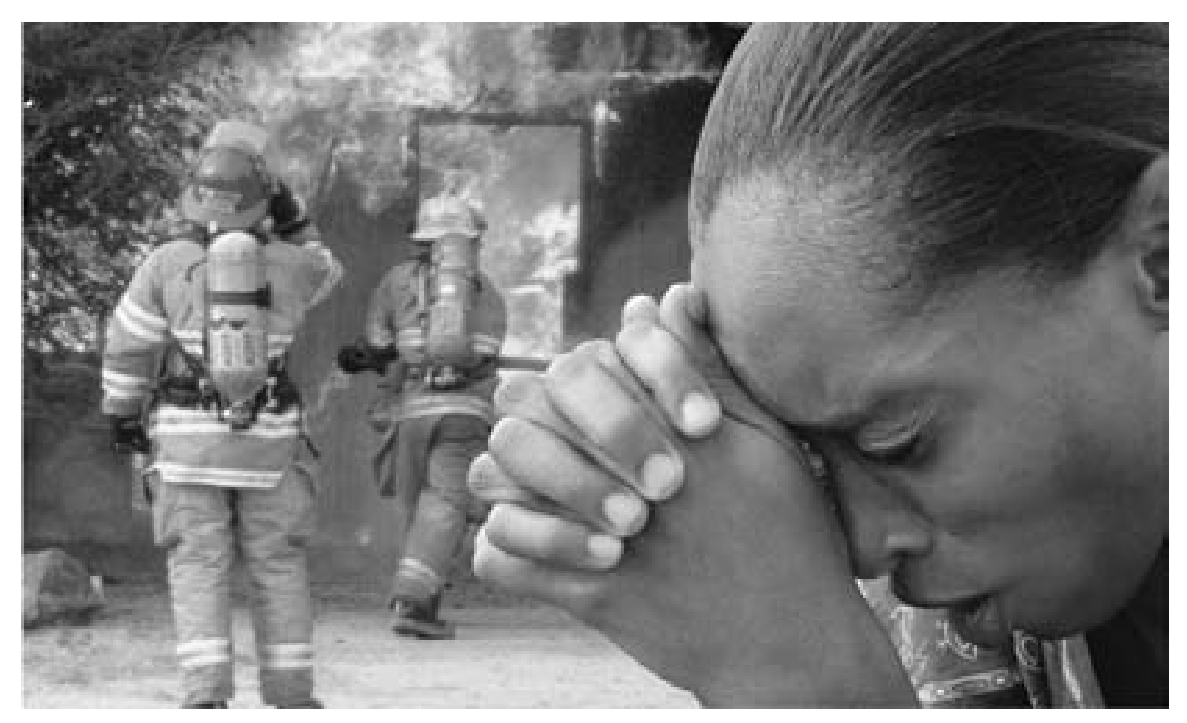
Write a story based on the picture below.
Your answer in this section should be approximately 400 to 450 words in length. You MUST write in Standard English. However, dialect may be used in conversation. You may use the answer booklet to jot down your notes as you plan your response.
In your answer you will be assessed on how well you
[35 marks]
She ran through the door laughing, but her friend Dari was stunned. It was no laughing matter.
Write a story which includes these sentences.
[35 marks]
It was all done; all the groups were sure that nothing more could be added. Emotions were mixed as we quietly studied the large room.
Describe the scenes and reactions you saw.
[35 marks]
Governments should offer free health care for everyone residing in a country, nationals and non-nationals alike. Write an essay EITHER supporting or OPPOSING this view.
In your answer you will be assessed on
[35 marks]
School principals should consult with the student body on ALL matters affecting the lives of students. Write an essay giving your views on this statement.
In your answer you will be assessed on
[35 marks]