Question 4 (35 marks)
Write a story based on the picture below.
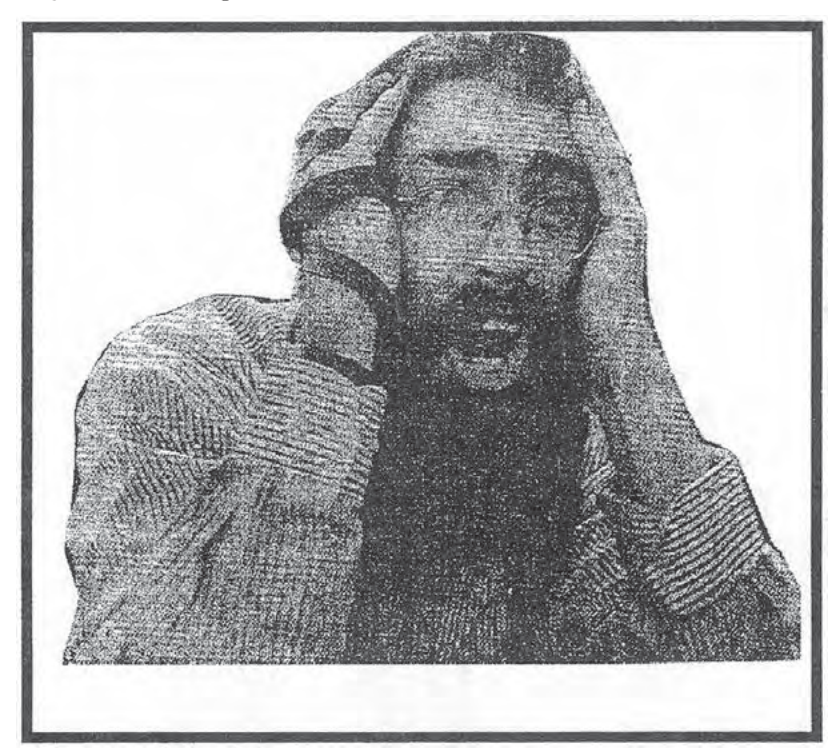
[35 marks]
Free CXC English A Paper 2 May/June 2007 past paper from 2007. Includes a worked answer key. Open the PDF, take a timed test, and study with AI on Caribbean AI.
Answer keys are free on Caribbean AI. View the answers to every past-paper question at no cost - no payment needed - with step-by-step worked solutions and instant AI marking available on Premium.
CSEC English A Paper 2 May/June 2007 - Free CXC Past Paper with Answers
Free CXC English A Paper 2 May/June 2007 past paper from 2007. Includes a worked answer key. Open the PDF, take a timed test, and study with AI on Caribbean AI.
Opening the interactive papers…
Every question from this paper as text. See the answers and worked solutions. Questions are the property of the Caribbean Examinations Council; Caribbean AI is not affiliated with CXC.
Read carefully the following passage and then write a summary of it.
Your summary must be in continuous prose, in paragraph form and it must not be more than 120 words in length. Only the first 120 words of your answer will be read and assessed.
Since the beginning of civilization, they have served as marks of identification, spiritual protection and decoration. Now at the cusp of another millennium, tattoos and other varieties of body markings are resurfacing as a popular form of individual self-expression.
Tattoos are timeless and can be as unique as the bearers they adorn. They don’t fade away like favourite t-shirts, or get lost or broken like school rings. They stay with you forever, until death. They become a part of you from the day you sit in the artist’s chair, etching your emotions alongside the needle’s sting, transforming an instant of your life into a symbol for the world to see.
Tattoos and other body markings arrived in the Caribbean with African slaves and indentured workers from China and India. They were sometimes the only permanent keepsakes of peoples snatched from their ancestral places. The Caribbean’s original Amerindian inhabitants also used tattoos for spiritual milestones. For Taino of the Northern Caribbean Islands, for instance, used vegetable dyes to etch images of their guardian onto their skin. These images also indicated an individual’s lineage, or his or her social position. Each tattoo was both a personal history book and a mark of belonging.
Over the centuries, however, tattoos and other forms of bodily adornment have mutated, exchanging religious and cultural significance for individualist associations. Sometimes that mark of individuality has been confused with rebellion and non-conformity, often alluding to a stain of bad character. Tattoo-wearers have seemed wild, dangerous, even just plain bad.
But today, tattoos have come full circle. Celebrities, writers, lawyers, housewives, all proudly display their marks of rebellion. An entirely new perception of art as of tattooing has arisen, which is more than just a preoccupation with style. This re-discovered form of expression has spawned an entire sub-culture of individuals among us. They carry this common bond of distinction through their daily routines. Via the images on their forearms, shoulders, ankles or torsos, they connect to each other, announcing to the world that it is OK to be unique and different.
Adapted from “Picturing nude flesh”, Caribbean Beat, July/August 2003.
[30 marks]
Read carefully the passage below and then answer all the questions that follow.
This village appeared to be at the end of the world, and it seemed as though each day was a deliberate effort. Dawn came slowly, the cold air flowing off the sea, the smell of fish and the wet smell of the nets fading away as the light climbed in the sky. Midday brought a blazing heat that softened the raw pitch with which the road was made in the village. Cars passed too long out in the heat sank slowly, tyre-deep, into the soft asphalt, and the hot sun and the heavy air filled with the smell of oil made drowsy people into the shade. As people settled over the whole village, Evening saw the huge red ball of the sun dipping across the sky into the sea leaving glorious and stunning sunsets that coloured the bay red, burning off the hulls of the tankers that tied up against the long oil jetty, burning the flares of the oil refinery in the distance as the excess gas was burned off. The evening smell was that of oil.
There was death in the village, but that death was not a final horror, it was not the heart-rending, bitter cry of a sudden and unexpected grief. No! It was the sad, lingering, whimsical death found in the faces of boys, old men as the paled young boys on the head and considered the foolishness of youth, it was the rusty death found in abandoned cars, at the end of small islands dwarfed by the hugeness of the Atlantic; it was the hopelessness of this backwater village, swept clean of talent and vitality, missed and ignored by a political turmoil sweeping the city, dependent upon a poor stony earth and dwindling oil. Death here was a vision of a hopeless future.
Noel Woodroffe, “Wing’s Way” – Best West Indian Stories. Nelson Caribbean, 1982, p. 138.
[15 marks]
What times of the day does the writer describe in paragraph 1?
[2 marks]
Identify the contrasting smells of the day mentioned by the writer in paragraph 1.
[2 marks]
To what does the writer compare the colour of the setting sun (lines 7 – 10)?
[2 marks]
Identify ONE example of what the writer refers to as “whimsical death” (lines 12 – 13).
[2 marks]
Identify ONE word that illustrates personification in line 3.
[1 mark]
What impression is suggested about the village by the use of “each day was a deliberate effort” (lines 1 – 2)?
[2 marks]
Why did cars parked too long sink slowly?
[2 marks]
Identify TWO phrases in the last four lines that create the atmosphere of abandonment.
[2 marks]
Read carefully the passage below and then answer all the questions that follow.
Gradually, every parent becomes aware that his or her child has adult concerns, wants acres of privacy and no longer trusts the goodwill of parents in the same old way. These are the biggest of all changes in child-parent relations, and are almost always in place by age 13. This shift occurs not because of bad influences and media but because your child’s brain has matured and is capable of more independent judgment. Please remember, however, that the change is not locked in place. Youngsters’ parent can bounce back and forth between ages 10 and 13 (and sometimes 15) in a matter of seconds, scoring your values yet, at times, still wanting to sit on your lap.
For girls, the central action is their social lives and the intensity of their feelings. No matter how much a girl and her friends are teasing one another with gossip in school or instant messages from home computers, she is convinced that if you know what she was saying, you would disapprove or, even worse, try to interfere and make a bad situation uglier.
What is she talking to about her friends? Social power: who’s popular, who’s feminine, who’s really weird. Parents: their faults and their inability to understand 13 year olds.
Girls are talking about their powerful feelings; they have complex and sometimes overwhelming insights into life. Their joy can be great and is visible, but their despair is hidden in solitary, late-night crying, jounced entries, outright obsession.
Boys are preoccupied by their power and the opinion of other boys, their anxiety about whether they live up to the masculinity, a new, deeper range of feelings that they may be unable to put into words. In the kitchen a boy looks down into his mother’s eyes and thinks, why is this woman giving me orders? I love her but I’m bigger than she is. This perplexes him because he also needs her so much. Boys, like girls, are having a lot of dark nights of the soul in which they see how disappointing adults can be and how unjust society is, but they may not be able to put their fears into words, or they do not want to because it makes them feel weak.
Adapted from Michael Thompson, “What they won’t tell you and why”, Time, August 8, 2005, p. 63.
[15 marks]
What meaning is conveyed by the word “acres” in line 1?
[2 marks]
Identify TWO of the “biggest of all changes in child-parent relations”, (lines 2 – 3) according to the writer.
[2 marks]
What does the phrase “not locked in place” (line 5) mean?
[2 marks]
What, according to the passage, are the causes of the shifts in child-parent relations?
[2 marks]
To whom does the pronoun “you” (line 10) refer?
[1 mark]
What according to the passage is the preoccupation of (i) girls and (ii) boys?
[3 marks]
Why, according to the writer, are boys perplexed?
[2 marks]
What conjunction of ‘contrast’ is used repeatedly (four times) in the passage?
[1 mark]
Write a story based on the picture below.
[35 marks]
The phone rang once and stopped. It rang again. This was it now.
Write a story which includes these sentences.
[35 marks]
As the astronauts landed they saw before them an unimaginable sight.
Describe what the astronauts saw.
[35 marks]
“Students should not be allowed to use cellular phones in school.”
Write an essay EITHER supporting OR opposing this view.
[35 marks]
“Popular music and dance on display in the Caribbean today are corrupting the youth and making them irresponsible.”
Write an essay giving your views on this statement.
[35 marks]