Free CXC English A Paper 2 May/June 2006 past paper from 2006. Includes a worked answer key. Open the PDF, take a timed test, and study with AI on Caribbean AI.
Answer keys are free on Caribbean AI. View the answers to every past-paper question at no cost - no payment needed - with step-by-step worked solutions and instant AI marking available on Premium.
CSEC English A Paper 2 May/June 2006 - Free CXC Past Paper with Answers
Free CXC English A Paper 2 May/June 2006 past paper from 2006. Includes a worked answer key. Open the PDF, take a timed test, and study with AI on Caribbean AI.
Opening the interactive papers…
Every question from this paper as text. See the answers and worked solutions. Questions are the property of the Caribbean Examinations Council; Caribbean AI is not affiliated with CXC.
Read carefully the following extract and then summarize the MAJOR factors which contribute to the disadvantages encountered by women in the labour market.
Your summary must be in continuous prose, in paragraph form and it must not be more than 120 words in length. Only the first 120 words of your answer will be read and assessed.
Despite their increasing participation in the labour market, women are still disadvantaged in the mainstream of economic life. With limited access to stable and well-paid employment, their participation is often confined to 'feminine' work: to low-paid, less visible jobs in the informal sector and to subsistence agriculture. Globally, women earn 30 to 50 per cent less than men while women make up 70 per cent of the world's more than 1 billion absolute poor.
In most regions of the world, female enrolment in secondary federal, technical and vocational education programmes represents less than half of the total. When girls opt for vocational courses they tend to choose fields that are considered more 'feminine' and less technical, thus narrowing their employment prospects. Socio-cultural factors play an important role in the attitudes of employers, teachers, parents and the girls themselves.
In poor countries, access to any type of secondary or post-secondary education for disadvantaged girls is often limited by entrance requirements and the cost of courses. In the more formal sector, there are numerous programmes provided by non-governmental organizations to enhance capacities for income generation among poor out-of-school girls. It is often difficult to assess the impact of such training on the lives of trainees due to the lack of systematic monitoring and reporting. Depending on how such programmes are designed, there could also be a danger of reinforcing existing gender roles and biases, especially where programmes do not offer training in profitable areas of work.
Miki Nozawa, "Reaching Out to Marginalized Girls" IIEP Newsletter, July - September 2004, p. 5.
[30 marks]
Read carefully the following extract and then answer all the questions set on it.
Pita panicked. There was nothing he could do. He was trapped. Trapped with hundreds of others. The Monster had come and was slowly, surely, dragging them from the deep. He swam through the excited crowd to try the bottom. Then he tried the top again. The great Monster had encircled them completely. There were millions of holes in its great hands, but none large enough. If only they were a little bigger. Pita tried to push himself through one of the holes again. He squeezed and squeezed. Great tails lashed around him. Not only he but the whole crowd was in desperation. He tried to ease himself through. The thread-lines pressed against his eyes. If only the thread could get through. He pushed again, hard, and the pain quivered through his body.
There was nothing he could do. He heard the breakers roaring above now. That meant they were nearing the shore. Pita whipped himself in fury. The Monster was gradually closing its hands. There were cries now above the surface. Below, the Monster grated on sand. The shore! They had reached the shore! Frantically Pita flung himself against one of the tiny holes. He gave a cry as the scales tore from his back – then a cry of joy. He was free! Free!
He lunged forward below the surface. Down he sped, rejoicing in his tinyness. If he was only a little bigger, he would have been dying on the shore now. The fateful shore! There had been those who had actually come back from that world. This was one of the great mysteries. But none said they had been there and had talked of that awesome place.
There was no more blood now. Down, he swam. Deep, deep, until the sound of the breakers was only a bitter memory, and the sea was not sandy but blue and clear, and until, far far away in the distance, green with fern and the tender moss, he saw the rocks of home.
Adapted from Michael Anthony, 'Pita of the Deep Blue Sea' in Island Voices Stories from the West Indies
[15 marks]
To whom or what does "he" (line 1) refer?
[1 mark]
What effect is the author trying to create by using short sentences in the passage?
[2 marks]
State ONE word which could describe Pita's feelings when he realized "There were millions of holes ... but none large enough" (lines 4 - 5).
[2 marks]
Why does the author repeat "squeezed" in line 6?
[3 marks]
Who or what does the "Monster" refer to?
[2 marks]
Why does the writer use "fateful" to describe the shore (line 16)?
[2 marks]
Why does Pita utter a cry of joy (line 14)?
[1 mark]
Why was "the sound of the breakers" (lines 19 - 20) a bitter memory?
[2 marks]
Read carefully the following extract and then answer all the questions set on it.
Can people be overweight but still healthy?
In books, in medical journals and at public health conferences, scientists have been duelling over the relative importance of fatness versus fitness, and whether there is any common ground between the two camps. A small but vocal cadre of researchers has been challenging conventional wisdom, arguing that while fitness may be more important to health than is generally possible to be both fat and fit.
"All too often, medical professionals says it's the obesity we have to cure. That's the be-all and end-all. It's not," said Steven N. Blair, who heads the Cooper Institute, a research foundation focused on physical activity.
Other experts, however, maintain that while there may be exceptions, the evidence is clear for most people: Being overweight significantly increases the risk of a host of debilitating and often deadly health problems, including heart attacks, strokes and diabetes.
"Being overweight has a clear association with important health problems, and even modest weight loss has important health benefits," said Walter Willett, an expert on nutrition and health at the Harvard School of Public Health.
Fitness proponents acknowledge that some overweight people are at increased risk for health problems, and that many people may benefit from losing weight. But they argue that society focuses far too much on dropping pounds and far too little on exercise, eating well and being physically fit.
Despite the intensity of the debate, Willett, Blair and others have been trying to find common ground, with each side emphasizing that the two ideas are not mutually exclusive. The best strategy would be to encourage people to exercise regularly and eat well.
"This is something that really shouldn't be a debate of one versus the other," Willett said. It's clear that both fitness and fatness are important. It's definitely good to be as fit as possible no matter what your body weight. But it's also clear that it is optimum to be both lean and fit. It shouldn't be a question of one or the other.
Adapted from Time, August 11, 2003, p. 72-73.
[15 marks]
What is the debate presented in the passage?
[2 marks]
What effect is the writer trying to achieve by the use of the phrase "In books, in medical journals and at public health conferences ..." (line 2)?
[2 marks]
What impression of the debate does the writer want to convey with the use of expressions such as "duelling", "camps", "versus" (paragraph 1)?
[2 marks]
Why does the writer use the word "however" in line 10?
[2 marks]
According to the author, what is the MOST important point in the debate as expressed in the last paragraph.
[2 marks]
State TWO factors which Blair and other fitness proponents recommend that society should emphasize more.
[2 marks]
Identify ONE paragraph that contains ONLY the remarks of the author AND ONE paragraph that expresses ONLY the opinion of the scholars.
[2 marks]
To whom is the writer referring in the phrase "But they argue that society ..." (lines 17 - 18)?
[1 mark]
Your answer in this section should be approximately 400 to 450 words in length. You MUST write in Standard English. However, dialect may be used in conversation.
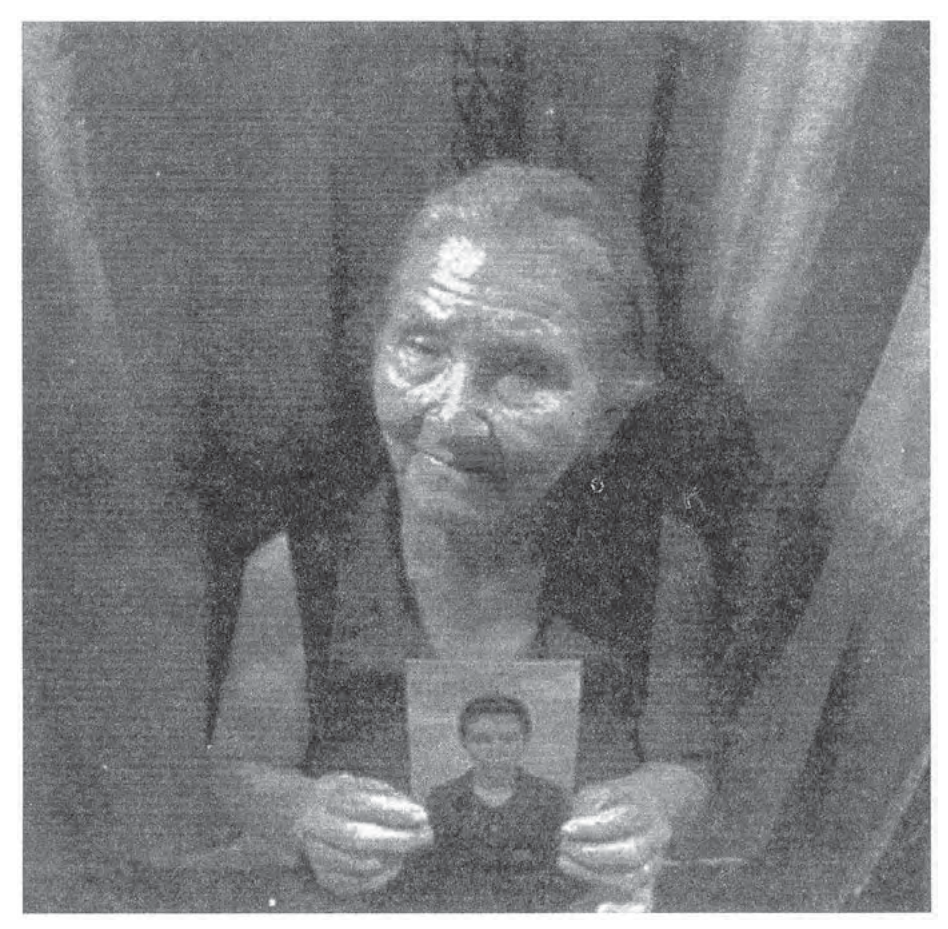
Write a story based on the picture below.
Source: The San Juan Star
[35 marks]
Your answer in this section should be approximately 400 to 450 words in length. You MUST write in Standard English. However, dialect may be used in conversation.
He was drawn to the kitchen by the sweet smell of his father's cooking. But what he saw made him burst out laughing. Write a story which includes these sentences.
[35 marks]
Your answer in this section should be approximately 400 to 450 words in length. You MUST write in Standard English. However, dialect may be used in conversation.
As she walked down the main street of the village where her grandparents lived she felt like she was in another country. Describe what she saw and her thoughts and feelings.
[35 marks]
Your answer in this section should be approximately 250 to 300 words in length. You MUST write in Standard English.
Skilled Caricom professionals should be allowed to work in any Caricom territory that they choose.
Write an essay giving your views on the above statement.
[35 marks]
Your Minister of Education believes that there are too many holidays each year and the school year should be longer so that student performance might improve.
As a student leader in your school, write a letter to the Minister of Education giving your views on this statement.
[35 marks]