Question 4 (25 marks)
Your answer in this section should be approximately 400 to 500 words in length.
You MUST write in Standard English. However, dialect may be used in conversation.
Write a story based on the picture below.
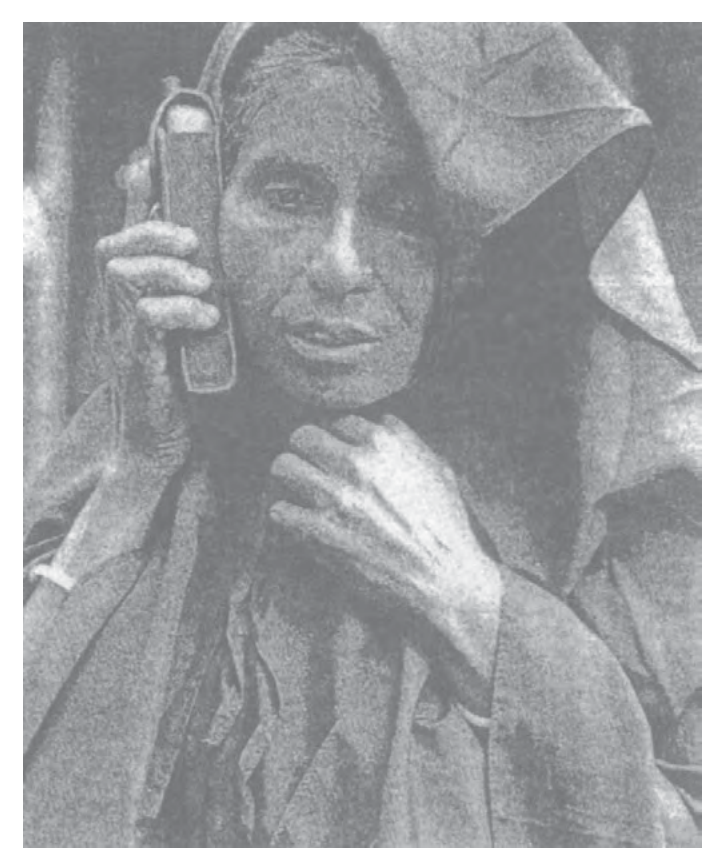
[25 marks]
Free CXC English A Paper 2 May/June 2005 past paper from 2005. Includes a worked answer key. Open the PDF, take a timed test, and study with AI on Caribbean AI.
Answer keys are free on Caribbean AI. View the answers to every past-paper question at no cost - no payment needed - with step-by-step worked solutions and instant AI marking available on Premium.
CSEC English A Paper 2 May/June 2005 - Free CXC Past Paper with Answers
Free CXC English A Paper 2 May/June 2005 past paper from 2005. Includes a worked answer key. Open the PDF, take a timed test, and study with AI on Caribbean AI.
Opening the interactive papers…
Every question from this paper as text. See the answers and worked solutions. Questions are the property of the Caribbean Examinations Council; Caribbean AI is not affiliated with CXC.
Your community is concerned with the quality of Somerfield chickens. Use the information below to write a report for your school newspaper in which you identify the problem and give Somerfield’s response.
Your summary must be in continuous prose. In paragraph form and it must not be more than 120 words in length. Only the first 120 words of your answer will be read and assessed.
In the light of recent news stories about water being added to chicken, Stephen Ridge, Quality Assurance Director of Somerfield, tells of how Somerfield ensures that its chickens are safe and tasty.
We’ve all heard the stories in the news that some chickens that are imported have been found to have high water content. In addition, proteins have been added to the chickens to help keep that water in place. Some of these proteins may not be chicken proteins but that of beef and pork. So the customer ends up with quite a different product from the one they expected to get.
We at Somerfield have been aware of the practice of adding water and proteins to chickens for some time. It is a legal process, as long as the product is properly described and all the information is given on the label. But in some cases there hasn’t been proper labelling and people are, understandably, concerned that they are being duped into buying chicken with high amounts of water and proteins added.
Assurance from Somerfield
Somerfield sells chicken in a variety of ways: fresh, frozen and processed in ready meals, pies and pastries. Somerfield is in control of the chicken used and, quite simply, we do not use this type of material. The fresh chicken we sell is processed without the use of any water other than to rinse the chicken during processing. The birds go into a chiller after being spray washed, and after they are have been chilled they are left whole or cut into various portions. Processed chicken goes through a slightly different process, called spin chilling. The chicken is dropped into a water bath with ice, then it is taken out again and the water is allowed to drip away. The water from this process is carefully controlled so that it amounts to no more than three per cent of the chicken. The birds are then trussed and frozen and no more water comes into contact with them after that. Processed chicken in ready-meals, pies and pastries has not had excess water or proteins added, even chicken that has been imported.
We want Somerfield chicken to be good-tasting and to be of the right texture. Adding high water content detracts from this and results in a product very different from the one we’re trying to provide. We have an independent analytical programme in place where our chicken is taken to a sophisticated laboratory, which is independently certified. The chickens are analysed and inspected for adulteration, including proteins and water content. This process ensures that Somerfield chickens are products of quality.
Somerfield Stores produces chickens through our own intensive system, without the use of growth promoters, high water contents or added proteins. Our aim is to achieve a good basic standard of animal welfare.
Adapted from Somerfield Magazine, September 2003, p. 39.
[25 marks]
Read the following extract carefully and then answer all the questions set on it.
Dr. Levy called me into his office early in the morning. He had lately moved his administrative throne to a remote rear room on the second floor of a concrete annex recently added on to the old wooden administration building. You walked up the stairs and entered a tremendous ante-room so austerely empty of furniture that your footsteps echoed as if in a fog, and I was guarded by a trio of three glum typists outside the doctor’s sanctuary. These small desks with battered manual typewriters were moored in an ocean of pastel tile, and the tang of heavily cured concrete and freshly applied whitewash immediately tickled your nose. The typists perpetually had little or nothing to type, and the secretary, who had no phone to answer, spent most of her time reading magazines or sticking her head out the window to scold the boisterous labourers below whose hilarity occasionally drifted in and buzzed her ears. Because of ill fitting dentures that stretched her lips and gave her an ugly overbite, she wore the grimaces of a seasoned battle-axe and seemed sour and bad-tempered, but in truth, she was a soft-spoken and sweet-natured woman whose only quirk was a Christian aversion to blasphemy and bad words. I had scarcely settled in the straight-backed chair before his desk when the doctor, looking officious and abnormally solemn, broke the news. The girls would not be allowed to sit for the A level exams.
From Anthony Winkler, Going Home to Teach, Kingston Publishers, 1995, p. 258. Reprinted by permission of LMH Publishing Ltd.
[13 marks]
What opinion does the author want you to have of Dr. Levy with the use of “throne” in line 2?
[2 marks]
How many members of staff did Dr. Levy have in his office?
[1 mark]
Identify TWO words used metaphorically in sentence 4 (lines 6 - 8).
[2 marks]
How would you summarise the author’s feelings about Dr. Levy’s office?
[2 marks]
Why did the personality of the secretary appear to be the opposite of what it really was?
[2 marks]
What is the occupation of Dr. Levy?
[2 marks]
What evidence is there in the passage to indicate that the secretary disliked “blasphemy and bad words” (line 14)?
[2 marks]
Read the following extract carefully and then answer all the questions set on it.
The classroom is where we first realised that we were good at maths or spelling or terrible at science or geography. From our own memories and experiences as learners, many of us can recall the obstacles that prevented us from grasping the proper way to diagram a sentence or understanding the laws of algebra. Some of us can remember the teachers who removed those obstacles, enabling us to learn.
Today's classroom might seem very different from the classrooms we remember, but the challenges of teaching (and learning) remain essentially the same. Teachers are still expected to convey a certain amount of information between September and June, and students are still expected to learn it. Teachers still employ a familiar variety of classroom assessments - quizzes, teacher-made tests and end-of-unit tests supplied by the textbook publishers - in their search for evidence of student progress, and students still ask the critical question: "Is this going to be on the test?"
On almost any school day, in almost every classroom, some form of student assessment is taking place. Searching for assessment tools to support the new teaching strategies, teachers and researchers are exploring assessment alternatives that reveal what students currently know and understand, in the hope that teachers can then use that information to suggest appropriate instructional next steps. Ideally, the next generation of classroom assessment will also enable teachers to observe student growth and develop-ment over time and to identify individual strengths and weaknesses that are difficult to capture through traditional testing.
Adapted from Focus 28: "Capturing the Power of Classroom Assessment," 1995 and used by permission of Educational Testing Service, the copyright owner.
Permission to reprint ETS materials does not constitute review or endorsement by ETS of this publication as a whole or of any other testing material it may contain.
[12 marks]
According to the writer in paragraph 1, what was the role of some of his teachers when he was a student?
[2 marks]
Identify TWO aspects of the classroom which are essentially the same today.
[2 marks]
What effect is the writer trying to achieve by the use of the phrase “the critical question” (line 12)?
[2 marks]
What effect on the reader does the writer wish to have by using “we”, “our” and “us” in paragraphs 1 and 2?
[2 marks]
What does the use of expressions such as “might seem”, “essentially”, “almost” and “ideally” in paragraphs 2 and 3 suggest about the writer?
[2 marks]
What, according to the writer, will future classroom assessment achieve?
[2 marks]
Your answer in this section should be approximately 400 to 500 words in length.
You MUST write in Standard English. However, dialect may be used in conversation.
Write a story based on the picture below.
[25 marks]
Your answer in this section should be approximately 400 to 500 words in length.
You MUST write in Standard English. However, dialect may be used in conversation.
“As she made her way towards the bus stop, Aleesa knew she was making the right choice. She walked confidently down the dirt road. There would be no turning back.” Write a story using these sentences.
[25 marks]
Your answer in this section should be approximately 400 to 500 words in length.
You MUST write in Standard English. However, dialect may be used in conversation.
“Suddenly the car did a high-speed U-turn and roared off. The driver must have smelled a rat.” Write a story which includes these words.
[25 marks]
"School uniforms are outdated. Students should be allowed to wear to school anything they choose."
Write an essay giving your views on this statement.
[25 marks]
"The fact that mothers are working away from home is largely to blame for the growing delinquency and crime among the youth."
Write an argument EITHER supporting OR opposing this view.
[25 marks]