Question 4 (35 marks)
Write a story based on the picture below.
Source: Winston Sill, The Gleaner, May 27, 2006, p. A5.
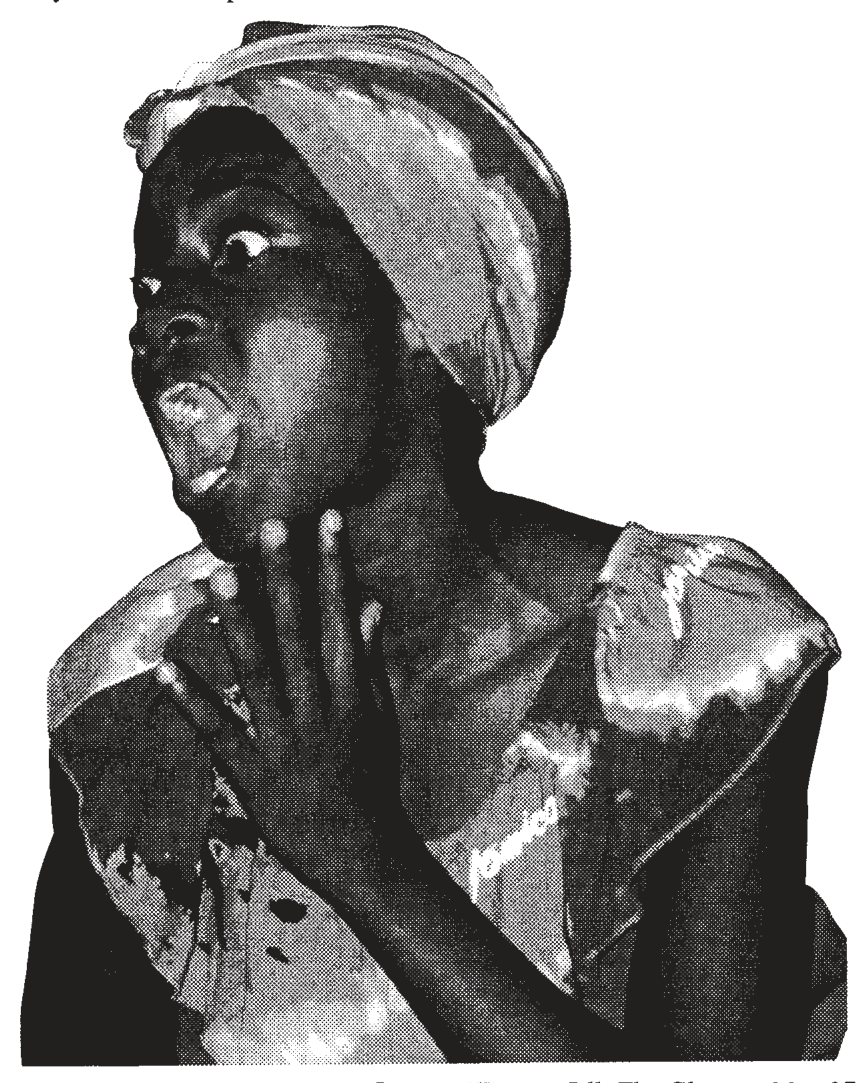
[35 marks]
Free CXC English A Paper 2 May/June 2008 past paper from 2008. Includes a worked answer key. Open the PDF, take a timed test, and study with AI on Caribbean AI.
Answer keys are free on Caribbean AI. View the answers to every past-paper question at no cost - no payment needed - with step-by-step worked solutions and instant AI marking available on Premium.
CSEC English A Paper 2 May/June 2008 - Free CXC Past Paper with Answers
Free CXC English A Paper 2 May/June 2008 past paper from 2008. Includes a worked answer key. Open the PDF, take a timed test, and study with AI on Caribbean AI.
Opening the interactive papers…
Every question from this paper as text. See the answers and worked solutions. Questions are the property of the Caribbean Examinations Council; Caribbean AI is not affiliated with CXC.
Read the following extract carefully and then write a summary in NOT MORE THAN 120 words. Your summary must be in continuous prose and in paragraph form. Only the first 120 words will be read and assessed.
Sea turtles have been swimming the world’s oceans since the days when dinosaurs walked the land. Now all seven species of these ancient and enduring creatures are endangered; some critically. As threats of their survival increase – such as pollution, poaching, fishing and coastal development – turtle numbers have decreased by an alarming ninety per cent over the past decade. The vast distances that turtles migrate complicate their conservation at an international level. Leatherbacks, for example, are found in the waters of the Caribbean, Newfoundland and the British Isles. Luckily, attempts to save them at a local level are increasing, and visitors to the Grenadine Islands in the south Caribbean have several opportunities to witness and participate in conservation at a grassroots level.
Although they spend vast amounts of time in water, the behaviour of turtles while at sea is the least understood of all marine animals. Capable of great longevity, turtles are in no hurry to reproduce, and when, after many years of floating in the sea, a female does come ashore to nest, each egg she lays has a one-in-a-thousand chance of reaching maturity.
Turtles usually nest at night, laying around a hundred eggs at a time. Many are dug up by dogs or poachers, while others are destroyed by eroding sand. Those that do survive take fifty to seventy days to hatch, and when they do, baby turtles emerge at night when there are fewer predators around. Guided by the light of the moon, they head for the sea.
Even when turtles have reached maturity, their struggle for survival is far from over. Kido Ecological Research Station, on the north-west coast of Carriacou – a Grenadine island part of the Nation of Grenada – works with schools, local communities and visitors to conserve turtles of all ages in this region. Old Hegg turtle sanctuary on Bequia, the largest of St. Vincent’s Grenadine islands, works to increase the hatchlings’ chances of survival through their efficient and most honourable “rears”. The work of organisations such as Kido and Old Hegg is helping to stabilise turtle populations. Visiting such places and experiencing turtles first hand, nesting or just resting, can be a rewarding and fascinating experience.
Lesley Anne Rosso, “One turtle at a time” in the Caribbean Beat, May/June 2006, pp. 28 – 29.
[30 marks]
Read the following poem carefully and then answer all the questions set on it.
They thought that we did not speak English Our words lifted to the grey skies Fell in tweed audiences to our ears only. We learned that a bloomer was bread. We learned to count shillings and pence Not dollars and cents.
Stood waiting in the greengrocers To buy Irish potatoes for West Indian soup. They thought I was too young to understand them I they did not understand us. Still waiting, while the greengrocer And his headscarfed customer discussed us. Listened to a whole conversation on how Ugly we were, but that They looked at me standing Patiently waiting for My turn to buy Irish potatoes, 'At least she's pretty,' they, The ugly ones said And lo and behold They were talking about me Assuming still that I did not speak English.
I took piano lessons from an elderly Smooth-cheeked, old English lady Who lived music, ergo life. The piano teacher puffed in silver, grey, angel's hair From her face and talked to me Prepared me for exams, which I took. Knew that I understood English, better than most Gave me warm Ribena before I entered cold exam rooms Fingers stiff with fear, vocal cords contracted with the curse of shyness Made me skip grade 1, go straight to grade II She always knew what I could do Taught me new ways to look at life.
Adapted from Maureen Roberts, "The way we were" in the Penguin Book of New Black Writing in Britain, Penguin Group, 2000, pp. 152 – 153.
[15 marks]
To whom does ‘we’ refer in the poem?
[2 marks]
What currency (money) is used in the narrator’s own country?
[2 marks]
What does “lo and behold” (line 20) tell us about the narrator’s reaction to the conversation?
[2 marks]
What does the narrator’s use of “they, the ugly ones” (lines 18 and 19) tell us about the narrator?
[3 marks]
Identify the point in the poem (that is, the line) at which there is a dramatic change in tone and attitude.
[2 marks]
Identify TWO phrases in stanza 3 that tell us about the personality of the narrator.
[2 marks]
What does “Gave me warm Ribena” (line 30) tell us about the narrator’s attitude to the English lady?
[2 marks]
Read the following extract carefully and then answer all the questions set on it.
March, 2006
The Editor,
These days we have to look at a calendar to be sure that Carnival is really here. Carnival was celebrated regionally last Monday and Tuesday, in Trinidad and Tobago, in Martinique, in Dominica and in Haiti. Yes, I'd be lying if I said that I heard many tunes or twice the usual calypsoes for 2006. All we hear on the radio is rap, hip hop and more rap. Fifty Cents, Sean Paul, Kanye West and Beyonce dominate the airwaves. However, no one can remember hearing Sparrow, Sugar Aloes or Invader on BET. Tell me, when last did we see a Caribbean steelband on BET?
We are all talking about CSME and the movement of Caribbean peoples in the region, but how are we going to move without music... our music? At a time like this when we celebrate our unique culture, we're left with the sounds of foreign artistes when we should be swaying to the sweet sounds of steelbands and salivating over the salaciously salubrious lyrics of our regional calypsonians.
While on the subject of Carnival, I am sick and tired of those 'barely there' costumes. Our designers give the impression that no matter what the theme of the band must be manifested in beads. When portraying a sunrise, use gold beads; when portraying a banana plantation, green beads. Even if the theme happens to be Lawrence of Arabia, use sandy coloured beads.
I understand that because of the tremendous number of revellers, costumes have to be miniaturised somewhat, but I am sure that creating something "different" is not impossible. Last year, our guests from Guadeloupe wore the most creatively memorable costumes of the Carnival pageant. Without them, in the opinion of many, Carnival would have been an utter disappointment.
Well, good, bad or unsightly, I am hooked on Carnival. So, here I am in limbo awaiting our "festivities" in July.
Adapted from Alexandra Grant, "Sitting in Limbo", The Saturday Voice, March 04, 2006, p. 4.
[15 marks]
What is the writer's attitude to rap music as expressed in lines 4 – 7?
[2 marks]
What answer does the writer expect to the question posed in paragraph 2?
[1 mark]
In the passage the writer deliberately uses several words with more than one meaning (puns, play on words). Give TWO examples of such words.
[2 marks]
What effect does the writer try to achieve by the repetition of "beads" in paragraph 3?
[2 marks]
To whom or what does "good, bad or unsightly" (line 23) refer?
[2 marks]
With what does the writer associate Lawrence of Arabia?
[2 marks]
In paragraph 2, how does the writer use the sound of words to highlight calypso?
[2 marks]
In which month does Carnival take place in the writer's country?
[2 marks]
Write a story based on the picture below.
Source: Winston Sill, The Gleaner, May 27, 2006, p. A5.
[35 marks]
The amusing thing is that I didn't plan it this way. It was just a series of unexpected turns.
Write a story which includes these sentences.
[35 marks]
Today was the day that we were going to play against SV High School. This would decide once and for all who was the better team.
Describe the scene just before the match started including the attitudes of both teams and those of the spectators.
[35 marks]
Caribbean countries would be better served by having women prime ministers.
Write an essay EITHER supporting OR opposing this view.
[35 marks]
Planning for the future is a waste of time. Too much of our future is beyond our control.
Write an essay giving your views on this statement.
[35 marks]