Free CXC Biology Paper 1 May/June 2004 past paper from 2004. Includes a worked answer key. Open the PDF, take a timed test, and study with AI on Caribbean AI.
Answer keys are free on Caribbean AI. View the answers to every past-paper question at no cost - no payment needed - with step-by-step worked solutions and instant AI marking available on Premium.
CSEC Biology Paper 1 May/June 2004 - Free CXC Past Paper with Answers
Free CXC Biology Paper 1 May/June 2004 past paper from 2004. Includes a worked answer key. Open the PDF, take a timed test, and study with AI on Caribbean AI.
Opening the interactive papers…
Every question from this paper as text. See the answers and worked solutions. Questions are the property of the Caribbean Examinations Council; Caribbean AI is not affiliated with CXC.
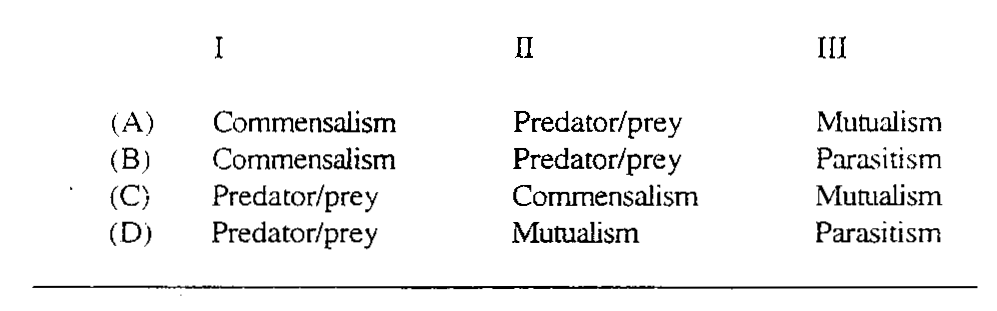
Item 1 refers to relationships between some organisms.
I. Barnacles on a shark's back II. Shark/man III. Man/malaria protozoan
Which of the following groups, I to III, correctly identifies these relation- ships?
Commensalism / Predator/prey / Mutualism
Commensalism / Predator/prey / Parasitism
Predator/prey / Commensalism / Mutualism
Predator/prey / Mutualism / Parasitism
Which of the following statements about a food chain is TRUE?
Energy from the sun is transferred from one organism to subsequent organisms.
Each of its members depends on heat energy obtained directly from the sun.
Energy changes from one type to another, that is, from heat to light to chemical.
The sun traps light energy at the start of the food chain.
Which of the following statements is NOT true about decomposers?
They release nutrients for recycling.
They prevent the accumulation of dead organic matter.
They are more abundant in damp places.
They are favoured by low tempera- tures.
Which of the following factors is NOT indi- cated by the direction of the arrows in a food chain?
The direction of the flow of energy.
The amount of food each animal eats.
The fact that plants start every food chain.
The animals that are predators.
A dog, killed on the roadway by a vehicle, is left to decay. Which of the following organ- isms would be directly responsible for return- ing the carbon and nitrogen compounds of the dog's body to the environment?
Saprophytic fungi
Flesh-eating beetles
Maggots (fly larvae)
Vultures (corbeaux/John Crow)
'Spaces' between the cells in the human body are filled with
tissue fluid
blood
serum
plasma fluid
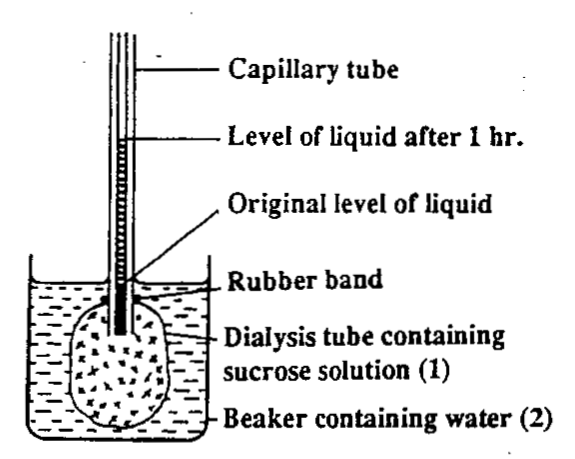
solute molecules from 1 to 2
solute molecules from 2 to 1
water molecules from 1 to 2
water molecules from 2 to 1
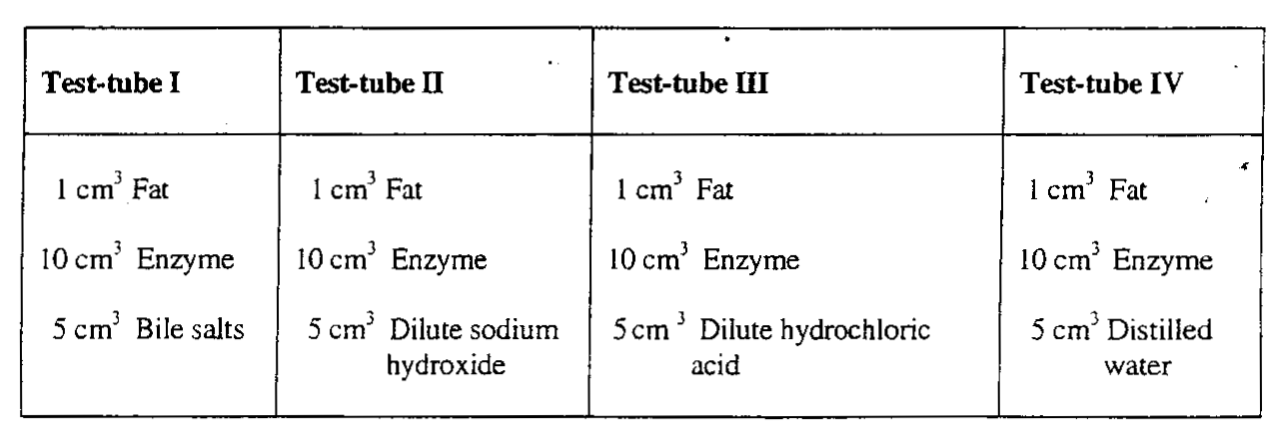
Items 8-9 refer to the following table which shows how four tubes were set up to investigate the conditions for digestion of a fat.
Which of the following variables is being investigated?
pH
Temperature
Enzyme concentration
Fat particle size
Which of the following types of chemical reaction is likely to have taken place?
Hydrolysis
Oxidation
Glycolysis
Reduction
The variation in cellular structure found in any complex organism is due to a process called
growth
elaboration
metabolism
specialisation
One of the problems with nutrition for a vegetarian is that
fats and oils are not produced by plants
large quantities of food are needed to supply essential amino acids
vitamins produced by plants are of inferior quality
large quantities of food are needed to supply essential mineral nutrients
The rate at which respiration is occurring in a mammal can be indicated by the rate of
sweat production
urine excretion
carbon dioxide elimination
oxygen elimination
Item 13 refers to the following characteristics.
I. Thin walled surfaces II. Excellent blood supply III. Always moist IV. Large surface area
Characteristics I to IV describe structures that are MOST likely to be associated with the
diffusion of gases
production of energy
movement of water
transport of digested food
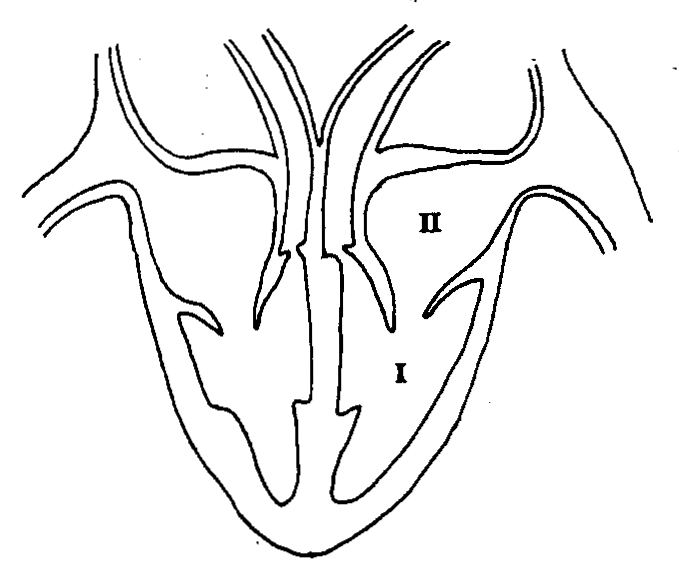
In a patient with a certain defective heart condition, it was found that blood flowed from Point I to Point II. This was MOST likely due to the malfunction of the
left atrium
left ventricle
semi-lunar valve
bicuspid valve
Large organisms cannot depend solely on diffusion for the uptake and transport of gases. This is because as organisms get larger the
surface area to volume ratio increases
surface area to volume ratio decreases
surface area and the volume both increase
surface area and the volume both decrease
Which of the following nutrients supplies most energy per gram?
Glucose
Starch
Protein
Fat
Which of the following substances can be found in high proportion in the nucleus?
ATP
ADP
AZT
DNA
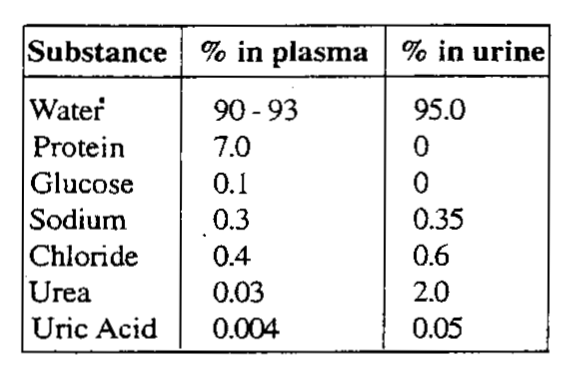
Item 18 refers to the following table which shows approximate concentrations of some substances in the blood plasma and urine of a healthy man.
| Substance | % in plasma | % in urine |
|---|---|---|
| Water | 90 - 93 | 95.0 |
| Protein | 7.0 | 0 |
| Glucose | 0.1 | 0 |
| Sodium | 0.3 | 0.35 |
| Chloride | 0.4 | 0.6 |
| Urea | 0.03 | 2.0 |
| Uric Acid | 0.004 | 0.05 |
From the table above, determine which of the following statements is NOT true?
All the organic food is retained in the blood.
Uric acid is more concentrated in blood than in urine.
Water and salts are more concentrated in urine than in blood.
Urea is more concentrated in urine than in blood.
The normal function of the mammalian kidney is
deamination
storage of mineral salts
conversion of glucose to glycogen
removal of excess mineral salts
The reactants in aerobic respiration are
water and carbon dioxide
water and oxygen
glucose and oxygen
glucose and carbon dioxide
The alveoli of the lungs of a mammal
keep the lungs filled to capacity with air at all times
serve to increase the absorptive surface of the lungs
are filled with oxygen to keep the lungs in an expanded state
pervent the lungs from collapsing
Blood entering the glomerulus of the kidney differs from blood leaving it, since the blood entering has
more oxygen, more urea and more glucose
more oxygen, less urea and more glucose
less oxygen, more urea and less glucose
less oxygen, less urea and less glucose
Bones act as storage depots for minerals in the body. The MOST important of the minerals they store are
calcium and phosphorus
calcium and potassium
phosphorus and sodium
sodium and potassium
Which of the following groups of functions is performed by a rib? I. Blood formation II. Protection III. Locomotion IV. Support
I and II only
I and IV only
II and III only
I, II and IV only
The MAIN function of cartilage at the end of long bones is to
lubricate joints
increase flexibility
reduce friction
protect nerves
Which of the following statements would NOT represent a form of excretion in plants?
Gases diffusing through stomata
Tannins being stored in dead tissue
Water vapour diffusing through the epidermis
Stored calcium oxalate crystals in leaves during leaf fall
The primary function of the neural spine of the lumbar vertebra is for
attachment of muscles
support of adjacent vertebrae
protection of the spinal cord
movement of bones
The eye is sometimes referred to as an effector organ because
the rods and cones are stimulated by light
the pupil constricts in the presence of bright light
images which fall on the retina are sent to the brain
neurones from the eye lead to the central nervous system
Insulin (a protein) is never taken orally because it
is broken down by pepsin
inhibits the action of salivary amylase
is inactivated by bile salts
takes too long to be absorbed into the blood
Which of the following conditions are necessary for germination to take place? I. Air II. Food supply III. Light IV. Moisture
I and II only
III and IV only
I, II and IV only
II, III and IV only
Which of the following conditions MOST directly controls increase in size in the flowering plant?
Light intensity
Auxin concentration
Carbon dioxide concentration
Oxygen concentration
Which of the following features is NOT a function of human skin?
Excretion
Sensory perception
Temperature regulation
Vitamin B-formation
Internal reflection of light within the eye is prevented by the
lens
retina
choroid layer
sclerotic layer
If an object is thrown towards you, your eyes blink. The receptors and effectors for this reflex action are the
retina and the eyelid muscles
retina and the ciliary muscles
pupil and the eyelid muscles
pupil and the ciliary muscles
Which of the following conditions is likely to promote a lowering of body temperature?
Increase in the metabolic rate
Raising of the hairs on the skin
Dilation of blood vessels just under the skin
Decrease in the evaporation of sweat
A seedling illuminated from one side, bends towards the light source because the concentration of auxins becomes
greater on the side away from the light
greater on the side towards the light
the same on both sides
greatest at the tip of the shoot
When an athlete runs a long-distance race, which of the following changes would you expect to take place in his/her body?
An increase in the breakdown of maltose in the intestines
A drop in the level of glycogen in the liver
Constriction of the veins in the legs
Dilation of the blood vessels to the gut
Which of the following sequence of structures shows the route taken by a sperm cell when it leaves the testis?
Epididymis → sperm duct → urethra
Sperm duct → urethra → epididymis
Epididymis → urethra → sperm duct
Urethra → sperm duct → epididymis
Which of the following features are examples of homeostasis in mammals? I. Control of the blood sugar level by insulin II. Limiting temperature changes to slight fluctuations III. Differences in the level of female hormones during the menstrual cycle IV. Changes in the rate of breathing to suit the body's activities
I and IV only
II and III only
I, II and IV only
I, III and IV only
Pollination is the process by which pollen is transferred from the
anther to the stigma
stigma to the anther
stamen to the ovary
pistil to the anther
Some plants, such as Bryophyllum (Leaf of Life, Wonder-of-the-world), can be propagated from buds at the leaf margin. The buds develop into complete plantlets while still attached to the leaf margin. These plants also flower and produce seeds. The development of the plantlets and the seed
both take place by mitosis
both take place by meiosis
take place by mitosis for the seed and meiosis for the plantlets
take place by meiosis for the seed and mitosis for the plantlets
Which of the following processes will produce clones? I. The growth of a fungus on a piece of bread II. The development of plantlets at the leaf margins of Bryophyllum III. Propagation of sugar cane from cuttings IV. Germination of seeds from the same pod
I and II only
II and III only
III and IV only
I and IV only
In which of the following organs does meiosis occur?
A developing embryo
The skin of a mammal
The testis of a mammal
The tip of the shoot of a plant
In which of the following parts of the plant would you expect the process of mitosis to occur? In the region
of the phloem
of the xylem
behind the root hair
behind the root tip
Which of the following combinations of sex chromosomes is found in the nuclei of non-reproductive cells of humans?
XY / YY
XX / XY
YY / XY
XY / XX
In a particular breed of dog, long hair (L) is dominant to short hair (Z). A certain cross produced some long-haired and some short-haired pups. Which of the following crosses would MOST likely have been the genotypes of the parents?
LL x LL
LL x ZZ
LZ x ZZ
LL x LZ
Which of the following processes may be used by man to change the characteristics of a particular organism in a short time? I. Genetic engineering II. Artificial selection III. Natural selection
I only
I and III only
II and III only
I, II and III.
The same species of hibiscus plants were grown on two garden plots near to each other. One plot, which was well watered and manured, produced large plants. The other plot contained sandy soil and produced small plants with leaves that were reduced in size. The hibiscus plants
were clones from the same species of hibiscus
showed genetic variation
showed artificial selection
were responding to environmental differences
Pathogens are BEST described as organisms that
cause diseases
transmit diseases
are carried in contaminated food or water
can be seen with a microscope
Which of the following treatments does NOT provide a form of immunisation?
Inoculation with a mild form of the disease
Inoculation with antibodies
Isolation of the infected person
Breast-feeding of the infant
Which of the following statements is TRUE of antigens?
They are produced by white blood cells.
They cause the production of antibodies.
They get rid of antibodies.
They are used to treat diseases.
Which of the following consequences are a direct result of disease in man? I. Loss of man hours and productivity II. Loss of human life III. Loss of livestock and crops
II only
I and II only
II and III only
I, II and III
Water logging of soil results in the death of soil organisms because
bacteria multiply rapidly and crowd them out
water decreases the temperature of the soil
the organisms cannot respire due to a lack of air
nutrients are washed out of the soil
Which of the following factors is NOT associated with rapid increase in human populations?
Faster utilization of natural resources
Greater demands on food resources
Less pollution from household and industries
Less space available for housing
Which of the following features is an advantage of using inorganic fertilizers rather than organic manure?
They help to hold water in the soil.
They improve the crumb structure of soil.
They make nutrients available more quickly.
They do not affect the soil pH.
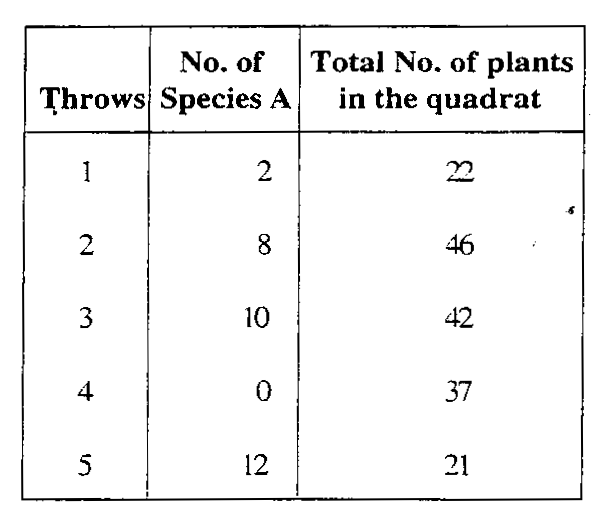
An open field was investigated using metre quadrats. In 5 random throws species A occurred as shown in the table below.
This data can be used to determine
cover only
cover and density
frequency and cover
density and frequency
Items 57-58 relate to the following graphs which show the growth pattern of several populations.
(A) Size of population Time (B) Size of population Time (C) Size of population Time (D) Size of population Time
Match the following statements about the population, to one of the options above. Each option may be used once, more than once, or not at all.
Has a good food supply and is NOT subject to environmental stress.
Has reached its equilibrium and there is a delicate balance between the rate of births and deaths.
Item 59 refers to the following characteristics.
I. Thick hairy leaves II. Concealed stomata III. Deeply penetrating root system
These characteristics MOST likely belong to a plant which grows in a region that is
warm and dry
warm and shady
cool and exposed
cool and wet
All the individuals of a particular species living in a defined area or location are referred to as
a niche
a population
a community
an environment