Free CXC Integrated Science Paper 2 May/June 2005 past paper from 2005. Includes a worked answer key. Open the PDF, take a timed test, and study with AI on Caribbean AI.
Answer keys are free on Caribbean AI. View the answers to every past-paper question at no cost - no payment needed - with step-by-step worked solutions and instant AI marking available on Premium.
CSEC Integrated Science Paper 2 May/June 2005 - Free CXC Past Paper with Answers
Free CXC Integrated Science Paper 2 May/June 2005 past paper from 2005. Includes a worked answer key. Open the PDF, take a timed test, and study with AI on Caribbean AI.
Opening the interactive papers…
Every question from this paper as text. See the answers and worked solutions. Questions are the property of the Caribbean Examinations Council; Caribbean AI is not affiliated with CXC.
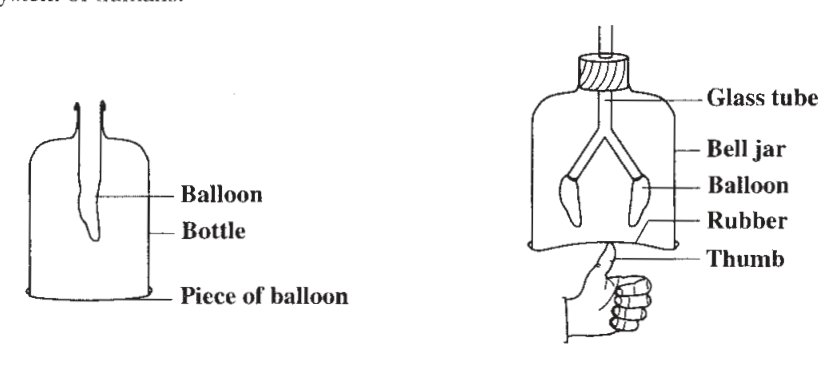
Figure 1 below shows two models A and B that may be used to represent the respiratory system of humans. <br> Figure 1
[15 marks]
Figure 1 below shows two models A and B that may be used to represent the respiratory system of humans.
Which of the models, A or B, BETTER represents the respiratory system of humans?
[1 mark]
Give ONE reason for your answer in (a) (i).
[2 marks]
In Model B, which part of the human respiratory system is represented by the a) balloons b) rubber?
[2 marks]
When the thumb in Model B is removed, the rubber flattens. Would this change the volume of air in the bell jar? Explain your answer.
[2 marks]
Which of the processes (inhalation or exhalation) is exemplified by the bell jar model in Figure 1? Give ONE reason for your answer.
[3 marks]
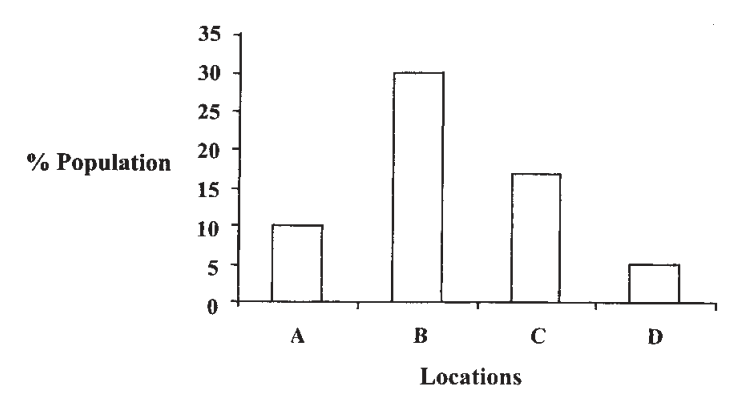
Bronchitis is a disease of the respiratory system that is made worse by environmental pollutants. The graph in Figure 2 shows the percentage of populations at various locations that have severe cases of bronchitis. <br> Figure 2. Graph of percentage population affected by bronchitis
What percentage of the population at location A in Figure 2 has severe bronchitis?
[1 mark]
In which location (A, B, C or D) is the population least affected by severe bronchitis?
[1 mark]
Suggest which location (A, B, C or D) is MOST likely to be near to a large cement plant.
[1 mark]
Give TWO reasons for your answer in (b) (iii).
[2 marks]
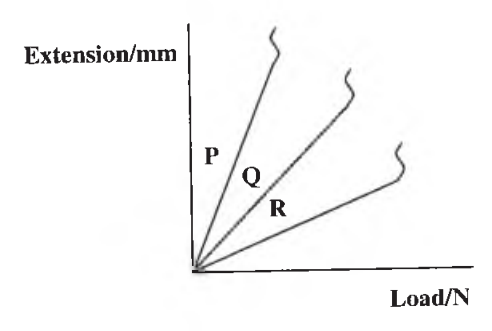
A manufacturer of tennis rackets is given three different samples of a new line of strings (P, Q, and R) which are to be used in his rackets. In order to investigate the strength and elasticity of the strings, he performs tests in which he measures the extension of EACH string when different loads are hung on them. His results are summarised in the graphs in Figure 3. <br> Figure 3
[15 marks]
A manufacturer of tennis rackets is given three different samples of a new line of strings (P, Q, and R) which are to be used in his rackets. In order to investigate the strength and elasticity of the strings, he performs tests in which he measures the extension of EACH string when different loads are hung on them. His results are summarised in the graphs in Figure 3. <br> Figure 3
In setting up the tests mentioned above, what feature of the strings must be controlled?
[1 mark]
What should the experimenter do after removing EACH load during the tests and before reloading?
[1 mark]
Give TWO reasons for the shape of the graph lines in Figure 3.
[2 marks]
Which string (P, Q or R) is able to withstand the GREATEST load and still remain elastic? Explain your answer.
[3 marks]
The manufacturer used two of the strings to make rackets. State, giving ONE reason in EACH case, which string he selected for rackets for players in professional tournaments and rackets for school children. a) String for professional tournaments: Reason: b) String for school children: Reason:
[4 marks]
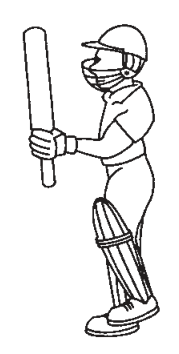
Figure 4 shows a batsman in protective gear: head gear, leather shoes, gloves and pads. <br> Figure 4. A batsman in protective gear
The protective headgear worn by the batsman is made from aluminium coated with fabric. Give TWO properties of aluminium which make it suitable for this purpose.
[2 marks]
The stored leather shoes and gloves of the batsman were covered with mildew (a fungus). Suggest ONE factor which might promote the growth of the mildew.
[1 mark]
How could the batsman have protected his gear to prevent the growth of the mildew?
[1 mark]
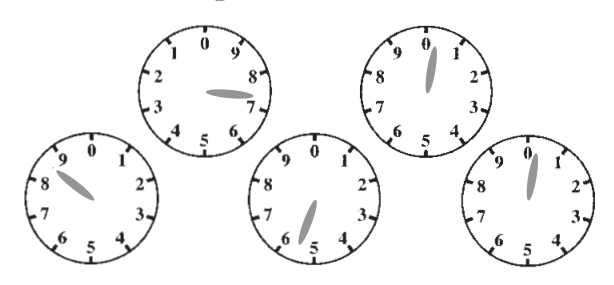
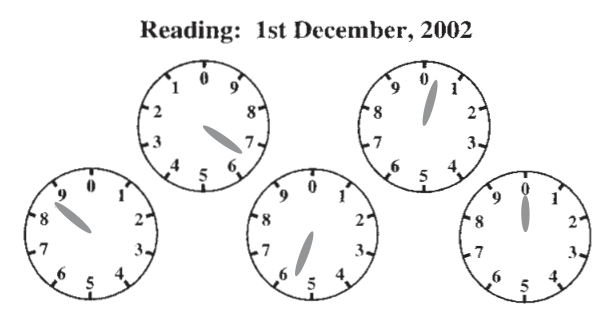
Figure 5 shows metre readings for the month of December 2002. <br> Figure 5. Meter readings
[2 marks]
Read the metres and calculate the amount of electricity used during the month of December 2002. Reading 1: Reading 2: Electricity used: kWh
[2 marks]
The electric company has a fixed fuel charge of $20.00 and an energy charge of 25 cents per kWh. Calculate the cost of the electricity used during the month of December.
[2 marks]
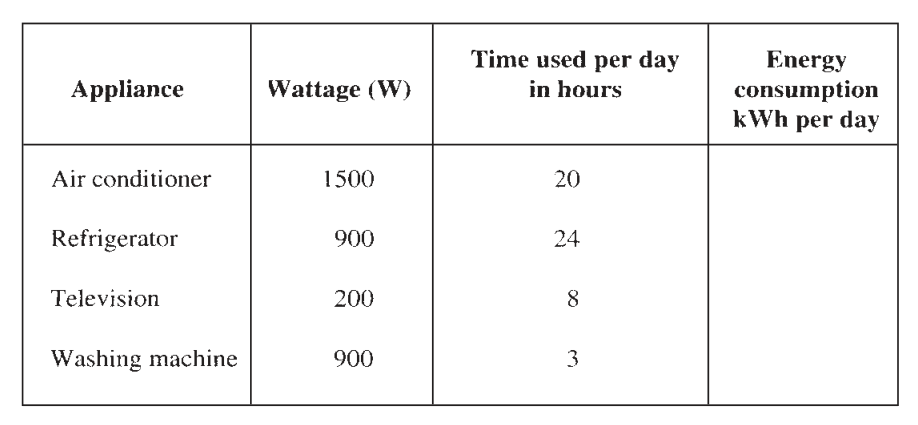
Table 1 shows a list of electrical appliances which are regularly used in a home.
TABLE 1. ENERGY CONSUMPTION IN A HOME
| Appliance | Wattage (W) | Time used per day in hours | Energy consumption kWh per day |
|---|---|---|---|
| Air conditioner | 1500 | 20 | |
| Refrigerator | 900 | 24 | |
| Television | 200 | 8 | |
| Washing machine | 900 | 3 |
[4 marks]
Calculate the daily energy consumption of the appliances in Table 1.
[2 marks]
State TWO measures the family, living in the home to which Table 1 refers, can take to consume less electricity.
[2 marks]
If fuses are not installed in the electrical wiring of houses, a fire can occur.
[7 marks]
What is a fuse?
[1 mark]
How does a fuse protect an appliance such as a hairdryer?
[2 marks]
Explain why water should NOT be used to put out an electrical fire.
[2 marks]
State TWO ways in which an electrical fire may be put out.
[2 marks]
SECTION B You should attempt ALL THREE questions.
In a particular area, the water supply has become contaminated. Why should all drinking water from this area be boiled before use?
[5 marks]
In a particular area, the water supply has become contaminated. Why should all drinking water from this area be boiled before use?
[1 mark]
Is it necessary to boil water which is being used to make ice? Give ONE reason for your answer.
[2 marks]
State ONE way in which pure water leaving a water treatment plant could become contaminated before reaching the faucet in a home.
[1 mark]
Name ONE disease to which individuals may be exposed if they drink contaminated water.
[1 mark]
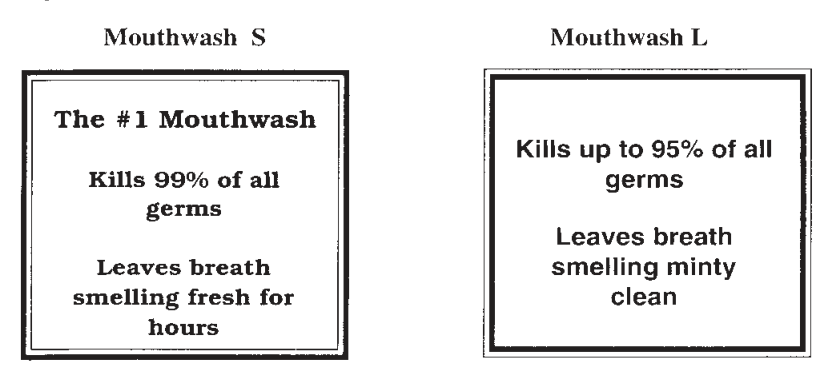
Figure 6 shows information taken from labels of different brands of mouthwash.
The teacher gives a student three agar plates, an incubator and some sterile swabs. He is asked to design and carry out an experiment to compare the effectiveness of the two brands of mouthwash in Figure 6. Agar plates contain nutrients that allow bacteria to grow.
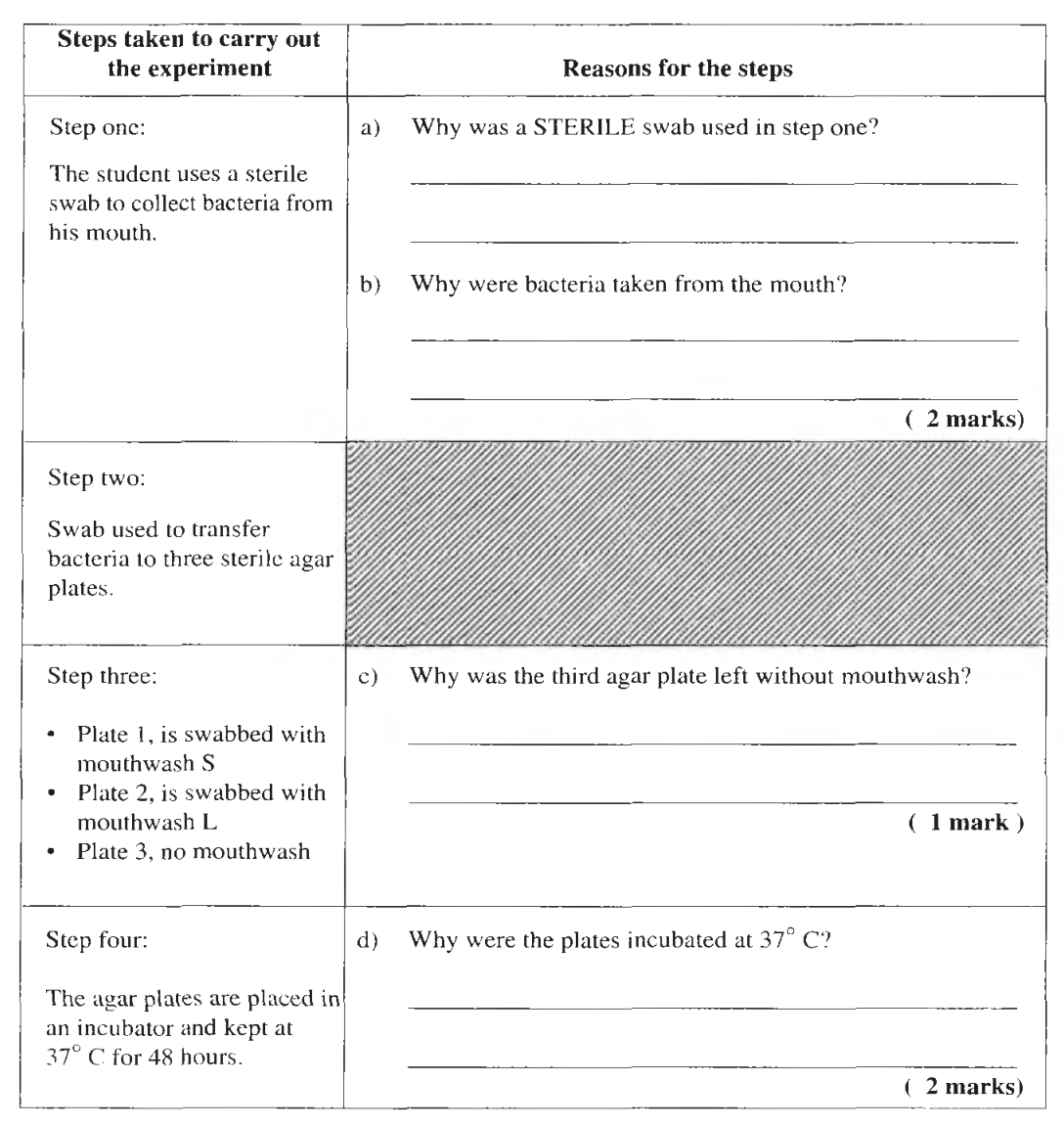
The steps taken to carry out the experiment are recorded in the left column of Table 2 below.
TABLE 2. STEPS OF THE EXPERIMENT
Read all steps in Table 2, then answer the questions in the column on the right.
Why was the third agar plate left without mouthwash?
[1 mark]
Why were the plates incubated at ?
[2 marks]
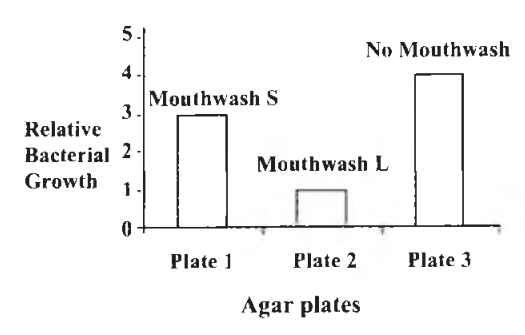
The agar plates are removed from the incubator and the bacterial growth in each plate recorded on a scale of 0 to 4 (no growth represented by 0). The bar graph below shows the results obtained for bacterial growth in the plates 1, 2 and 3.
Figure 7. Comparison of bacterial growth in three agar plates
By referring to the graph in Figure 7, determine in which agar plate there was the most bacterial growth.
[1 mark]
Suggest what accounted for the high growth rate in the agar plate you selected in (b) (iii).
[1 mark]
Which mouthwash is likely to be the most effective? Give ONE reason for your answer.
[2 marks]
Suggest which mouthwash label in Figure 6 on page 9 presents the MORE accurate claim.
[1 mark]
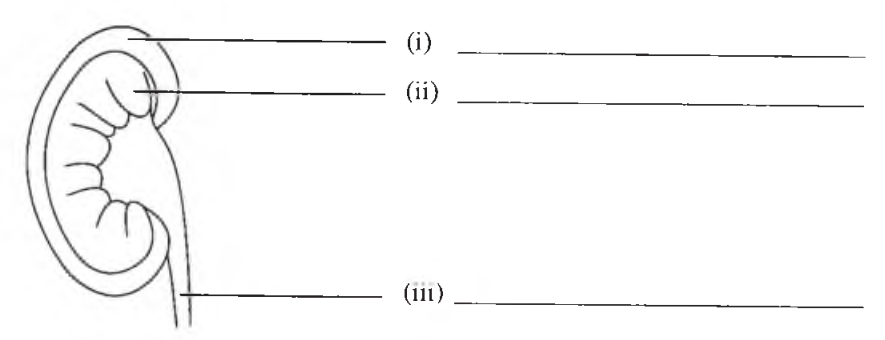
Figure 8 is a diagram of a section through Peter's kidney.
Label structures (i), (ii) and (iii) in Figure 8.
Figure 8. Peter's kidney
[3 marks]
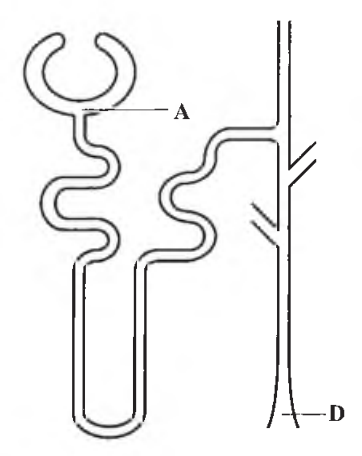
Figure 9 is a diagram of a nephron from the kidney in Figure 8.
After the intake of a meal that is high in protein, would the amount of urea that passes point D in Figure 9 increase or decrease?
[1 mark]
Explain your answer to (b) (i) a).
[2 marks]
Suggest ONE possible reason for the presence of glucose at D in Figure 9.
[2 marks]
Explain why glucose will also be found in Peter's bladder if it is found to be present at point D in Figure 9.
[1 mark]
If glucose is detected in Peter's bladder, what effect might this loss of glucose have on his ability to carry out his daily activities? Explain your answer.
[3 marks]
Suggest why Peter drinks a glass of glucose and water after jogging around the football field.
[2 marks]
Name the hormone which is responsible for lowering the glucose level in the blood.
[1 mark]
Detecting and analysing the paths of 'fronts' is important for predicting the weather.
[9 marks]
What is a 'front'?
[1 mark]
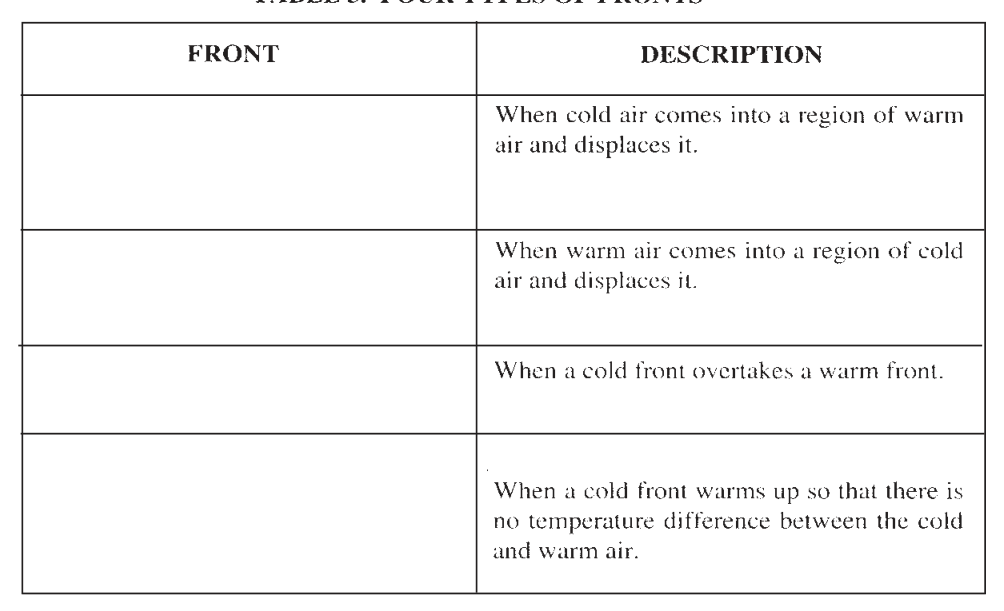
Four types of fronts are described in Table 3 (occluded, stationary, warm and cold fronts). Complete the table by writing the correct type of front in the empty cell, next to its proper description.
TABLE 3. FOUR TYPES OF FRONTS
| FRONT | DESCRIPTION |
|---|---|
| When cold air comes into a region of warm air and displaces it. | |
| When warm air comes into a region of cold air and displaces it. | |
| When a cold front overtakes a warm front. | |
| When a cold front warms up so that there is no temperature difference between the cold and warm air. |
[4 marks]
A cold front is passing through the Caribbean and a warm front is passing over the U.S.A. Predict the weather in these two areas.
The Caribbean: The U.S.A.:
[4 marks]
What is the difference between high tide and low tide?
[2 marks]
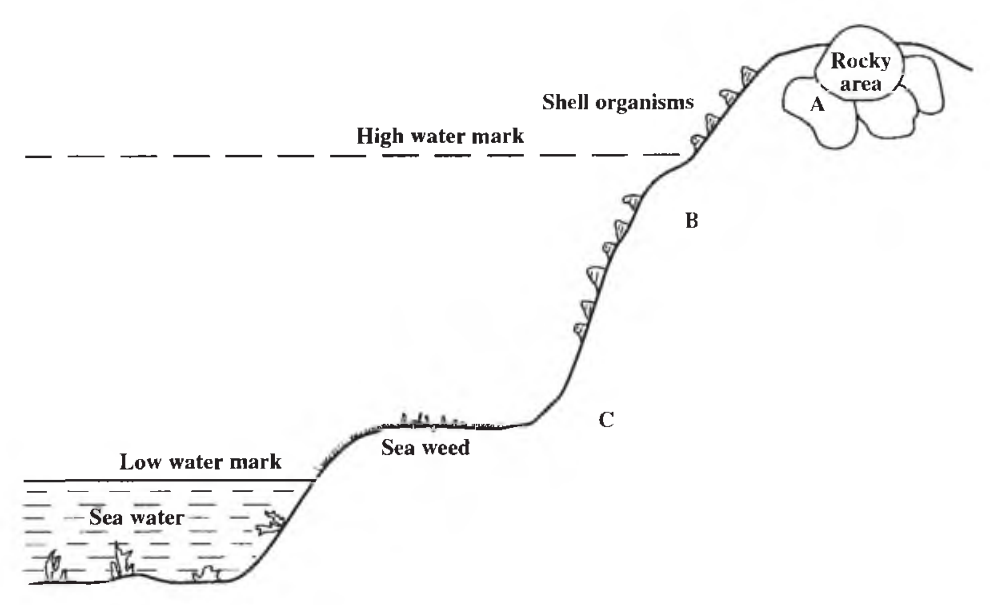
Figure 10 is a picture of a rocky sea shore. Shelled organisms, for example snails, are found in regions A and B, while mainly sea weeds are found in region C.
[1 mark]
Explain why the shelled animals are more likely to be found in areas A and B of the seashore shown in Figure 10.
[2 marks]
Organisms living in region B, in Figure 10, usually have features which allow them to cling to the rocks. Why are these features necessary?
[1 mark]
Name ONE organism, other than snails, that is likely to be found in region B in Figure 10.
[1 mark]