Free CXC Integrated Science Paper 2 May/June 2007 past paper from 2007. Includes a worked answer key. Open the PDF, take a timed test, and study with AI on Caribbean AI.
Answer keys are free on Caribbean AI. View the answers to every past-paper question at no cost - no payment needed - with step-by-step worked solutions and instant AI marking available on Premium.
CSEC Integrated Science Paper 2 May/June 2007 - Free CXC Past Paper with Answers
Free CXC Integrated Science Paper 2 May/June 2007 past paper from 2007. Includes a worked answer key. Open the PDF, take a timed test, and study with AI on Caribbean AI.
Opening the interactive papers…
Every question from this paper as text. See the answers and worked solutions. Questions are the property of the Caribbean Examinations Council; Caribbean AI is not affiliated with CXC.
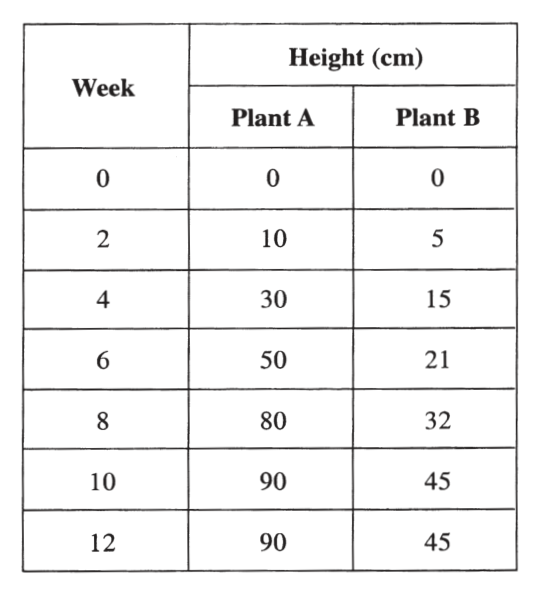
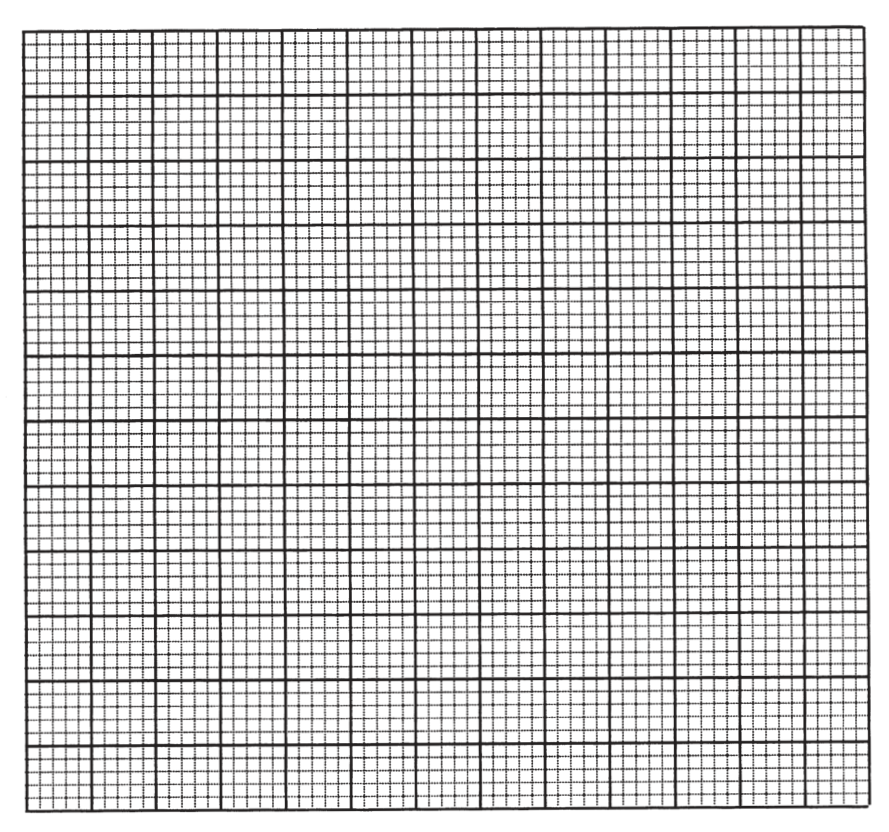
Using the data in Table 1 and the same axes on the grid provided in Figure 1, plot TWO graphs to compare the increase in height of the two bean plants over the twelve-week period.
[5 marks]
Write an appropriate title above your graph in Figure 1.
[1 mark]
After how many weeks did Plant B stop increasing in height?
[1 mark]
Which of the two plants shows the faster rate of growth?
[1 mark]
State TWO conditions that might cause the faster rate of growth in the plant selected in (b) (ii) above.
[2 marks]
How would ONE of the conditions you mentioned in (b) (iii) above cause an increase in the rate of growth?
[1 mark]
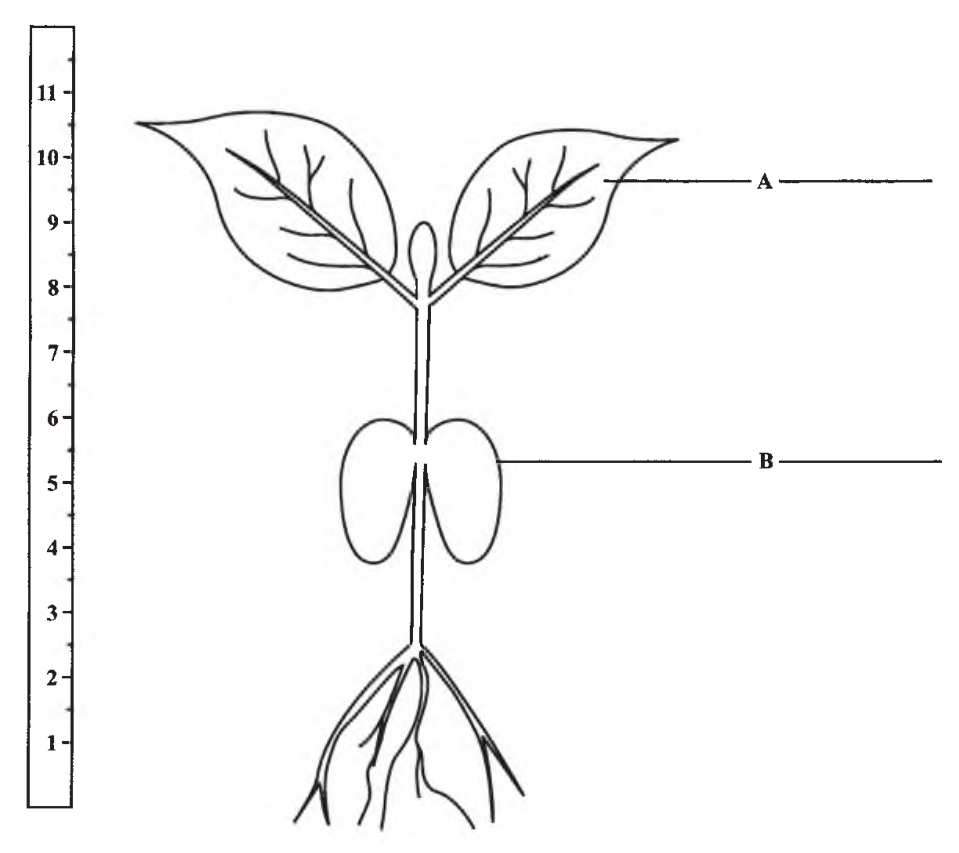
Figure 2 is a diagram of a bean seedling.
Label Parts A and B on the diagram.
[2 marks]
Label Parts A and B on the diagram.
[2 marks]
Using the ruler at the left side of the diagram in Figure 2, measure and record the length of the stem.
Length of stem:
[2 marks]
Name the TWO water-safety devices which make it easier for a person to float in the sea or in the pool.
[2 marks]
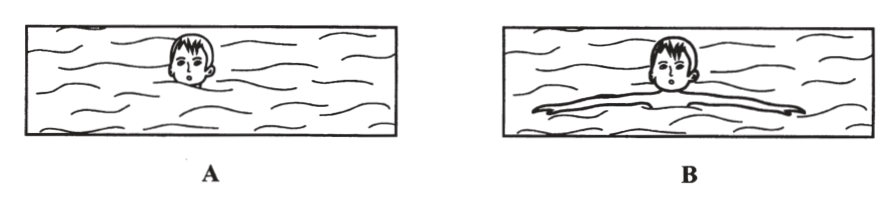
The pictures, A and B, in Figure 3 show a learner floating in two different types of water.
In which picture, A or B, in Figure 3, is the learner floating in sea water?
[1 mark]
Give ONE reason for your answer in (b) (i) above.
[1 mark]
Swimming is an aerobic activity. What does 'aerobic' mean?
[1 mark]
During a competition meet, two swimmers were disqualified for using unethical performance enhancement techniques. One of these techniques was blood boosting
During a competition meet, two swimmers were disqualified for using unethical performance enhancement techniques. One of these techniques was blood boosting.
Name ONE other technique used for performance enhancement.
[1 mark]
Explain how ANY ONE of the techniques in (d) above could increase the performance of the swimmers.
[2 marks]
Why are the techniques considered to be unethical?
[1 mark]
Suggest to the swimmers TWO ways in which they can improve their performance without using unethical techniques.
[2 marks]
Name ONE food nutrient which should be part of the swimmer's diet.
[1 mark]
Give ONE reason for your answer in (d) (v) above.
[1 mark]
The swimmers are advised not to eat a heavy meal before a race.
Explain why this advice is given.
[2 marks]
What is a 'hormone'?
[1 mark]
Give TWO examples of hormones.
[2 marks]
Joseph, a male patient, and Karen, a female patient, are consulting a doctor for problems which they are having with their endocrine systems. Joseph's urine is tested for the presence of glucose. The result is positive. Karen is 18 years old but has not yet developed breasts and has not yet had a menstrual period.
For EACH patient, state which secretory/endocrine organ has malfunctioned and is causing the symptom(s). Explain why each patient is experiencing the particular symptom(s).
Joseph's malfunctioning organ is his Reason for symptoms:
Karen's malfunctioning organ is her Reason for symptoms:
[3 marks]
To control his symptoms, Joseph must decrease the intake of ONE food nutrient.
Suggest which food nutrient must be decreased.
[1 mark]
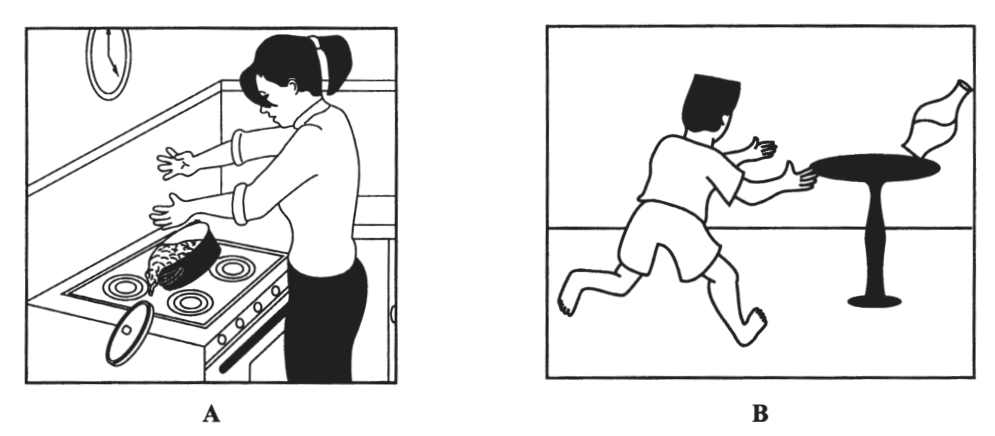
Figure 4 shows two responses of the nervous system.
What is a 'reflex action'?
[1 mark]
In which of the pictures, A or B, in Figure 4 is a reflex action MOST likely occurring?
[1 mark]
Give ONE reason for your choice in (c) (ii).
[2 marks]
Name the sense organ being used in the response at B in Figure 4.
[1 mark]
You should answer ALL THREE questions. (Suggested time: 60 minutes)
You are advised to spend about 20 minutes on EACH question.
[15 marks]
State TWO chemical and TWO physical properties of water.
Chemical properties:
Physical properties:
Name TWO processes which the local water company uses to purify the water to ensure that clean water reaches the homes.
Process 1:
Process 2:
[4 marks]
Name TWO processes which the local water company uses to purify the water to ensure that clean water reaches the homes.
Process 1: Process 2:
[2 marks]
How does EACH process mentioned in (b) (i) help to purify the water?
Process 1:
Process 2:
[2 marks]
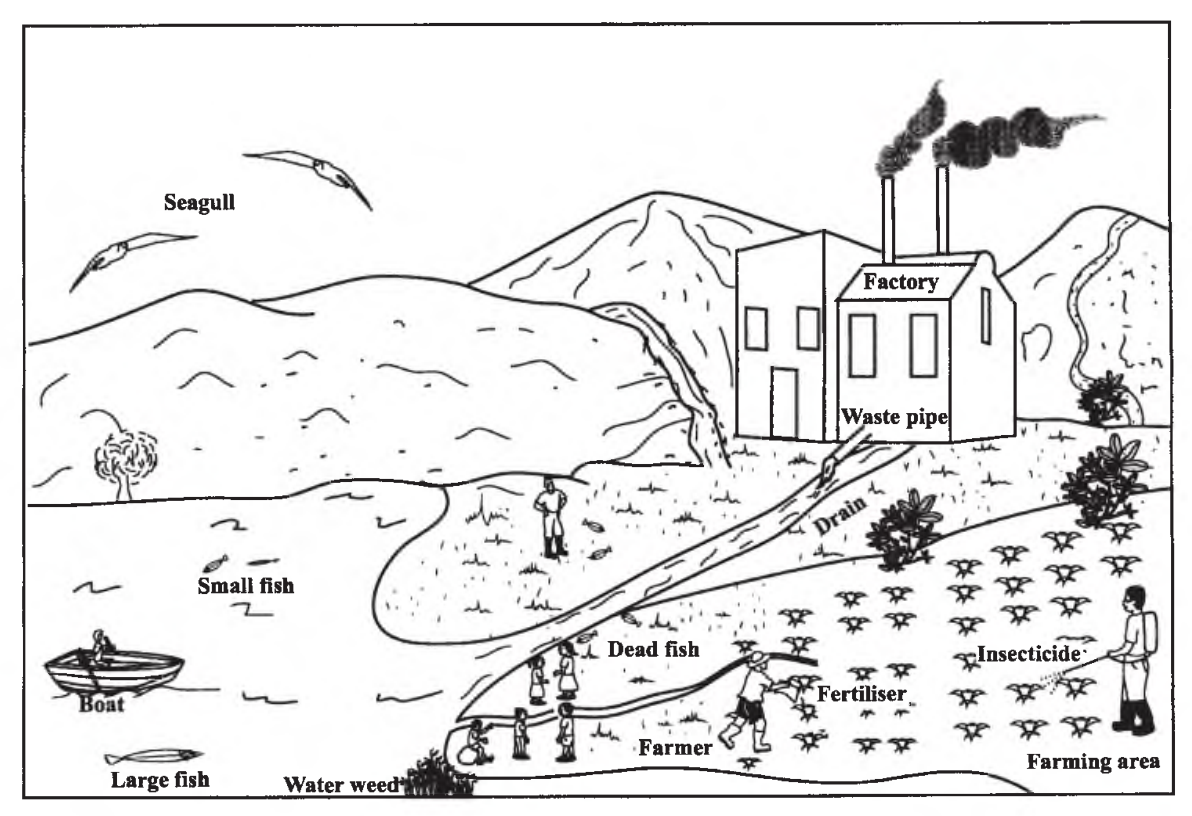
Figure 5 shows a section of a riverside. Beside it is a small farming area and a factory. The farmers often find dead fish near the river bank.
[7 marks]
Use FOUR of the organisms shown in Figure 5 to draw a food chain.
[2 marks]
Identify ONE activity on the farm shown in Figure 5 that could have a negative effect on the river.
[1 mark]
How does the activity mentioned in (c) (ii) above result in the negative effect?
[1 mark]
Identify ONE activity of the factory shown in Figure 5 that could have a negative effect on the river.
[1 mark]
How does the activity mentioned in (c) (iv) above result in the negative effect?
[1 mark]
Why should the dead fish NOT be collected and sold?
[1 mark]
A bimetallic strip and a frame are presented in Figure 6. The bimetallic strip is made of two different metals, A and B, riveted together. When the bimetallic strip is heated, A expands more than B.
In the frame provided in Figure 6, draw what the strip would look like when heated. Label A and B on your diagram.
[2 marks]
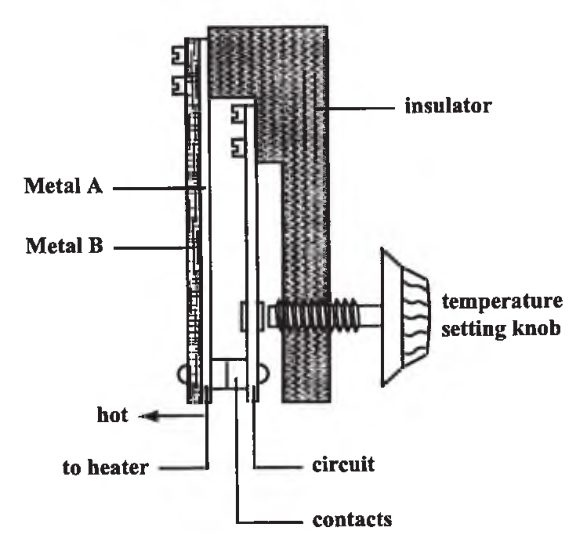
A bi-metallic strip is used in the thermostat of an electric iron as shown in Figure 7. Metal A expands more than Metal B for the same change in temperature.
[4 marks]
What is a 'thermostat'?
[1 mark]
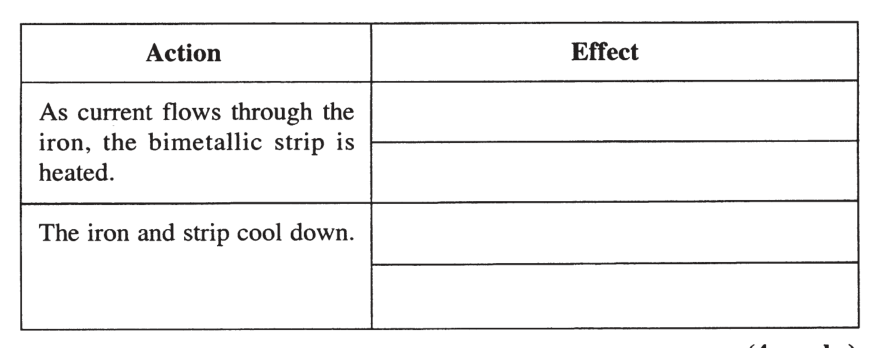
Table 2 presents two stages explaining how the thermostat shown in Figure 7 works.
Complete Table 2 by writing the effect of EACH action indicated on the flow of electric current through the iron.
TABLE 2: HOW THE THERMOSTAT WORKS
| Action | Effect |
|---|---|
| As current flows through the iron, the bimetallic strip is heated. | |
| The iron and strip cool down. |
[4 marks]
The hot iron is placed on a metal rest at one end of the ironing board and the metal becomes hot.
Suggest the method by which heat is transferred from the iron to the metal rest.
Method of transfer:
[1 mark]
The wax of an unlit candle standing near, but not touching the hot iron or metal rest, becomes soft.
Suggest the method by which heat is transferred from the iron to the candle wax.
Method of transfer:
[1 mark]
What is meant by 'ventilation'?
[2 marks]
During the rainy season, a family keeps all of their windows and doors closed for several days, resulting in poor ventilation of the house. The inside of the house has been recently painted.
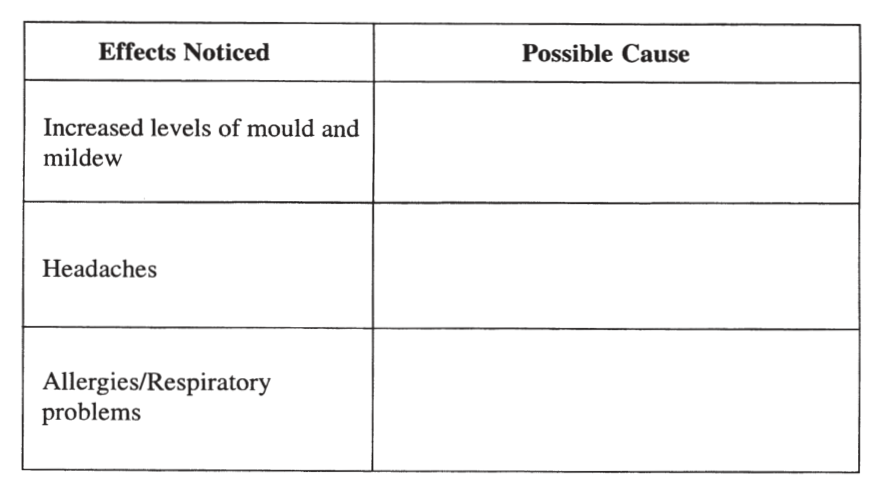
Some of the negative effects they experienced are indicated in Table 3.
Complete Table 3 to show the specific cause of EACH effect of poor ventilation.
TABLE 3: EFFECT AND CAUSE OF EFFECT
| Effects Noticed | Possible Cause |
|---|---|
| Increased levels of mould and mildew | |
| Headaches | |
| Allergies/Respiratory problems |
[3 marks]
State ONE way in which the ventilation in the room might be improved.
[1 mark]
What is a 'force'?
[1 mark]
Define EACH of the following:
Gravitational force
[1 mark]
Frictional force
[1 mark]
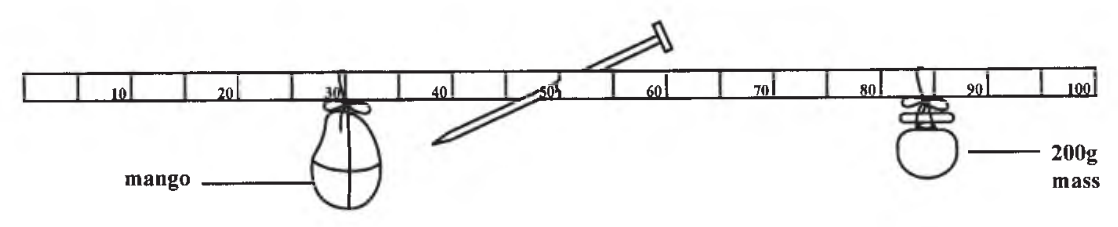
A student wishes to find the mass of a mango but there is no balance available. Her friend tells her that she could use the pieces of apparatus listed below to find the mass.
Explain how the student might use the pieces of apparatus as set up in Figure 8 to find the mass of the mango.
[4 marks]
How could the student use the results from (c) (i) above to find the mass of the mango?
[2 marks]
What is a 'machine'?
[1 mark]
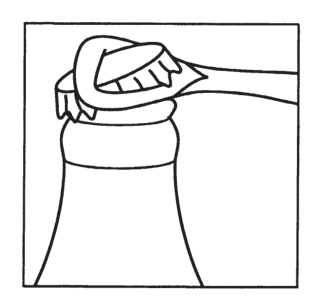
The bottle opener in Figure 9 is a machine used in everyday life.
Label Figure 9 to show the effort force (E), the fulcrum (F), and the load (L).
[3 marks]
Why is the bottle opener, used as shown in Figure 9, considered to be a machine?
[2 marks]