Free CXC Integrated Science Paper 2 May/June 2008 past paper from 2008. Includes a worked answer key. Open the PDF, take a timed test, and study with AI on Caribbean AI.
Answer keys are free on Caribbean AI. View the answers to every past-paper question at no cost - no payment needed - with step-by-step worked solutions and instant AI marking available on Premium.
CSEC Integrated Science Paper 2 May/June 2008 - Free CXC Past Paper with Answers
Free CXC Integrated Science Paper 2 May/June 2008 past paper from 2008. Includes a worked answer key. Open the PDF, take a timed test, and study with AI on Caribbean AI.
Opening the interactive papers…
Every question from this paper as text. See the answers and worked solutions. Questions are the property of the Caribbean Examinations Council; Caribbean AI is not affiliated with CXC.
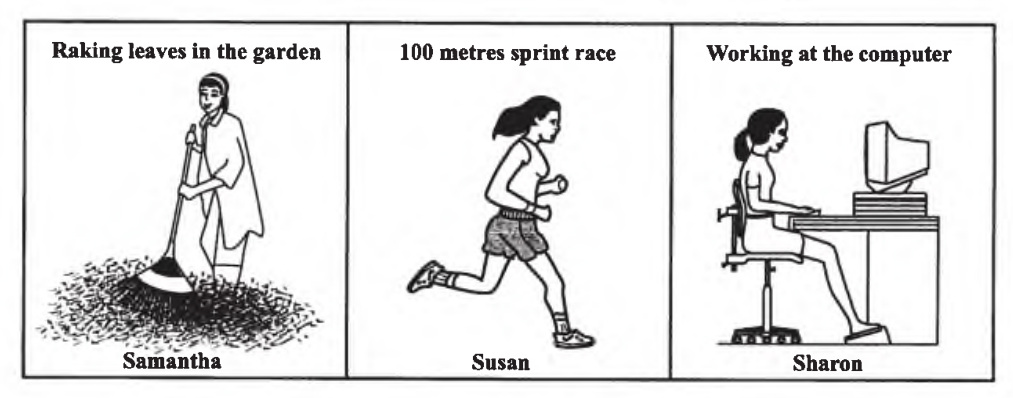
Three individuals, Samantha, Susan and Sharon, often carry out the activities depicted in Figure 1. Study Figure 1 and answer the questions which follow.
Figure 1. Working and sporting activities
[15 marks]
In the space provided below, sequence the individuals in order of the energy required by the individual's body when performing the activity depicted in Figure 1 for the same duration.
Most energy required _________________________ Least energy required Individuals: _________________________ _________________________
[2 marks]
In which activity in Figure 1 would the individual have the highest breathing rate?
[1 mark]
Describe the chest movement expected during the activity to indicate the difference in breathing rate of EACH individual in Figure 1. Refer to the structures of the respiratory system in your response.
Samantha: Breathing rate – Chest movement –
Susan: Breathing rate – Chest movement –
Sharon: Breathing rate – Chest movement –
[2 marks]
State ONE difference between 'aerobic' and 'anaerobic' respiration.
[1 mark]
In which activity in Figure 1 does anaerobic respiration play a significant role?
[1 mark]
Why might anaerobic respiration be necessary for this activity?
[1 mark]
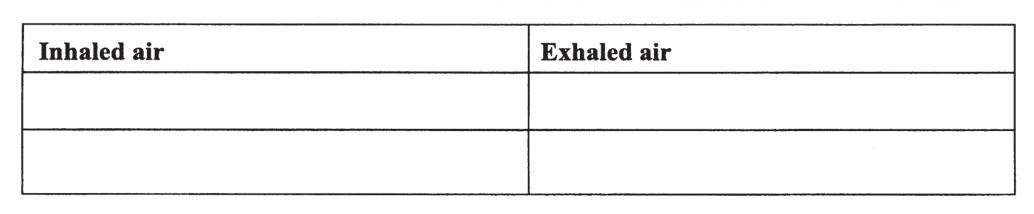
In Table 1, insert TWO likely differences between the air inhaled and exhaled by Susan during her activity shown in Figure 1.
TABLE 1. DIFFERENCES BETWEEN SUSAN’S INHALED AND EXHALED AIR
| Inhaled air | Exhaled air |
|---|---|
[2 marks]
With reference to Susan's activity, give a reason for ONE difference in the inhaled and exhaled air.
Reason:
[1 mark]
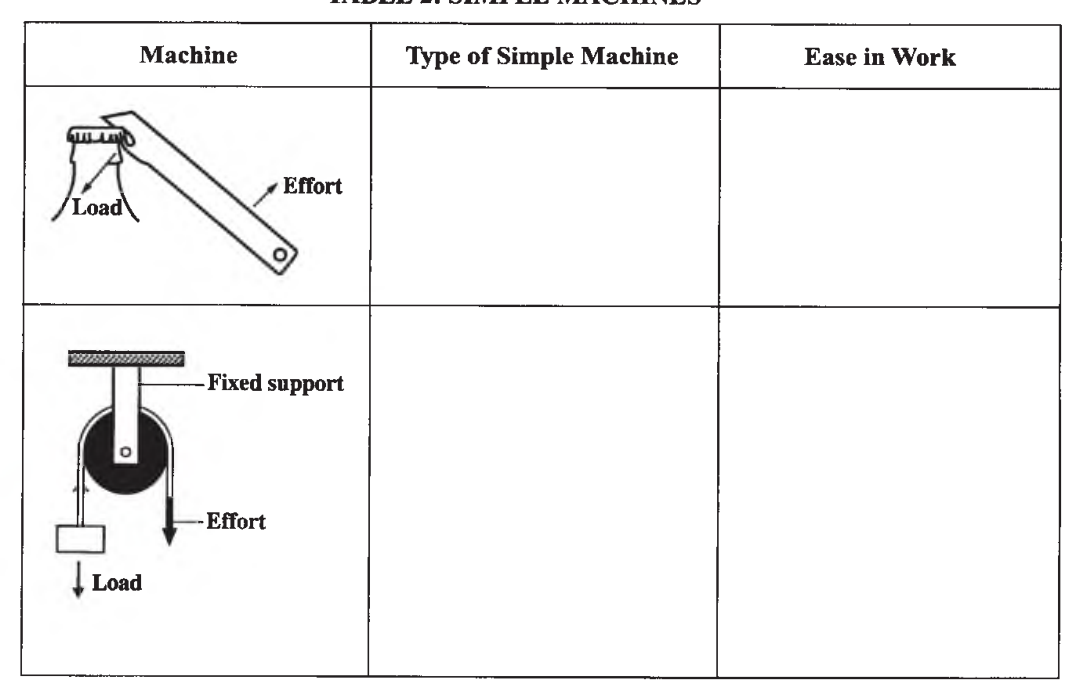
Table 2 refers to simple machines. Complete Table 2 by describing the machine as a pulley, lever or inclined plane and state how the machine makes work easier.
TABLE 2: SIMPLE MACHINES
| Machine | Type of Simple Machine | Ease in Work |
|---|---|---|
[4 marks]
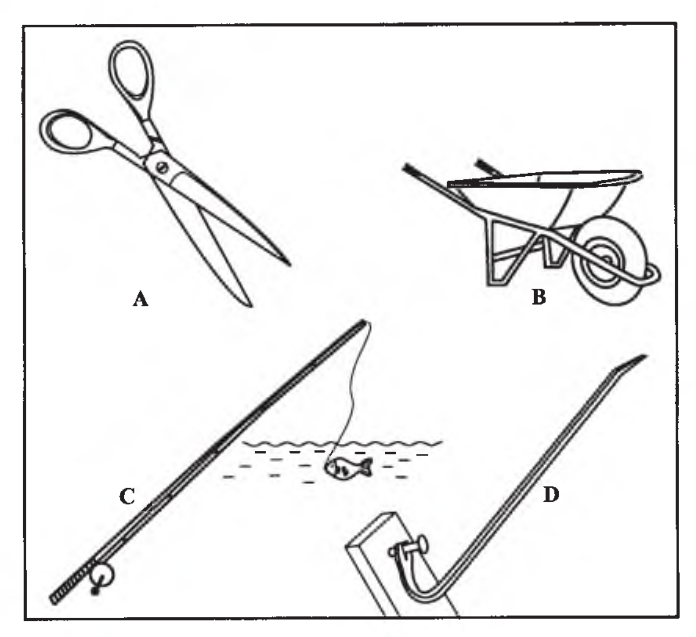
Figure 2 shows four different classes of levers labelled A, B, C and D. Study Figure 2 and answer the questions which follow:
Figure 2. Different classes of levers
Which lever is
Label lever D in Figure 2 to show the positions of the fulcrum (F), effort (E) and load (L).
[1 mark]
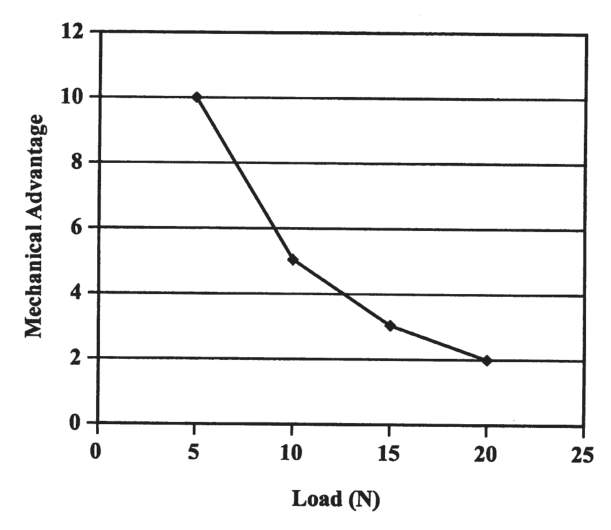
Figure 3 is a graph showing the performance of a simple machine. The mechanical advantage of the machine was measured for different loads. Study Figure 3 and answer the questions which follow.
Figure 3. Graph showing mechanical advantage versus different loads
From Figure 3, estimate the mechanical advantage for a load of 5N.
[1 mark]
Calculate the effort applied for the load of 5 N.
[1 mark]
Describe the trend shown by the graph in Figure 3.
[2 marks]
Suggest a reason for this trend.
[1 mark]
Poor maintenance practices may cause damage to machines and affect their efficiency. For the situation described below, suggest the effect on the machine and on its function.
Maya used a pair of scissors and forgot them by the sink in the kitchen.
Effect on scissors:
[2 marks]
Effect on function of scissors:
[2 marks]
People in a Caribbean country awoke to loud rumblings and saw red hot lava being emitted into the air.
What natural disaster could have caused this?
[1 mark]
What is lava?
[2 marks]
Many persons migrated from the area where the lava was emitted. Suggest TWO possible reasons for this migration. (i) (ii)
[2 marks]
State TWO precautions that the residents may adopt to protect themselves. (i) (ii)
[2 marks]
Meteorologists in surrounding Caribbean islands have indicated that the dust present in the air of their countries came from the nearby natural disaster. Describe how this could have happened.
[2 marks]
Suggest TWO ways in which the natural disaster can economically benefit the country in the long term. (i) (ii)
[2 marks]
List TWO other natural disasters that have affected the Caribbean.
[2 marks]
List TWO features or environmental impacts of ONE of the natural disasters listed in (g) above.
[2 marks]
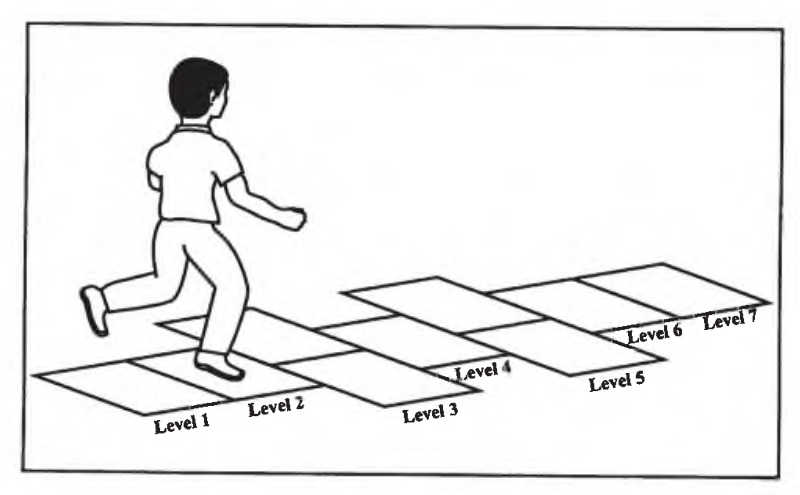
Figure 4 shows Jerry playing a hop-scotch game. This game requires Jerry to place only one foot in a box where there is one box and one foot in each of two boxes when there are two boxes at the same level.
[15 marks]
Describe the role of EACH of the structures below in assisting Jerry to sucessfully jump from Levels 1 to 7 indicated in Figure 4. (i) Brain: (ii) Eyes: (iii) Muscles: (iv) Semi-circular canals:
[8 marks]
(i) At which level(s) of the game is Jerry likely to be MOST stable? (ii) Give a reason for your answer in (b)(i) above.
[2 marks]
When Jerry heard the barking of dogs he ran from Level 3 to Level 7 and away from the game. (i) Which hormone was likely to have enabled this response? (ii) Describe TWO possible effects of the hormone in (c)(i) above on Jerry's body.
[3 marks]
Which hormone (i) will promote the development of facial hair as Jerry matures? (ii) is necessary to control the amount of glucose in Jerry's blood?
[2 marks]
A marine biologist identified the following organisms in a river flowing through a village: large fish, small animals and larvae, algae and small plants, and small fish.
[7 marks]
Draw a food chain showing the feeding relationships among all of the organisms identified above.
[2 marks]
Which of the organisms listed in (a) above can be identified as producers?
[1 mark]
Some chemicals from a nearby factory accidentally entered the river and killed the small animals and larvae. State TWO effects this would have on the organisms in the river.
[2 marks]
What are TWO methods that can be used by the villagers to catch fish in the river?
[2 marks]
Could the same method of fishing used by the villagers in the river, be used by fishermen in the deep sea?
[3 marks]
Provide TWO reasons for your answer in (e)(i) above.
[2 marks]
John, a young villager, caught two live, small fishes and placed them in a bottle and covered it.
[2 marks]
What will happen to the fish after a while?
[1 mark]
Suggest a reason for your response in (f)(i) above.
[1 mark]
The villagers living near a polluted river have to use its water for domestic purposes. Describe how the sun can be used for making the water safe.
[3 marks]
In relation to playing surfaces, define 'friction' and 'bounce'.
[2 marks]
Friction:
[1 mark]
Bounce:
[1 mark]
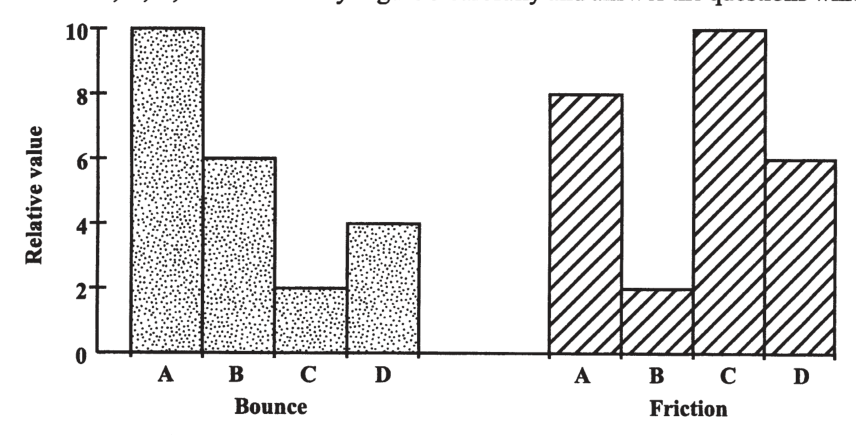
The graph in Figure 5 shows a comparison of the bounce and friction of four playing surfaces, A, B, C and D. Study Figure 5 carefully and answer the questions which follow.
[13 marks]
Which of the surfaces, A, B, C or D, is the HARDEST?
[1 mark]
Write a reason for your response in (i) above.
[2 marks]
Which of the surfaces, A, B or C or D, is the SMOOTHEST?
[1 mark]
State a reason for your answer in (iii) above.
[2 marks]
The materials used to make the four playing surfaces are wood, concrete, rubber and grass. From Figure 5, which of the surfaces, A, B, C or D, is likely to be rubber?
[1 mark]
Provide a reason for your answer in (v) above.
[2 marks]
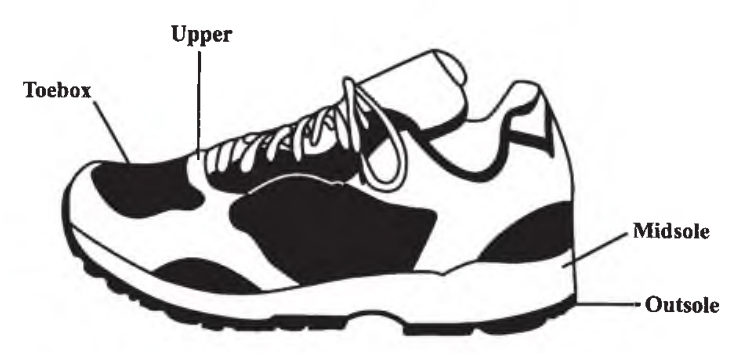
Figure 6 shows a footwear usually used for athletic sports. The materials used to make this shoe include cloth, plastic, leather and rubber.
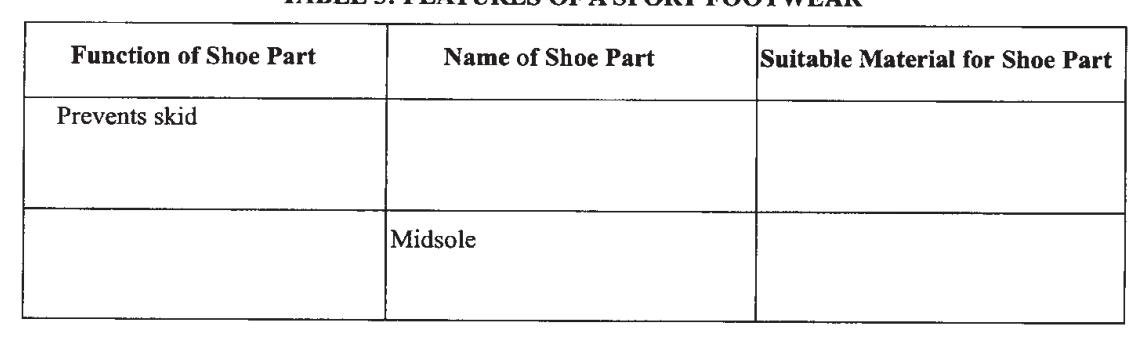
Study Figure 6 and complete Table 3 by inserting in the appropriate spaces the name of the shoe part (from Figure 6), the function of the shoe part and a suitable material for the shoe part.
TABLE 3: FEATURES OF A SPORT FOOTWEAR
| Function of Shoe Part | Name of Shoe Part | Suitable Material for Shoe Part |
|---|---|---|
| Prevents skid | ||
| Midsole |
[4 marks]