Free CXC Integrated Science Paper 2 May/June 2009 past paper from 2009. Includes a worked answer key. Open the PDF, take a timed test, and study with AI on Caribbean AI.
Answer keys are free on Caribbean AI. View the answers to every past-paper question at no cost - no payment needed - with step-by-step worked solutions and instant AI marking available on Premium.
CSEC Integrated Science Paper 2 May/June 2009 - Free CXC Past Paper with Answers
Free CXC Integrated Science Paper 2 May/June 2009 past paper from 2009. Includes a worked answer key. Open the PDF, take a timed test, and study with AI on Caribbean AI.
Opening the interactive papers…
Every question from this paper as text. See the answers and worked solutions. Questions are the property of the Caribbean Examinations Council; Caribbean AI is not affiliated with CXC.
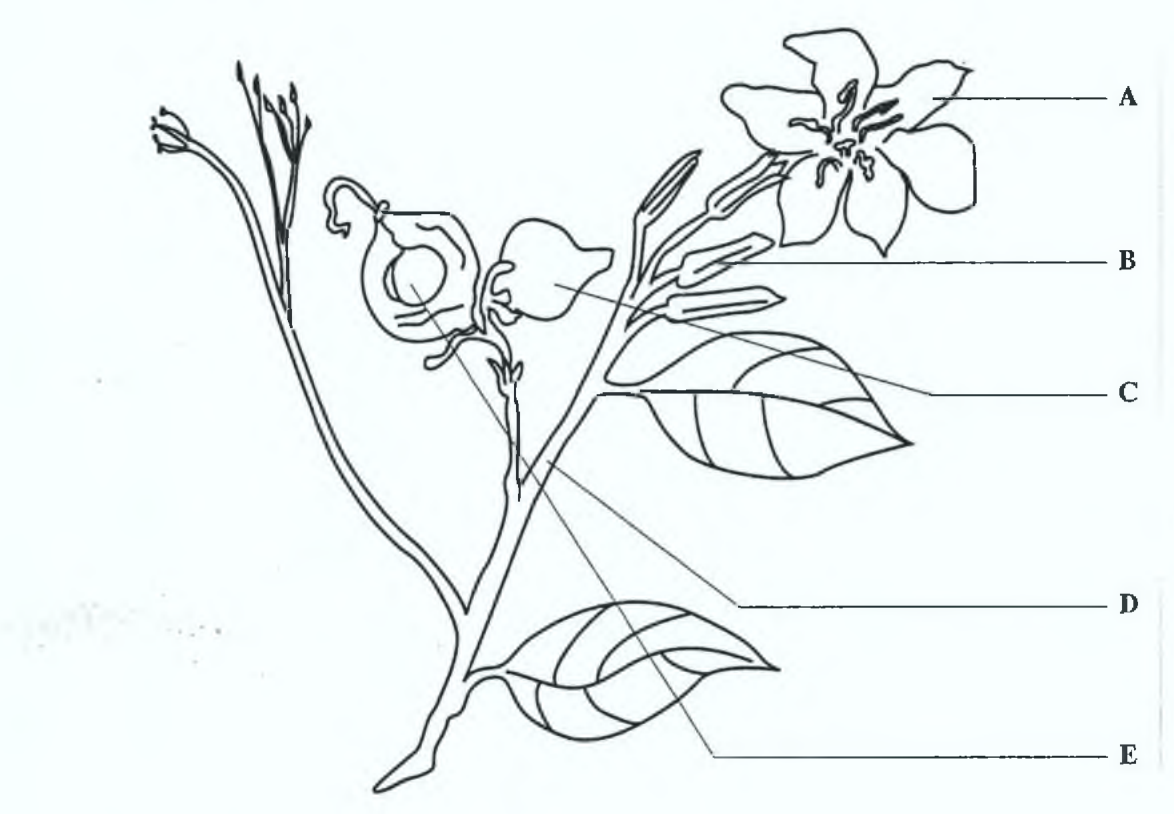
Name EACH of the structures labelled, A, B, C and D.
Figure 1 shows a flowering plant with structures labelled A, B, C, D and E.
[2 marks]
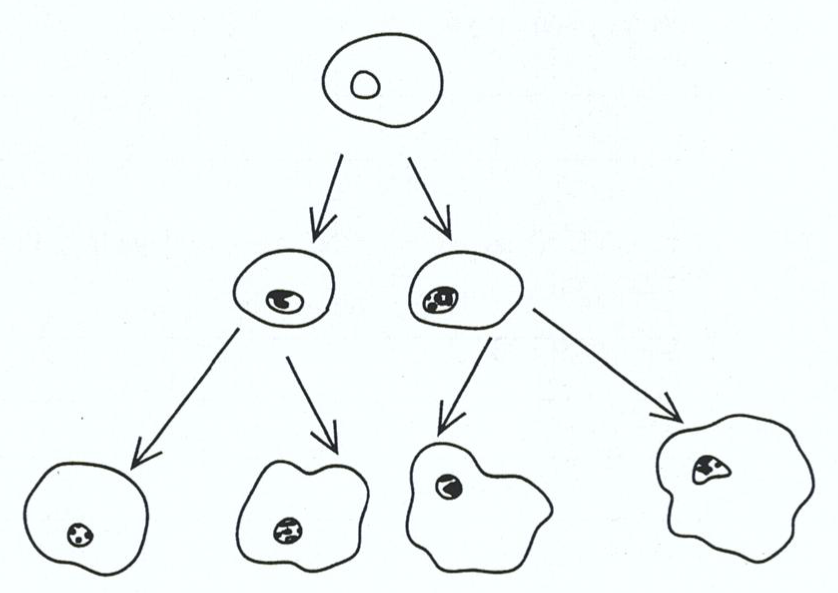
Outline TWO differences between the organisms shown in Figures 1 and 2.
Figure 2 depicts a reproducing unicellular organism.
[2 marks]
Identify in Figure 1 (i) TWO structures that are associated with sexual reproduction (ii) ONE structure that is associated with asexual reproduction.
[3 marks]
TWO structures that are associated with sexual reproduction
[2 marks]
ONE structure that is associated with asexual reproduction.
[1 mark]
A farmer wishes to cultivate genetically identical trees on his farm. (i) Which of the labelled parts of the flowering plant should the farmer use? (ii) Give a reason for your answer to (d)(i) above. (iii) State ONE advantage and ONE disadvantage of cultivating genetically identical trees.
[4 marks]
Which of the labelled parts of the flowering plant should the farmer use?
[1 mark]
Give a reason for your answer to (d)(i) above.
[1 mark]
State ONE advantage and ONE disadvantage of cultivating genetically identical trees.
[2 marks]
The reproduction of the organism in Figure 2 occurred in a flask containing water and glucose. (i) Over a three-week period, the number of organisms in the flask increased then decreased. Suggest TWO likely reasons for the decrease. (ii) What is the LIKELY effect on the population of the organisms if the temperature of the contents of the flask was raised to ? (iii) Give ONE reason for your answer to (e)(ii) above.
[6 marks]
Over a three-week period, the number of organisms in the flask increased then decreased.
Suggest TWO likely reasons for the decrease.
[2 marks]
What is the LIKELY effect on the population of the organisms if the temperature of the contents of the flask was raised to ?
[1 mark]
Give ONE reason for your answer to (e)(ii) above.
[1 mark]
Ms Molly grows yams and potatoes, and raises cows and chickens on her farm. Name TWO other plants that Ms Molly could grow in order to increase the variety of nutrients available to her family.
[2 marks]
Identify the major nutrient provided by ONE of the plants named at (a) above.
[1 mark]
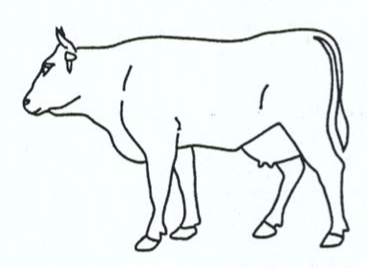
Figure 3 shows one of Ms Molly's cows.
State TWO nutrients that cows may provide.
[2 marks]
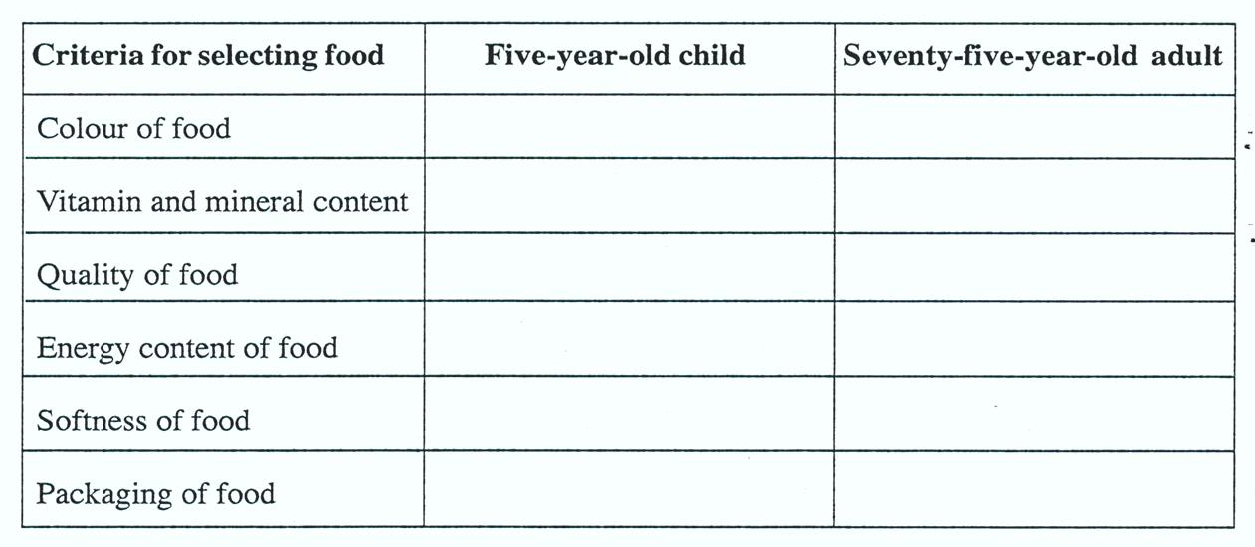
Ms Molly has a five-year-old grandchild and a seventy-five-year-old brother. Table 1 shows the criteria for selecting food for these two members of her family.
| Criteria for selecting food | Five-year-old child | Seventy-five-year-old adult |
|---|---|---|
| Colour of food | ||
| Vitamin and mineral content | ||
| Quality of food | ||
| Energy content of food | ||
| Softness of food | ||
| Packaging of food |
Complete Table 1 by placing a tick in the appropriate cell to select the TWO MOST important criteria for her a) five-year-old grandchild b) seventy-five-year-old brother.
[4 marks]
Give TWO reasons for EACH of your answers to (d)(i) above.
Child:
Adult:
[4 marks]
Ms Molly sometimes works on the farm while she prepares meals.
Suggest ONE precaution that she MUST take while she is preparing or serving meals to her family.
[1 mark]
Give ONE reason for your answer to (e)(i) above.
[1 mark]
Baby Mina has a very high temperature (fever). Her grandmother wipes her skin with rubbing alcohol and her temperature goes down. After a while, the baby's temperature starts to rise again.
State ONE difference between a clinical thermometer and a laboratory thermometer.
[1 mark]
Baby Mina's temperature was measured with a clinical thermometer. State ONE difference between a clinical thermometer and a laboratory thermometer.
[1 mark]
State TWO main processes that occur when rubbing alcohol is used to lower the baby's temperature.
[2 marks]
Suggest ONE reason for the baby's temperature rising again.
[1 mark]
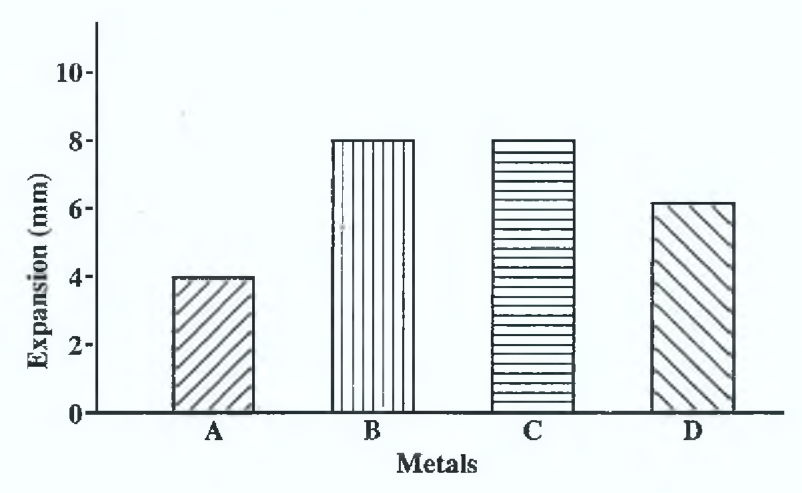
A bi-metallic strip is an essential part of some thermostats. Its function depends on metals expanding at different rates. Figure 4 shows how four metals, labelled A, B, C and D, expanded when heated by the same quantity of heat. Study Figure 4 and answer the questions which follow.
Which of the metals, A, B, C or D, expands the LEAST when heated?
[1 mark]
Which of the metals, A, B, C or D, expands the LEAST when heated?
[1 mark]
Which combination of metals CANNOT be used in a bi-metallic strip?
[1 mark]
Give the reason for your answer to (b)(ii).
[1 mark]
Which of the following combinations of metals will bend the MOST in a bi-metallic strip? (Circle only ONE combination.)
A and B A and D B and D
[1 mark]
Give the reason for your answer to (b)(iv).
[1 mark]
John's office is located in a warehouse. It has one entrance and a window which opens onto a garage.
The visiting health inspector told John that his office was poorly ventilated. Give TWO reasons for the inspector's comment.
[2 marks]
The visiting health inspector told John that his office was poorly ventilated. Give TWO reasons for the inspector's comment.
[2 marks]
Suggest TWO likely effects of the poor ventilation.
[2 marks]
Recommend TWO actions that could be taken to improve the ventilation and air quality in the office.
[2 marks]
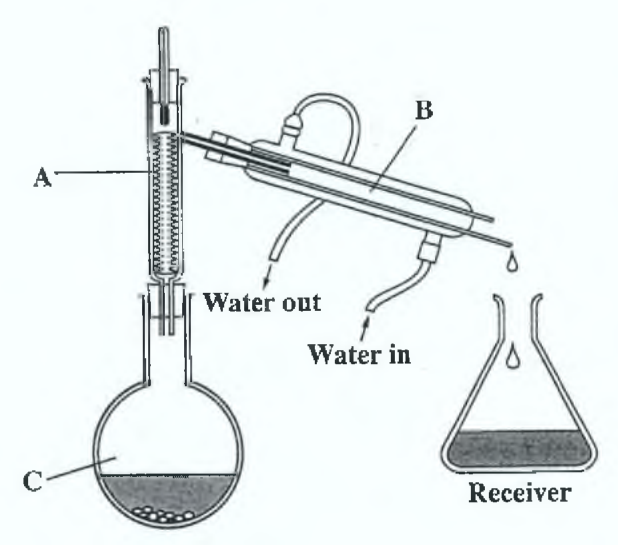
Figure 5 shows the fractional distillation apparatus used to separate mixtures of liquids in the laboratory. Three sections are labelled A, B and C.
[15 marks]
Figure 5 shows the fractional distillation apparatus used to separate mixtures of liquids in the laboratory. Three sections are labelled A, B and C.
List the physical states of the materials usually present in Section A.
[1 mark]
List the physical states of the materials usually present in Section A.
[1 mark]
Name the process occuring in EACH of the following labelled sections:
B C
[2 marks]
The distillation flask contains a mixture of liquids W (boiling point ), X (boiling point ) and Y (boiling point ). Which of W, X or Y will be collected in the receiver first?
[1 mark]
Fossil fuels are gradually being supplemented by renewable energy sources such as solar energy.
[2 marks]
Fossil fuels are gradually being supplemented by renewable energy sources such as solar energy.
State ONE major environmental concern associated with using fossil fuels.
[1 mark]
State ONE reason which may limit the use of solar energy in the Caribbean.
[1 mark]
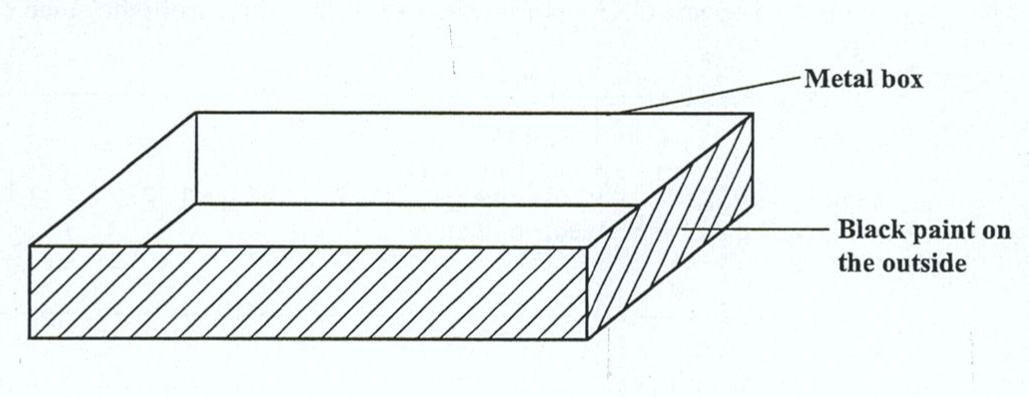
Mr Wong decided to build a simple solar water heater. His design is shown in Figure 6. Study Figure 6 and answer the questions which follow.
Which method of heat transfer is MOST important for this solar water heater to operate?
[1 mark]
Which method of heat transfer is MOST important for this solar water heater to operate?
[1 mark]
Why did Mr Wong paint the exterior of the water heater in black?
[1 mark]
Would you expect to find hotter water at the top or at the bottom of the heater?
[1 mark]
Give ONE reason for your answer to (c)(iii) above.
[1 mark]
Mr Wong needs to cover the water heater. Should the covering be made from metal, transparent glass or plastic?
[1 mark]
Suggest ONE appropriate use of the water from the solar water heater.
[1 mark]
Suggest TWO reasons for Mr Wong using a solar water heater instead of a gas heater or an electric heater.
[2 marks]
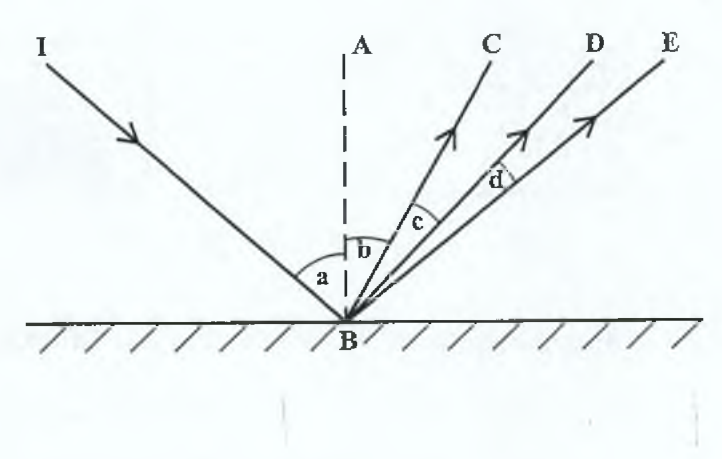
Figure 7 shows a ray of light (I) incident on a mirror and four angles a, b, c and d. Study Figure 7 and answer the questions which follow.
[3 marks]
State the angle of incidence in the diagram.
[1 mark]
Which of AB, BC, BD or BE represents a) the normal? b) the reflected ray?
[2 marks]
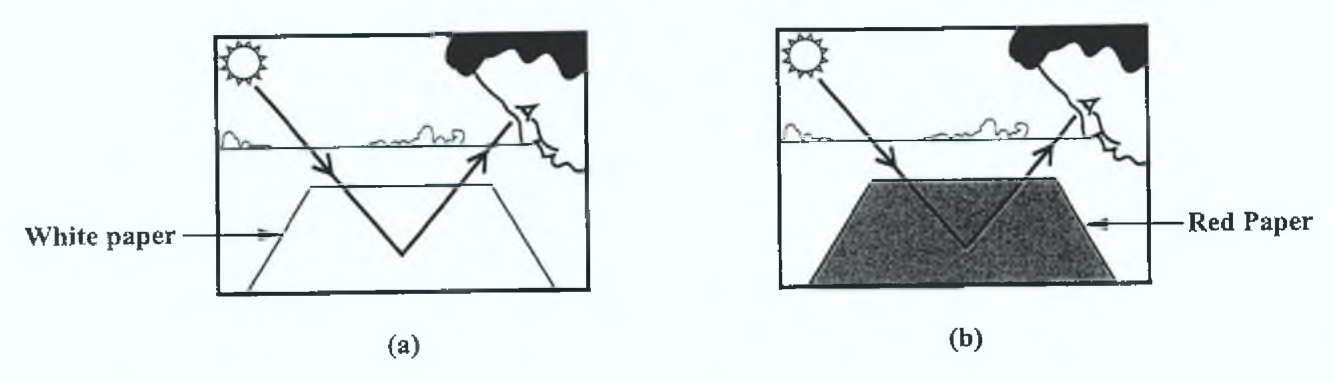
Figures 8 (a) and (b) show John observing white light on different coloured papers.
[5 marks]
What colour would John observe in Figure 8 (a)? Give a reason for your answer.
Colour observed: Reason for answer:
[2 marks]
What colour would John observe in Figure 8 (b)? Give a reason for your answer.
Colour observed: Reason for answer:
[2 marks]
State ONE difference between light and sound.
[1 mark]
Plan an investigation to find out which material is BEST for reducing the loudness of the sound of a drum. You are provided with a drum, a sound meter, sheets of plastics, leather and cloth.
[6 marks]
State a suitable hypothesis for this investigation.
[1 mark]
Name TWO variables that may be controlled to make this a fair investigation.
[2 marks]
Construct a table to show how you would record your results.
[2 marks]
Outline the procedures that you would follow to carry out this test.
[2 marks]
Define the term 'centre of gravity'.
[1 mark]
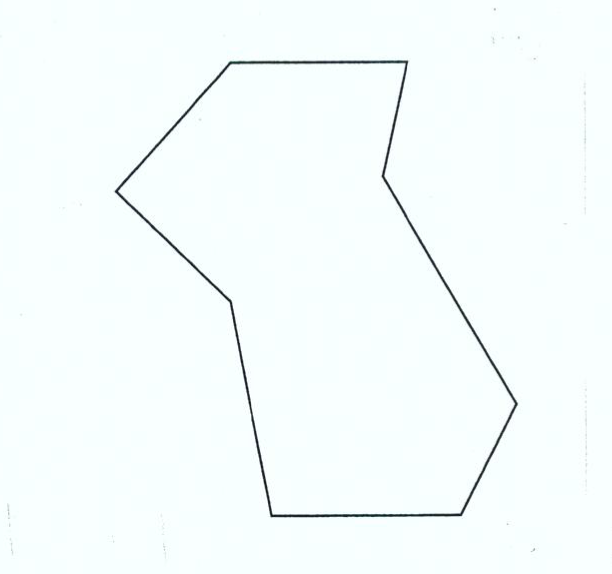
Figure 9 shows a diagram of an irregular-shaped piece of thin cardboard. You are provided with some pins, a piece of string, a retort stand, a small mass and a ruler.
Describe a method of finding the centre of gravity of the piece of cardboard shown in the figure above.
[4 marks]
Label with an X the likely position of the centre of gravity of the piece of cardboard shown in Figure 9.
[1 mark]
A housewife found that it was easier to carry two market bags of equal mass than to carry one with the combined mass. Suggest a reason for this.
[2 marks]
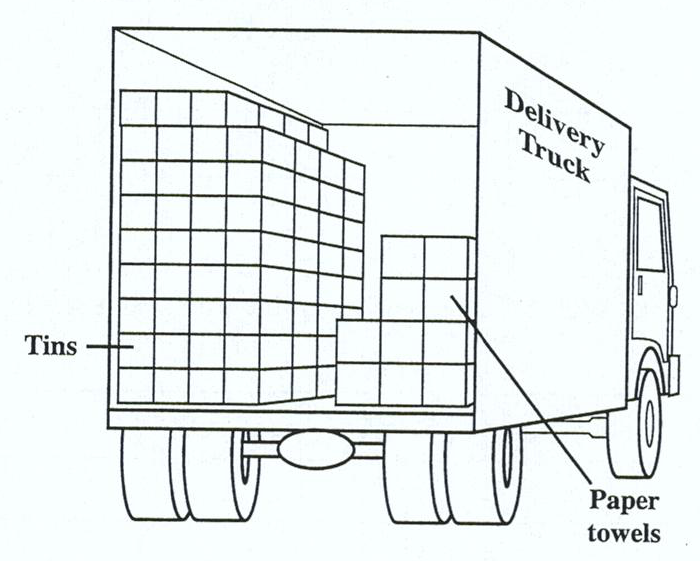
Figure 10 shows a delivery truck with boxes containing tins packed on the left-hand side and the boxes with paper towels on the right-hand side.
[7 marks]
Distinguish between 'stable equilibrium' and 'unstable equilibrium'.
[2 marks]
What problems would the driver of the truck encounter when taking a left turn at a high speed?
[1 mark]
Give a reason for your answer to b(ii) above.
[1 mark]
The driver of the truck went to a supermarket where he offloaded all the paper towels from the right of the truck. What is the likely consequence of this action when the truck is moving?
[1 mark]
Suggest TWO actions the driver of the truck can take to prevent these problems.
[2 marks]