Free CXC Caribbean History Paper 2 May/June 2023 past paper from 2023. Includes a worked answer key. Open the PDF, take a timed test, and study with AI on Caribbean AI.
Answer keys are free on Caribbean AI. View the answers to every past-paper question at no cost - no payment needed - with step-by-step worked solutions and instant AI marking available on Premium.
CSEC Caribbean History Paper 2 May/June 2023 - Free CXC Past Paper with Answers
Free CXC Caribbean History Paper 2 May/June 2023 past paper from 2023. Includes a worked answer key. Open the PDF, take a timed test, and study with AI on Caribbean AI.
Opening the interactive papers…
Every question from this paper as text. See the answers and worked solutions. Questions are the property of the Caribbean Examinations Council; Caribbean AI is not affiliated with CXC.
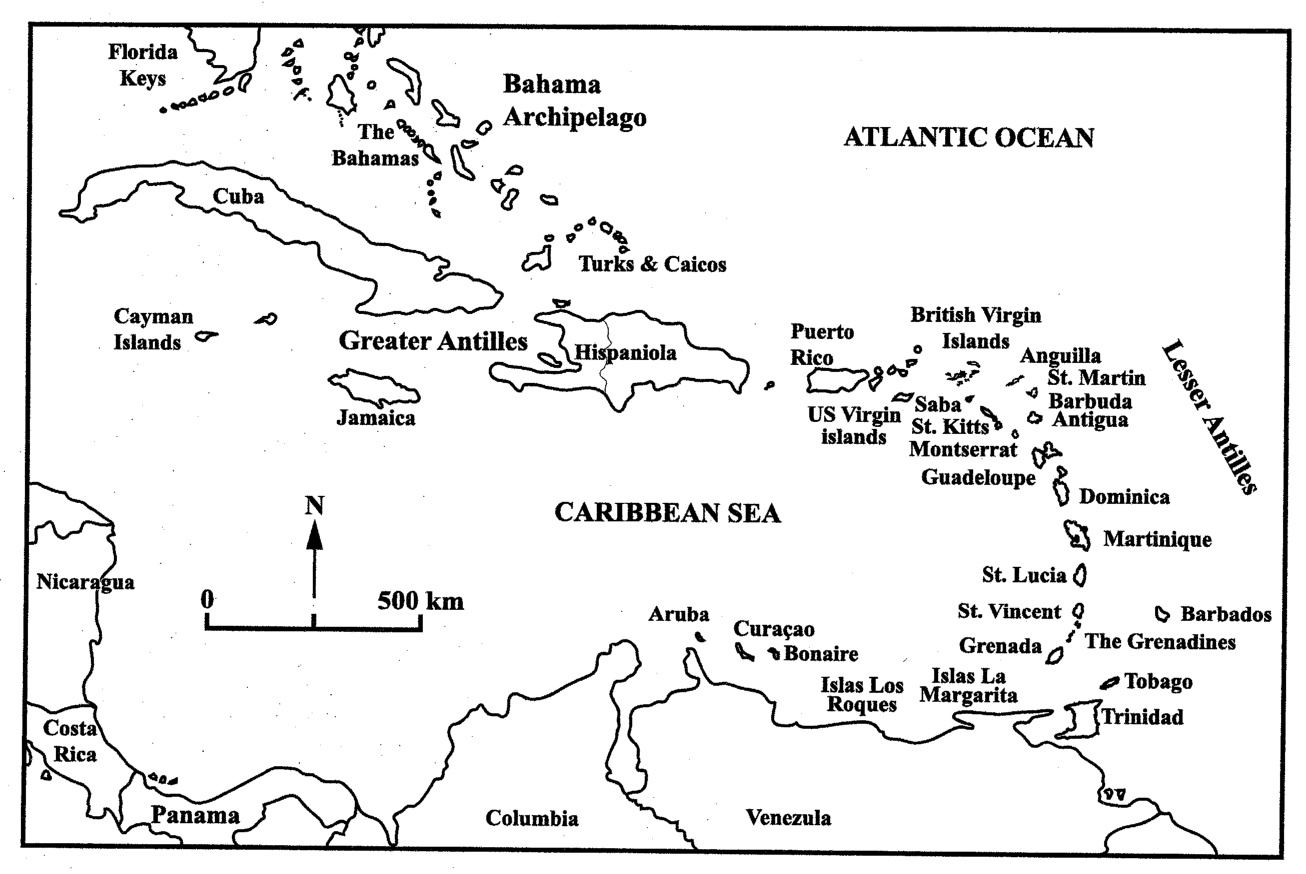
Study the following map and answer the questions that follow.
Retrieved from https://www.researchgate.net/figure/Map-of-the-greater-Caribbean-Archipelago-and-surrounding-continental-mainland_fig1_32708660.
[25 marks]
The map illustrates the Caribbean region. List FOUR islands that were occupied by the Taino.
[4 marks]
Explain how THREE factors caused migration from Central and South America to the Caribbean.
[9 marks]
Discuss THREE cultural characteristics of the Taino people.
[12 marks]
List FOUR developments in shipping technology that aided Columbus in his voyage to the New World.
[4 marks]
Explain THREE factors that motivated Christopher Columbus' voyages to the Caribbean in the 15th century.
[9 marks]
Discuss THREE effects on the region of Columbus' voyages to the Caribbean.
[12 marks]
Name FOUR crops other than sugar and tobacco, which were grown in the 17th century Caribbean.
[4 marks]
Explain THREE reasons why tobacco was a suitable crop for small European farmers in the 17th century Caribbean.
[9 marks]
Discuss TWO advantages and ONE disadvantage which farmers had to consider in changing from tobacco to sugar.
[12 marks]
Identify FOUR buildings found on a typical sugar plantation which were utilised in the manufacture of sugar.
[4 marks]
Outline THREE tasks which were essential in the manufacturing of sugar.
[9 marks]
Explain the role performed by THREE types of individuals residing in Europe who were involved in the West Indian sugar industry.
[12 marks]
List FOUR types of physical punishment used by planters to control enslaved people in the Caribbean.
[4 marks]
Explain how THREE psychological forms of control were used on the enslaved population of the Caribbean.
[9 marks]
Discuss TWO economic and TWO legislative methods used to keep enslaved persons in bondage to their owners.
[12 marks]
"The record of resistance tells us that there was hardly a generation of enslaved persons in the region that did not confront their enslavers with arms in pursuit of their freedom."
Hilary Beckles and Verene Shepherd. Liberties Lost: Caribbean Indigenous Societies and Slave Systems. Cambridge University Press, 2004, p 169.
[25 marks]
List TWO types of resistance commonly used by enslaved women in the Caribbean. List TWO types of resistance commonly used by enslaved men in the Caribbean.
[4 marks]
List TWO types of resistance commonly used by enslaved women in the Caribbean.
[2 marks]
List TWO types of resistance commonly used by enslaved men in the Caribbean.
[2 marks]
Explain THREE reasons for the outbreak of the enslaved rebellion in Barbados in 1816.
[9 marks]
Discuss THREE reasons for the development of maroon societies in Jamaica, Suriname or British Guiana.
[12 marks]
Imagine that you are a member of the Methodist clergy and have been invited to the first meeting of the Society of Friends to establish the anti-slavery movement in Great Britain. On your return home, prepare a speech discussing FIVE key points explaining why enslavement should end in Great Britain and its colonies.
[25 marks]
You are a journalist writing on the anti-slavery movements in Britain and France. Discuss the ideas and actions of the anti-slavery organizations in Britain and France. Your response MUST include TWO similarities and THREE differences.
[25 marks]
You are a newly freed person living in the English-Speaking Caribbean being interviewed by a reporter for a newspaper in England. Discuss with the reporter TWO social and THREE economic impacts that free villages have had on you and the territory in which you live.
[25 marks]
Imagine that you are a member of the Commission of Enquiry sent to the Caribbean to report on the systems of government in the territories. In your report, discuss TWO reasons why Crown Colony government was adopted in some British Caribbean colonies and THREE results of the change in government.
[25 marks]
You are a journalist for the Spanish Newspaper El Daily Mail and you have arrived in Cuba to assess the state of the sugar industry. Write an article for your readers examining FIVE factors that facilitated the growth of the Cuban sugar industry in the 19th century.
[25 marks]
As a farmer, you have made the switch from sugar to new agricultural crops. In discussion with farmers at the local co-operative, examine THREE factors that encouraged you to make that change and TWO factors that allowed for the successful production of the crops.
[25 marks]
"Revolution is a dictatorship of the exploited against the exploiters."
Fidel Castro Quotes: https://wellquo.com/fidel-castro-quotes/
Examine THREE ways in which the Cuban people were exploited before the revolution, and TWO features of Fidel Castro's dictatorship in Cuba.
[25 marks]
Examine FIVE ways in which the English-Speaking Caribbean was impacted by the United States' influence and involvement between 1939 and 1985.
[25 marks]
"For a century after emancipation the economic foundations of slavery had remained basically untouched... Within a few years in the 1930s, the working people in all these colonies...challenged these systems of domination."
Nigel Boland, On the March: Labour Rebellions in the British Caribbean, 1934–39. London: Ian Randle Publishers, 1995, p 5.
Examine FIVE ways in which popular protests by persons in the British Caribbean impacted political developments in those territories between 1935 and 1958.
[25 marks]
Examine FIVE ways in which prominent women and men from the English-Speaking Caribbean contributed to social, economic and political integration in the region up to 1985. At least FIVE personalities should be named in your discussion.
[25 marks]
The Royal Commission, also called the Moyne Commission, which was created to investigate the labour disturbances in the then British West Indies between 1937 and 1938, visited many Caribbean countries and held public enquiries into the reasons for the disturbances.
Examine FIVE recommendations of the Moyne Commission which were intended to reverse the previous century of neglect in the region.
[25 marks]
Examine THREE social and TWO political conditions that resulted in the labour disturbances of the late 1930s in the English-Speaking Caribbean.
[25 marks]