(b)(i) 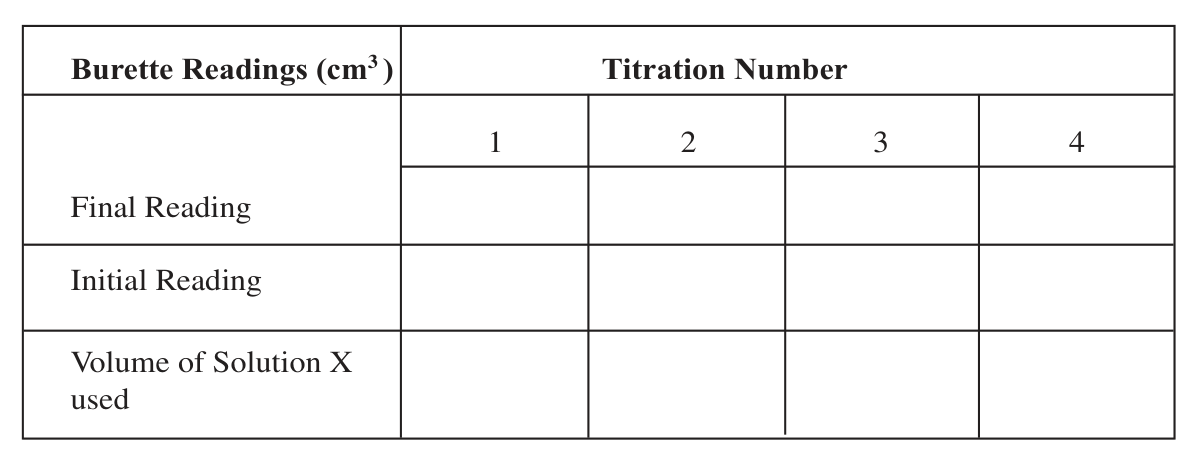
Complete Table 1 using the readings from Figure 1.
[8 marks]
Free CXC Chemistry Paper 3 May/June 2010 past paper from 2010. Includes a worked answer key. Open the PDF, take a timed test, and study with AI on Caribbean AI.
Answer keys are free on Caribbean AI. View the answers to every past-paper question at no cost - no payment needed - with step-by-step worked solutions and instant AI marking available on Premium.
CSEC Chemistry Paper 3 May/June 2010 - Free CXC Past Paper with Answers
Free CXC Chemistry Paper 3 May/June 2010 past paper from 2010. Includes a worked answer key. Open the PDF, take a timed test, and study with AI on Caribbean AI.
Opening the interactive papers…
Every question from this paper as text. See the answers and worked solutions. Questions are the property of the Caribbean Examinations Council; Caribbean AI is not affiliated with CXC.
Students in a class are required to determine the number of moles of water molecules in one mole of a sample of an iron-containing salt, . They must titrate a solution of the iron-containing salt (Solution Y) with aqueous potassium manganate(VII) solution (Solution X) provided.
(Relative atomic mass: H = 1; Fe = 56; N = 14; O = 16; S = 32)
[23 marks]
Starting with a sample of the solid iron-containing salt, , describe the preparation of a solution of concentration . This is Solution Y.
[4 marks]
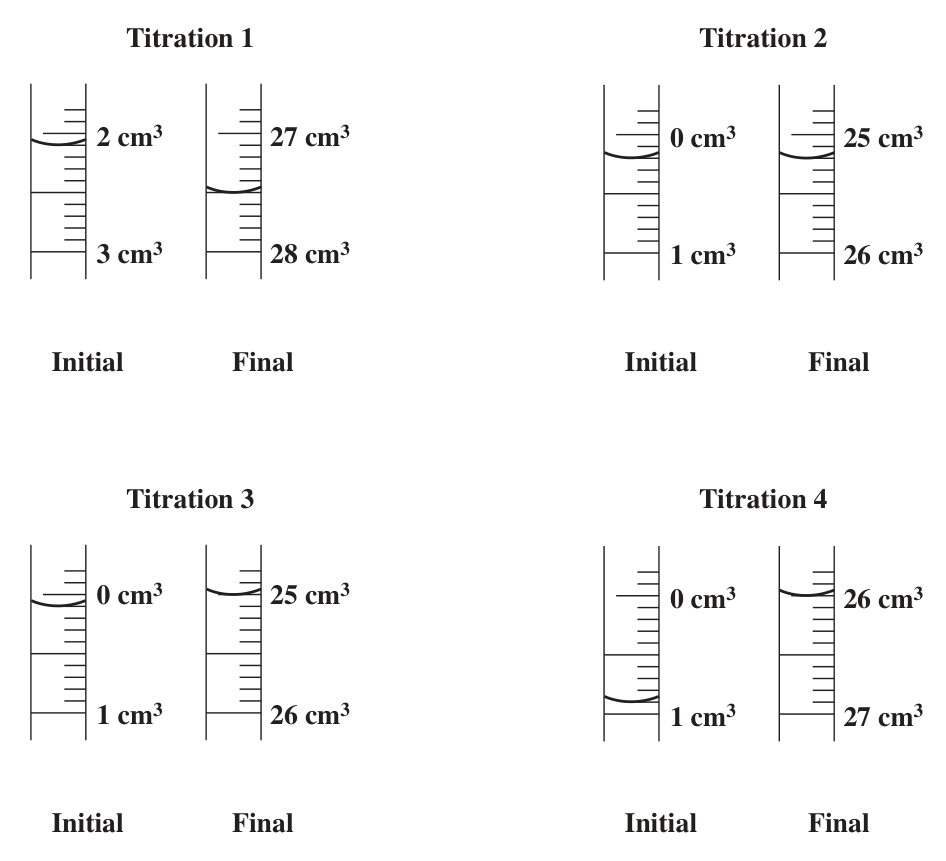
Solution X which contains is used to titrate portions of Solution Y in the presence of dilute sulphuric acid. Figure 1 gives the representations of the initial and final burette readings obtained.
Complete Table 1 using the readings from Figure 1.
[8 marks]
Volume of Solution X to be used in the calculation: __________
[1 mark]
The ionic equation for the reaction between X and Y is as follows:
Use the titration results from Table 1 and the ionic equation given to answer the following questions.
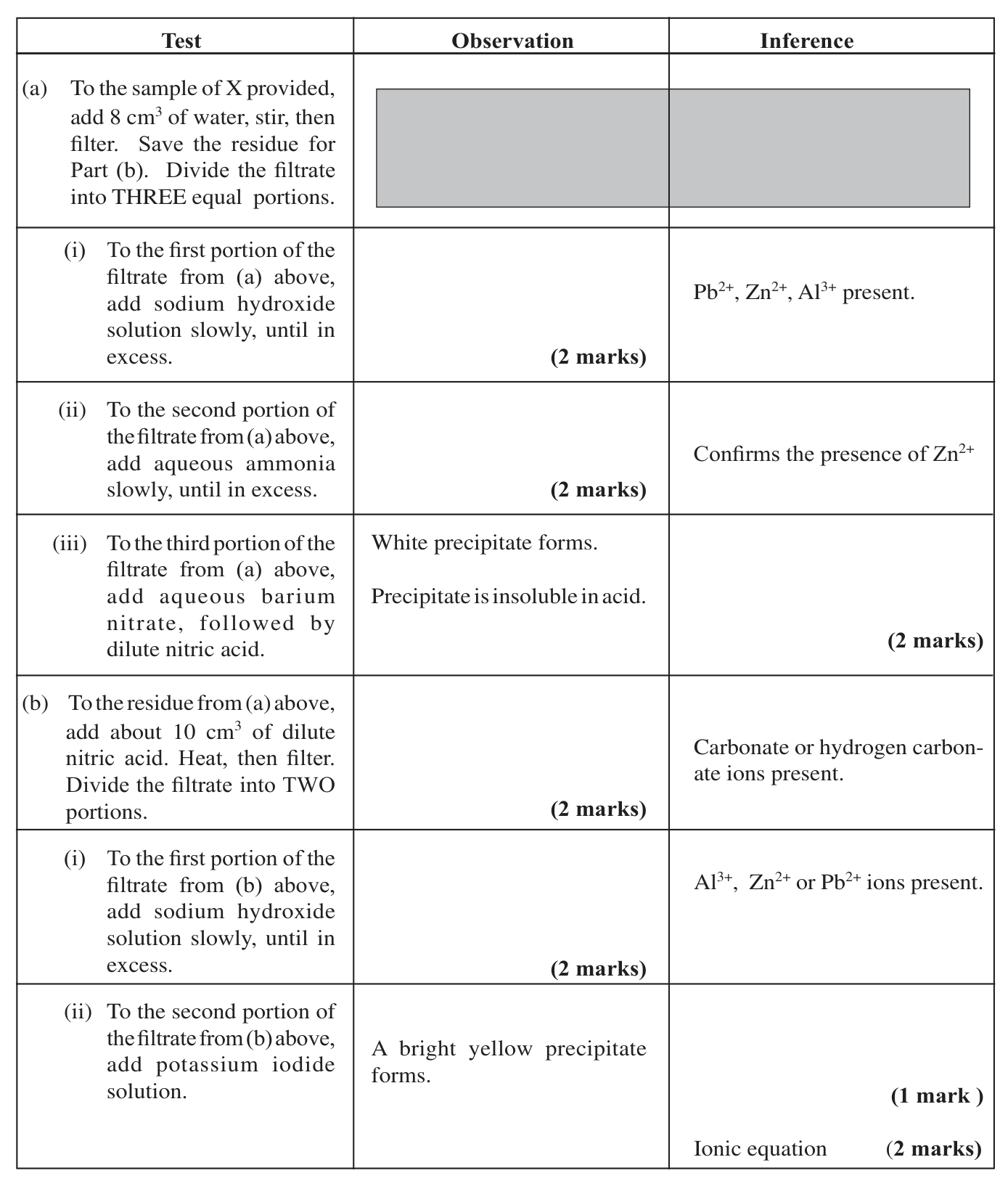
The following tests were done on Compound X, which is a mixture of two substances. Complete Table 2 by writing the observations and inferences that are missing.
[13 marks]
To the sample of X provided, add of water, stir, then filter. Save the residue for part (b). Divide the filtrate into THREE equal portions.
To the first portion of the filtrate from (a) above, add sodium hydroxide solution slowly, until in excess.
[2 marks]
To the second portion of the filtrate from (a) above, add aqueous ammonia slowly, until in excess.
[2 marks]
To the third portion of the filtrate from (a) above, add aqueous barium nitrate, followed by dilute nitric acid.
[2 marks]
To the residue from (a) above, add about of dilute nitric acid. Heat, then filter. Divide the filtrate into TWO portions.
To the first portion of the filtrate from (b) above, add sodium hydroxide solution slowly, until in excess.
[2 marks]
To the second portion of the filtrate from (b) above, add potassium iodide solution.
[3 marks]
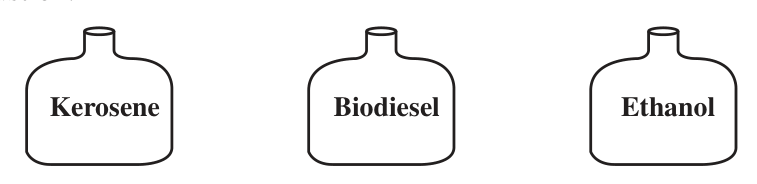
Plan and design an experiment to determine whether the following fuels produce the same amount of energy upon combustion.
Hypothesis: Biodiesel produces the same amount of energy upon combustion, as ethanol and kerosene.
Your answer should include the following:
[12 marks]
Apparatus and materials
[2 marks]
Procedure
[3 marks]
Variables to control
[2 marks]
Data to be collected
[2 marks]
Discussion of results as they relate to the hypothesis
[2 marks]
ONE possible source of error
[1 mark]