Free CXC Human and Social Biology Paper 2 May/June 2005 past paper from 2005. Includes a worked answer key. Open the PDF, take a timed test, and study with AI on Caribbean AI.
Answer keys are free on Caribbean AI. View the answers to every past-paper question at no cost - no payment needed - with step-by-step worked solutions and instant AI marking available on Premium.
CSEC Human and Social Biology Paper 2 May/June 2005 - Free CXC Past Paper with Answers
Free CXC Human and Social Biology Paper 2 May/June 2005 past paper from 2005. Includes a worked answer key. Open the PDF, take a timed test, and study with AI on Caribbean AI.
Opening the interactive papers…
Every question from this paper as text. See the answers and worked solutions. Questions are the property of the Caribbean Examinations Council; Caribbean AI is not affiliated with CXC.
< ![CDATA[The movement of ions and other materials across membranes is extremely important in biological systems. Materials can normally be moved by osmosis, simple diffusion and active transport.
[10 marks]
Complete the following statement:
In simple diffusion, the higher the ____________________________________, the ____________________________________ the rate of movement.
[2 marks]
Briefly explain the term 'active transport'.
[2 marks]
Give an example of active transport.
[1 mark]
Define the term 'osmosis'.
[2 marks]
Complete the following statements:
When a peeled potato is placed in distilled water it will ____________________________________ (1 mark)
If some salt is added to the water the potato will ____________________________________ (1 mark)
[2 marks]
< ![CDATA[A drop of ink is placed in a glass of pure, clear water, and after a while all the water turns blue. This spread is as a result of ____________________________________
[1 mark]
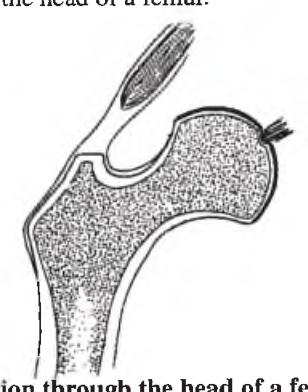
Figure 1 shows a section through the head of a femur.
Figure 1. Section through the head of a femur
[10 marks]
By means of a line and a label, show on the diagram EACH of the following parts: a) Cartilage b) Cancellous (spongy) bone c) Compact bone d) Fatty marrow
[4 marks]
< ![CDATA[Describe the function of EACH of the parts labelled in (a) (i) above.
Cartilage:
Cancellous bone:
Compact bone:
Fatty marrow:
[4 marks]
< ![CDATA[Give TWO reasons for the elasticity of cartilage.
[2 marks]
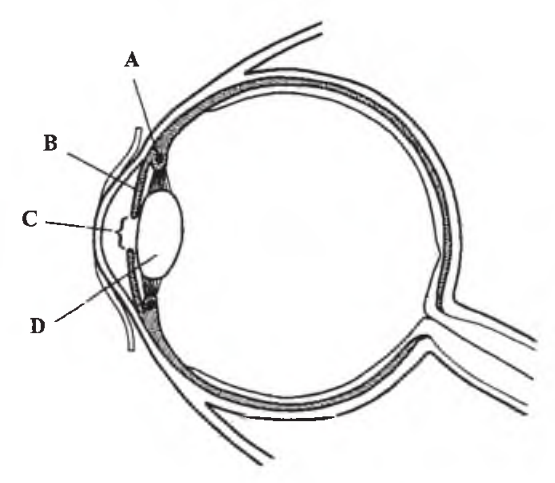
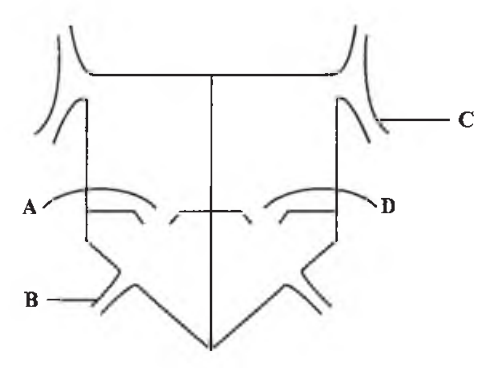
Figure 2 represents a horizontal section through the eye.
Figure 2. Horizontal section through the eye
[10 marks]
Name the parts labelled A, B, C and D.
A: __________________________________________________
B: __________________________________________________
C: __________________________________________________
D: __________________________________________________
[4 marks]
Name the part of the eye which decreases in size when a bright light is shone into the eye.
[1 mark]
Explain why objects in dim light are seen more clearly from the corner of the eye.
[1 mark]
Explain how the eye is nourished.
[2 marks]
Describe how images are formed on the retina.
[2 marks]
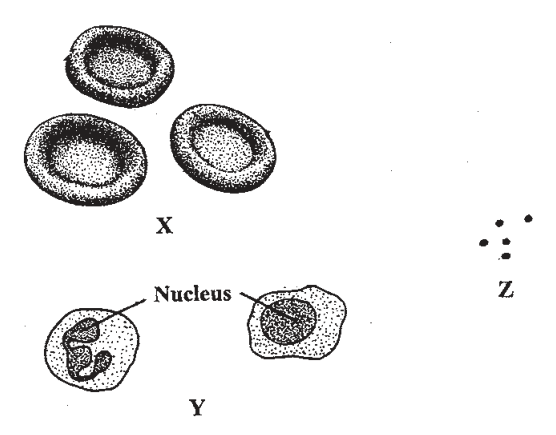
Figure 3 shows drawings of blood cells.
Figure 3. Blood cells
[10 marks]
Identify the blood cells, X, Y and Z in Figure 3.
X: __________________________________________________
Y: __________________________________________________
Z: __________________________________________________
[3 marks]
Describe oxygen transport in the red blood cell.
[3 marks]
What is the liquid part of the blood called?
[1 mark]
Distinguish between the part named in (c) (i) and serum.
[1 mark]
< ![CDATA[Distinguish between the functions of the blood and the circulation of the blood.
[2 marks]
Glucose lactic acid carbon dioxide and water
[10 marks]
With reference to the above equation, identify EACH of the following processes:
[2 marks]
Anaerobic respiration:
[1 mark]
Aerobic respiration:
[1 mark]
Explain EACH of the following processes:
[6 marks]
Anaerobic respiration
[3 marks]
Aerobic respiration
[3 marks]
Explain the concept of oxygen debt.
[2 marks]
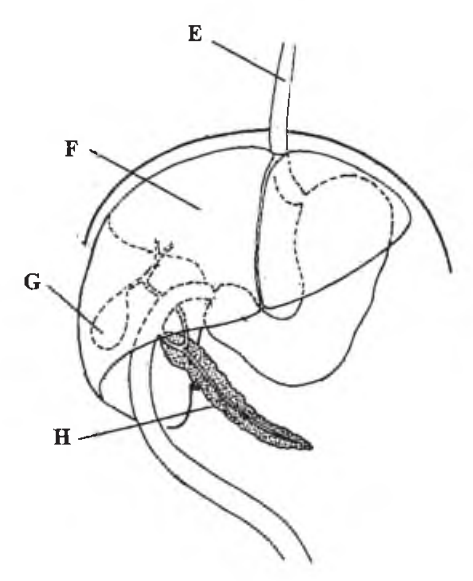
Figure 4 shows parts of the alimentary canal.
<image>Figure 4. Parts of the alimentary canal
[10 marks]
Name EACH of the parts labelled E, F and G.
E: F: G:
[3 marks]
Name the substance that is stored in G.
[1 mark]
State TWO functions of the substance named in (b) (i).
[2 marks]
Name TWO enzymes produced by the part labelled H in Figure 4, and the substrate on which EACH of these enzymes act.
Name of enzyme: Substrate:
[4 marks]
Choose the word from the brackets at the end of the statement, to complete the state- ment correctly.
The rhythm method is an example of a/an ________________________________ method of birth control, while contraceptive pills are an example of a/an ________________________________ of birth control. (artificial, natural, surgical)
[2 marks]
What is meant by the 'safe period' in reproduction?
[1 mark]
Which days of the menstrual cycle are considered NOT safe?
[1 mark]
Explain TWO ways in which contraceptive pills prevent pregnancy.
[2 marks]
In pregnancy, explain how the structure of the placenta is related to its function.
[4 marks]
Briefly describe DNA and explain its function.
[3 marks]
Explain what is meant by EACH of the following terms:
[2 marks]
Homozygous
[1 mark]
Dominance
[1 mark]
With the aid of a diagram, determine the inheritance of eye-colour for a homozygous male with brown eyes mating with a homozygous female with blue eyes. Brown eye-colour is dominant over blue eye-colour.
[5 marks]
What is the phenotype of the F1 generation in (c) (i)?
[1 mark]
What proportion of the F1 generation will be homozygous recessive?
[1 mark]
Drug abuse is a common societal problem. Name THREE drugs which are commonly abused.
[3 marks]
What is the effective ingredient in alcoholic drinks?
[1 mark]
Describe ONE social impact of alcohol abuse on the family.
[1 mark]
Explain how alcohol acts on the human body.
[5 marks]
One of the problems created by modern man is the greenhouse effect.
[6 marks]
What causes the greenhouse effect?
[2 marks]
What is the initial consequence of the greenhouse effect?
[2 marks]
State ONE health consequence of the thinning of the ozone layer.
[1 mark]
Name TWO sources of atmospheric (air) pollution.
[2 marks]
Which THREE dilute acids are produced by water in the atmosphere combining with the pollutants named in (b) (i)?
[3 marks]
Define the term 'hormone'.
[2 marks]
Describe the role of hormones in the regulation of the menstrual cycle.
[9 marks]
Which is faster, nervous control or hormonal action? Explain your answer.
[9 marks]
Figure 5 shows a simplified drawing of a human heart.
[20 marks]
Copy Figure 5 on your answer page. On your drawing:
[4 marks]
Shade the part of the heart which is associated with oxygenated blood.
[1 mark]
Label the atria and ventricles.
[2 marks]
Compare the relative thickness of the walls of the atria and ventricles.
[3 marks]
Describe the role played by the different parts of the heart in the circulation of blood.
[10 marks]
With the aid of diagrams, describe cell division by the process of mitosis.
[15 marks]
State TWO main differences between mitosis and meiosis.
[2 marks]
Explain how gender is determined in humans.
[3 marks]
Define the term 'obesity'.
[2 marks]
State FOUR main causes of obesity.
[4 marks]
Explain how hypertension can become a complication of obesity.
[4 marks]
Explain what is meant by lifestyle changes, and discuss how lifestyle changes can be used in treating obesity.
[10 marks]