Free CXC Human and Social Biology Paper 2 May/June 2019 past paper from 2019. Includes a worked answer key. Open the PDF, take a timed test, and study with AI on Caribbean AI.
Answer keys are free on Caribbean AI. View the answers to every past-paper question at no cost - no payment needed - with step-by-step worked solutions and instant AI marking available on Premium.
CSEC Human and Social Biology Paper 2 May/June 2019 - Free CXC Past Paper with Answers
Free CXC Human and Social Biology Paper 2 May/June 2019 past paper from 2019. Includes a worked answer key. Open the PDF, take a timed test, and study with AI on Caribbean AI.
Opening the interactive papers…
Every question from this paper as text. See the answers and worked solutions. Questions are the property of the Caribbean Examinations Council; Caribbean AI is not affiliated with CXC.
Whether abortions should be legal or not is a controversial topic. Abortions are legal in some countries but illegal in others. (i) Define the term 'abortion'. (ii) State the term used for a 'naturally occurring abortion'. (iii) Explain why abortion is NOT a method of contraception. (iv) State ONE disadvantage of having a medical abortion and give ONE instance when a medical abortion may be considered necessary.
[7 marks]
Define the term 'abortion'.
[2 marks]
State the term used for a 'naturally occurring abortion'.
[1 mark]
Explain why abortion is NOT a method of contraception.
[2 marks]
State ONE disadvantage of having a medical abortion and give ONE instance when a medical abortion may be considered necessary.
[2 marks]
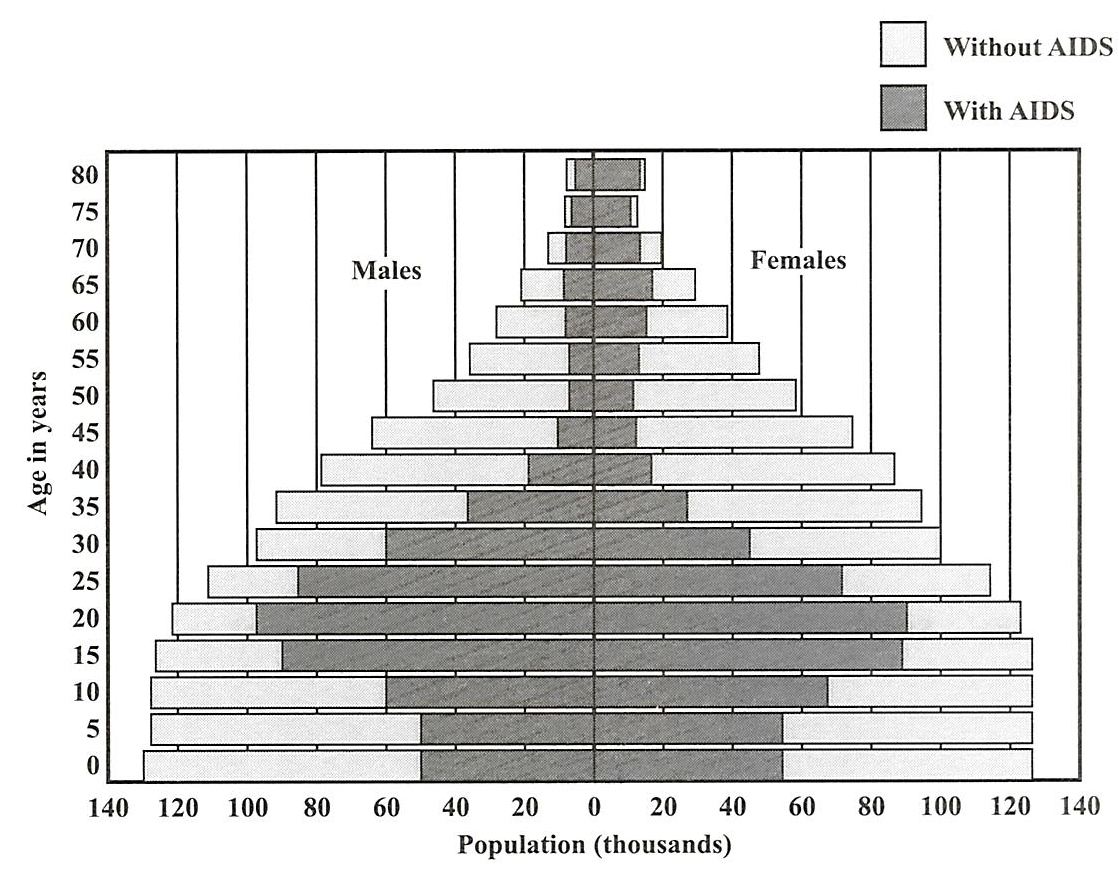
Figure 1 shows the predicted population pyramid for Country X. It shows the population of males and females from 0 to 80 years with and without AIDS for the year 2020.
State the TWO differences between the projected growth for the population with AIDS and the population without AIDS.
[2 marks]
State the TWO differences between the projected growth for the population with AIDS and the population without AIDS.
[2 marks]
Suggest ONE reason for EACH difference stated in (b) (i).
[2 marks]
Suggest THREE socioeconomic effects that may occur as a result of significant death rates due to AIDS in the 25–40 age range.
[3 marks]
State the earliest age at which the predicted population without AIDS is approximately the same as the predicted population with AIDS.
[1 mark]
Osmosis, diffusion and active transport are all important processes that occur in living systems. (i) State TWO similarities between osmosis and diffusion. (2 marks) (ii) Outline ONE difference between osmosis and active transport. (2 marks) (iii) In which of the three processes, osmosis, diffusion or active transport, is a protein carrier used? (1 mark)
[5 marks]
State TWO similarities between osmosis and diffusion.
[2 marks]
Outline ONE difference between osmosis and active transport.
[2 marks]
In which of the three processes, osmosis, diffusion or active transport, is a protein carrier used?
[1 mark]
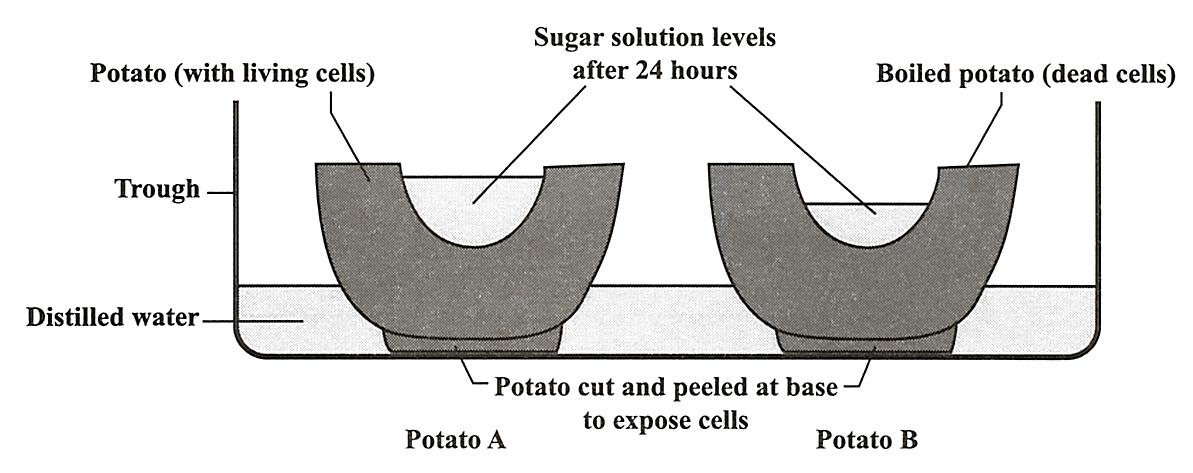
A student performed an experiment to investigate the movement of distilled water through potato tissue using the apparatus shown in Figure 2. Potato A was boiled while Potato B was NOT boiled. Each potato cavity was filled with an equal level of sugar solution and left to stand for 24 hours.
(i) Identify the process by which distilled water moves from the trough into the cavities of the potatoes. (1 mark) (ii) Explain why the level of sugar solution in Potato A is higher than the level of sugar solution in Potato B after 24 hours. (3 marks)
[5 marks]
Identify the process by which distilled water moves from the trough into the cavities of the potatoes.
[1 mark]
Explain why the level of sugar solution in Potato A is higher than the level of sugar solution in Potato B after 24 hours.
[3 marks]
The experiment is repeated using distilled water in the cavities of EACH potato. Suggest what would happen to the level of water in potato A. Give ONE reason for your answer.
[2 marks]
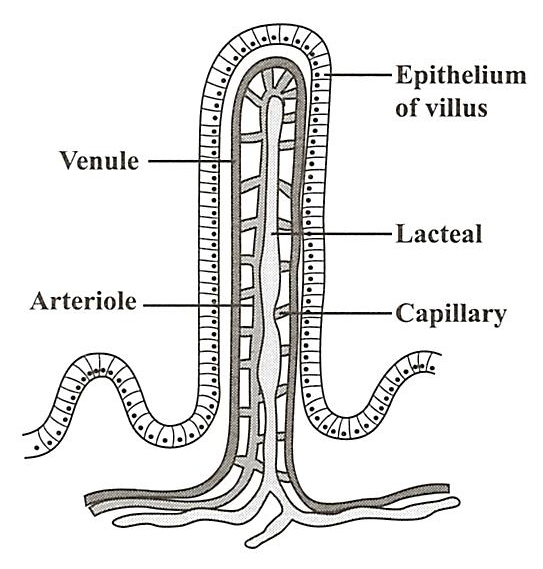
Figure 3 shows a diagram of a villus. Villi are located in the small intestine and are necessary for the absorption of nutrients.
[6 marks]
Using the diagram, explain how villi are well adapted for absorption.
[3 marks]
State ONE process by which nutrients are absorbed into the blood stream.
[1 mark]
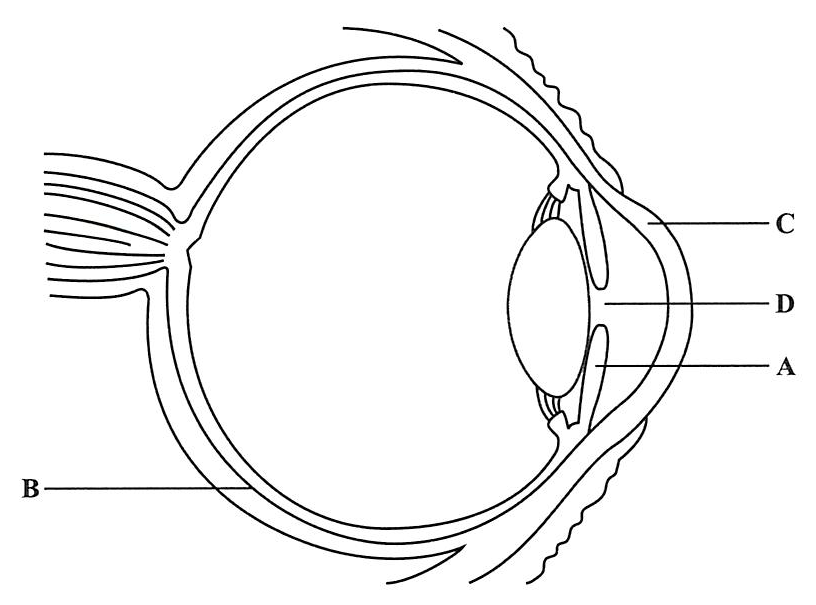
Figure 4 shows a diagram of the cross-section of the eye.
[8 marks]
Figure 4 shows a diagram of the cross-section of the eye.
[4 marks]
Name EACH of the structures labelled A and B.
Name of structure A Name of structure B
[2 marks]
State the main function of EACH of the structures labelled C and D.
Function of C Function of D
[2 marks]
Name the eye disease caused by a vitamin deficiency and identify the vitamin that can reduce its incidence.
Name of eye disease Deficient vitamin
[2 marks]
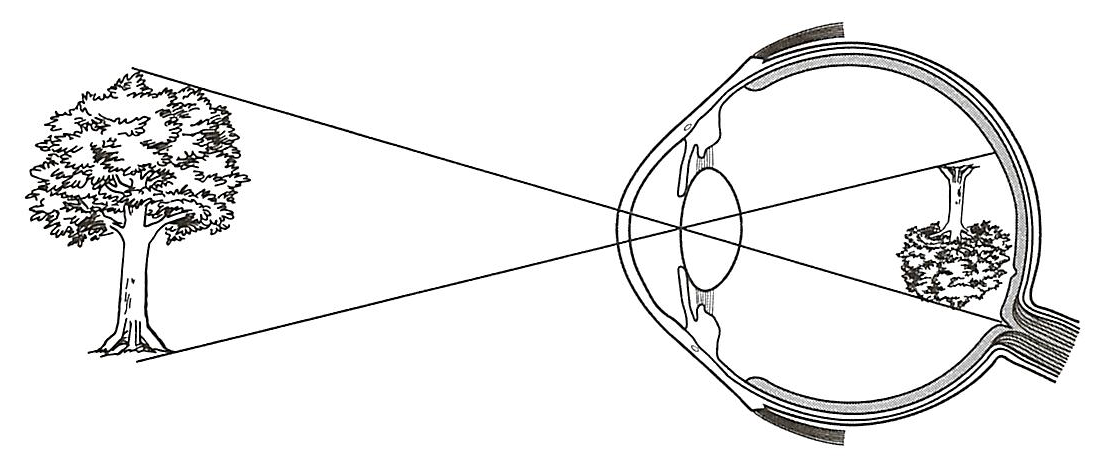
Figure 5 shows an image of a tree being formed on the retina.
Figure 5. Image of tree formed on retina
List the FIVE structures, in the correct order, to show the path through the eye in which the light rays pass as they leave the tree to focus the image on the retina.
[3 marks]
Accommodation is referred to as the changes that occur in the eye when we focus on far and near objects.
Describe what happens to EACH of the following structures as the eye focuses on a distant object.
[2 marks]
The ciliary muscles
[1 mark]
The lens
[1 mark]
Carolyn is unable to see close objects clearly.
[4 marks]
Name the sight defect that Carolyn may be experiencing.
[1 mark]
Suggest ONE possible cause of Carolyn's sight problem and state where in the eye the image of a close object that she views is formed.
[2 marks]
Recommend a type of lens that could be used to correct Carolyn's sight problem.
[1 mark]
Water is necessary for life. However, too much or too little water in the diet can cause problems to develop within the body.
[5 marks]
Name the excretory organ responsible for regulating the volume of water in the body.
[1 mark]
Identify TWO other excretory organs which remove water from the body and state EACH of their excretory products that contain water.
Organ Excretory product
Organ Excretory product
[4 marks]
Alex and Anna love to play during breaktime at school. As a result, their bodies generate large amounts of heat and their body temperatures rise.
[5 marks]
Explain the difference between 'body heat' and 'body temperature'.
[2 marks]
Name the structure in their bodies which acts as a thermostat to keep their body temperatures constant.
[1 mark]
Explain the process by which the body temperatures of Alex and Anna return to normal after they have played during recess.
[5 marks]
The human body functions best at . Alex becomes very cold in his air-conditioned classroom and begins to shiver. Explain how his body's response is an example of negative feedback.
[2 marks]
SECTION B
Answer ALL questions in this section.
A drug is a substance which changes the way in which the body works. It changes the chemical reactions in the body.
[15 marks]
Name TWO categories of drugs and state ONE example of a drug from EACH named category.
[4 marks]
Medical doctors advise their patients to use medicinal drugs only as prescribed because they may cause various physiological and/or psychological effects.
Outline the difference between 'physiological dependence' and 'psychological dependence' on drugs.
[2 marks]
Antibiotics are used to treat bacterial infections. Most individuals discontinue taking antibiotics as soon as they get some relief from their symptoms.
Explain why doctors advise patients to complete the entire course of prescribed antibiotics.
[3 marks]
Explain THREE negative effects the misuse of drugs could have on society.
[6 marks]
Governments are trying to find new ways of replacing resources that will eventually become scarce. As a result, methods are being developed to conserve existing sources.
[15 marks]
List the THREE methods by which resources can be conserved and state ONE example of EACH method.
[6 marks]
The growth of populations has led to increased waste production. Various Caribbean countries have created landfills to deal with this challenge.
Outline THREE ways in which the environment may be negatively affected by the activities occurring at a landfill.
[6 marks]
The common use of non-biodegradable plastics has led to an increase in the volume of waste in the environment.
Suggest THREE ways in which non-biodegradable plastics could negatively impact living organisms and the environment.
[3 marks]