Free CXC Human and Social Biology Paper 2 May/June 2016 past paper from 2016. Includes a worked answer key. Open the PDF, take a timed test, and study with AI on Caribbean AI.
Answer keys are free on Caribbean AI. View the answers to every past-paper question at no cost - no payment needed - with step-by-step worked solutions and instant AI marking available on Premium.
CSEC Human and Social Biology Paper 2 May/June 2016 - Free CXC Past Paper with Answers
Free CXC Human and Social Biology Paper 2 May/June 2016 past paper from 2016. Includes a worked answer key. Open the PDF, take a timed test, and study with AI on Caribbean AI.
Opening the interactive papers…
Every question from this paper as text. See the answers and worked solutions. Questions are the property of the Caribbean Examinations Council; Caribbean AI is not affiliated with CXC.
Name a test that Matthew could use to determine the presence of starch in his diet.
[1 mark]
Other than potato and cassava, state TWO foods that are rich in starch.
[2 marks]
Which of the following foods should Matthew ingest for growth and repair of his muscle tissue: fish, plantain, carrots, lentil peas?
[1 mark]
Name TWO reagents that Matthew should use to test for the presence of protein in his meal.
[2 marks]
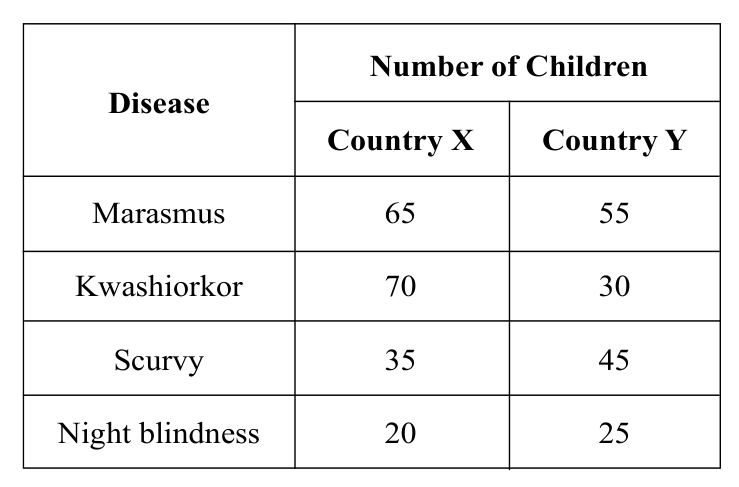
Table 1 shows the number of children (in hundreds) who suffer from diet-related diseases in Country X and Country Y.
| Disease | Number of Children |
|---|---|
| Country X | |
| Marasmus | 65 |
| Kwashiorkor | 70 |
| Scurvy | 35 |
| Night blindness | 20 |
On the grid provided on page 7, draw a bar graph to represent the data in Table 1.
[3 marks]
On the grid provided on page 7, draw a bar graph to represent the data in Table 1.

[3 marks]
Which country has the HIGHER incidence of BOTH marasmus and kwashiorkor?
[1 mark]
Which country has the LOWER incidence of diseases altogether?
[1 mark]
Using your knowledge of nutritional diseases, suggest the major nutrient that may be lacking in the diet of children from Country X that could cause them to develop night blindness, and state ONE source of this nutrient.
Nutrient Source
[2 marks]
As a result of a change in government, a certain country no longer suffers from the effects of hunger. Suggest TWO diseases that could develop as a result of overeating and lack of exercise.
[2 marks]
State the meaning of EACH of the following terms:
Diffusion Osmosis
[4 marks]
Diffusion
[2 marks]
Osmosis
[2 marks]
Figure 1 and Figure 2 represent experiments to show the movement of molecules.
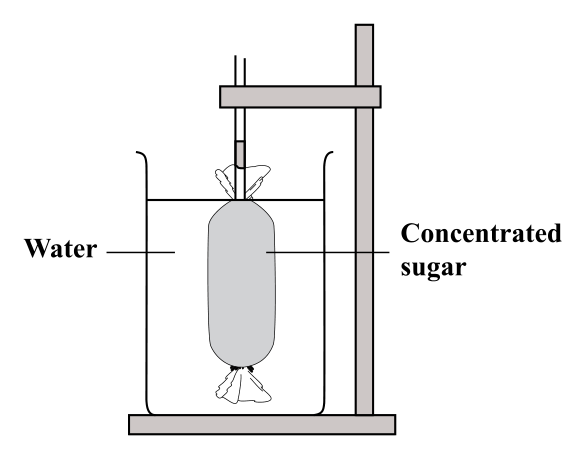
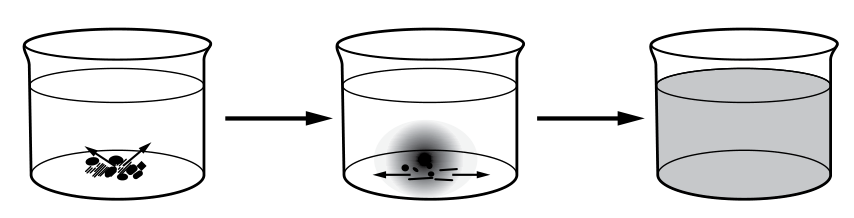
Both experiments show the movement of molecules. Suggest TWO differences between the movement of molecules in Figure 1 and Figure 2.
[2 marks]
In which of the diagrams, Figure 1 or Figure 2, is osmosis taking place?
[1 mark]
After one hour, what would be expected to happen to the level of water in the beaker in Figure 2? Explain why this would occur.
[2 marks]
The process of diffusion is necessary in the human body in order for it to obtain essential materials. Other than the small intestine, state TWO organs in the human body in which diffusion occurs.
[2 marks]
The inner surface of the small intestine is modified to carry out its function. One modification is the villus. Describe and explain the structure and function of the villus.
[4 marks]
Name the end products of EACH of the following types of cellular respiration:
[6 marks]
Aerobic
[3 marks]
Anaerobic
[3 marks]
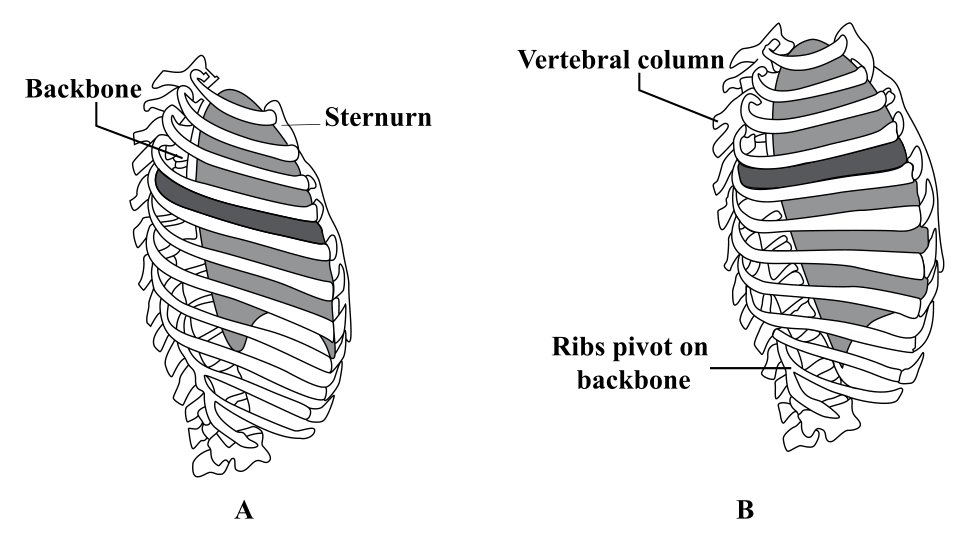
Breathing involves inspiration and expiration. Figure 3 shows the position of the rib cage during breathing.
[5 marks]
Which of the drawings in Figure 3, A or B, shows the rib cage during inspiration?
[1 mark]
With the aid of Figure 3, outline the activities that occur during the process of inspiration.
[4 marks]
Desirée has difficulty breathing during the dry season when bush fires occur. Her bronchiole tubes become inflamed and she often has to be hospitalized.
[4 marks]
Suggest the disease from which Desirée is MOST likely suffering.
[1 mark]
Other than smoke, suggest TWO factors that may trigger Desirée’s disease.
[2 marks]
Name the treatment that Desirée MOST likely receives at the hospital.
[1 mark]
Figure 4 illustrates a form of cell division in humans.
[15 marks]
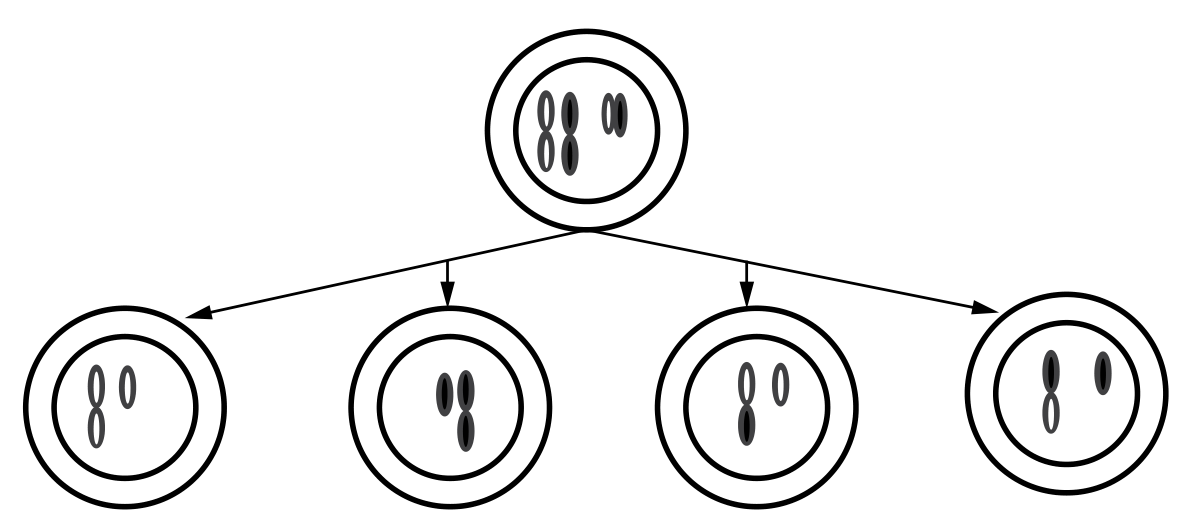
Identify the type of cell division illustrated in Figure 4.
[1 mark]
Which type of cells, sex cells or somatic cells, are produced by this process?
[1 mark]
What is the chromosome number of the parent cell and the daughter cell?
Parent cell Daughter cell
[2 marks]
Which TWO types of sex chromosomes are fathers able to pass on to their offspring?
[2 marks]
Sunil receives a painful blow to his groin during a game. Later he wonders why his testes are not protected inside his body.
[6 marks]
Explain to Sunil the advantage of his testes being carried outside his body.
[3 marks]
Sunil and his wife would like to have a child. Outline the roles that the epididymis, the seminal vesicles and the prostate gland play in forming semen in Sunil's body.
[3 marks]
Sunil's wife learns that cervical cancer is common and kills many women in the Caribbean.
[3 marks]
What TWO measures should she take to protect herself from cervical cancer?
[2 marks]
Cervical cancer is believed to be caused by a sexually transmitted infection. Name ONE other sexually transmitted infection.
[1 mark]
SECTION B
Answer ALL questions in this section.
Write your answers in the spaces provided in this booklet.
[15 marks]
Identify the single-cell organism that causes malaria and state the TWO tissues/organs that it destroys in the human body.
Organism Organs
[3 marks]
List THREE symptoms that someone suffering from malaria is likely to exhibit.
[3 marks]
While on vacation Ravi enjoys some oysters and drinks a glass of water. The next morning he experiences severe abdominal cramps and diarrhoea.
Discuss the disease that Ravi most likely contracted. Include in your discussion, the name of the disease, the causative organism, TWO possible ways in which Ravi may have contracted it, and TWO steps that he could take to avoid getting ill like this in the future.
[9 marks]
Describe THREE ways in which water is cycled between the earth and the atmosphere.
[6 marks]
Kheana has a garden near a pond from which she can fish. She notices that the surface of the pond is covered by water plants. Later she observes dead plants and dead fish in the pond. Explain to Kheana why the fish in the pond are most likely dying.
[5 marks]
Acme Industries have been dumping their chemical waste in a river that is frequented by a diversity of animals and used by humans for swimming and fishing. Explain the effect that these chemicals have on the food chain.
[4 marks]