Free CXC Physics Paper 2 May/June 2010 past paper from 2010. Includes a worked answer key. Open the PDF, take a timed test, and study with AI on Caribbean AI.
Answer keys are free on Caribbean AI. View the answers to every past-paper question at no cost - no payment needed - with step-by-step worked solutions and instant AI marking available on Premium.
CSEC Physics Paper 2 May/June 2010 - Free CXC Past Paper with Answers
Free CXC Physics Paper 2 May/June 2010 past paper from 2010. Includes a worked answer key. Open the PDF, take a timed test, and study with AI on Caribbean AI.
Opening the interactive papers…
Every question from this paper as text. See the answers and worked solutions. Questions are the property of the Caribbean Examinations Council; Caribbean AI is not affiliated with CXC.
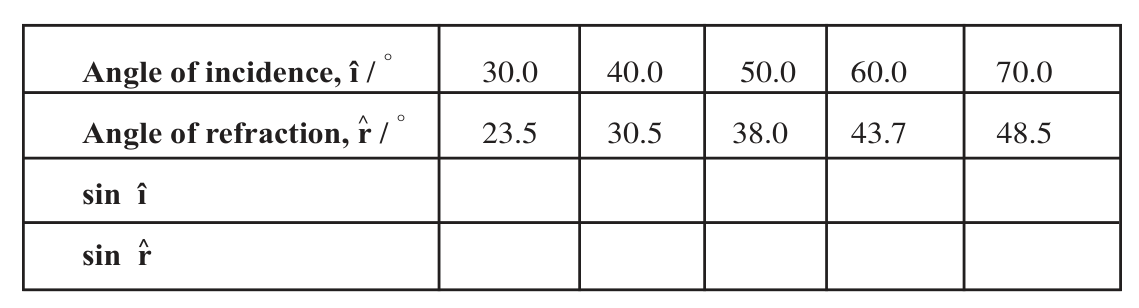
Testing of a new material to be used as an anti-reflective coating for eye glasses has yielded the results shown in Table 1.
| Angle of incidence, | 30.0 | 40.0 | 50.0 | 60.0 | 70.0 |
|---|---|---|---|---|---|
| Angle of refraction, |
| 23.5 |
| 30.5 |
| 38.0 |
| 43.7 |
| 48.5 |
| sin |
| sin |
[25 marks]
Complete Table 1 by calculating the values for and .
[4 marks]
Use the readings from the completed Table 1 to plot a graph of against on the graph paper on page 2.
[7 marks]
Calculate the gradient of the graph.
[4 marks]
State the TWO laws of refraction.
[4 marks]
Calculate the angle of refraction if the angle of incidence is for this new material.
[3 marks]
The anti-reflective coating works best if its refractive index is the square root of the refractive index of the lens in the eye glasses. Determine the refractive index of the lens that gives the best result.
[3 marks]
Define EACH of the following terms.
[6 marks]
Velocity
[2 marks]
Acceleration
[2 marks]
Linear momentum
[2 marks]
In 2008, at the Beijing Olympics, Usain Bolt of Jamaica reclaimed his title as the world's fastest man. He completed the 100 m final in a world record time of 9.69 s. He accelerated uniformly from rest for the first 6.5 seconds, covering 60 m before coasting at maximum speed to the finish.
[9 marks]
Calculate his average speed for the first 6.5 s.
[2 marks]
What was his maximum speed?
[2 marks]
What was his acceleration during the first 6.5 s?
[2 marks]
What MAJOR form of energy did BOLT possess when he crossed the finish line?
[1 mark]
A student connects the circuit in Figure 1 below to investigate rectification using a single diode.
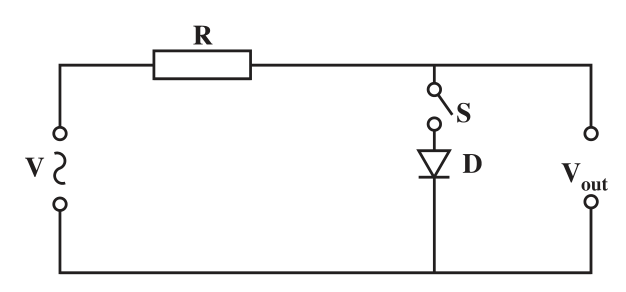
[2 marks]
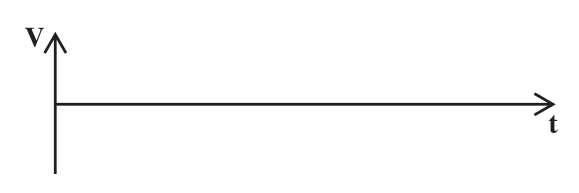
Sketch the graph when switch S is open.
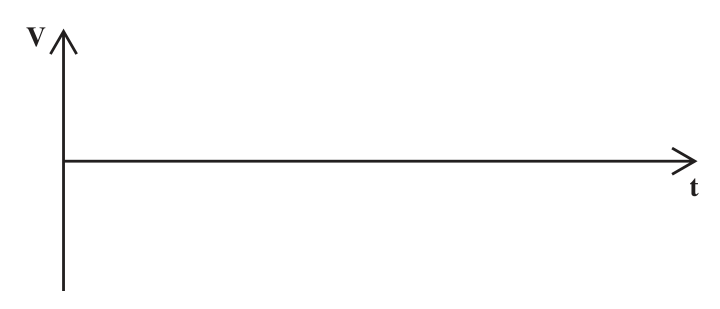
[1 mark]
Sketch the graph across diode D when switch S is closed.
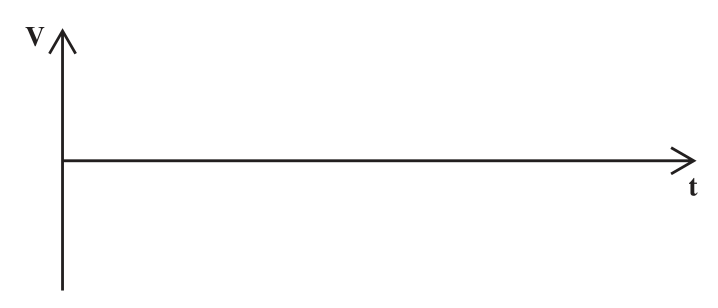
[1 mark]
Sketch the graph across a battery power source.
[1 mark]
What is the similarity in the voltage between (ii) and (iii)?
[1 mark]
How can you use the circuit in Figure 1 to determine whether or not a semiconductor diode is defective?
[2 marks]
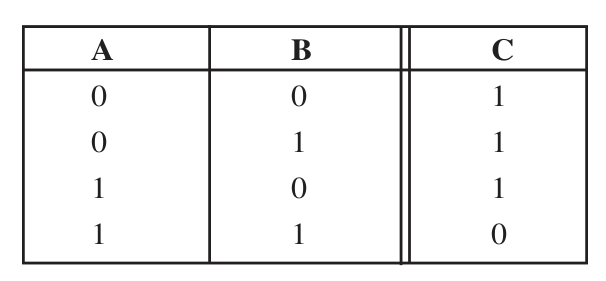
The truth table of a logic gate is shown below for inputs A and B and output C.
[9 marks]
State the type of logic gate.
[1 mark]
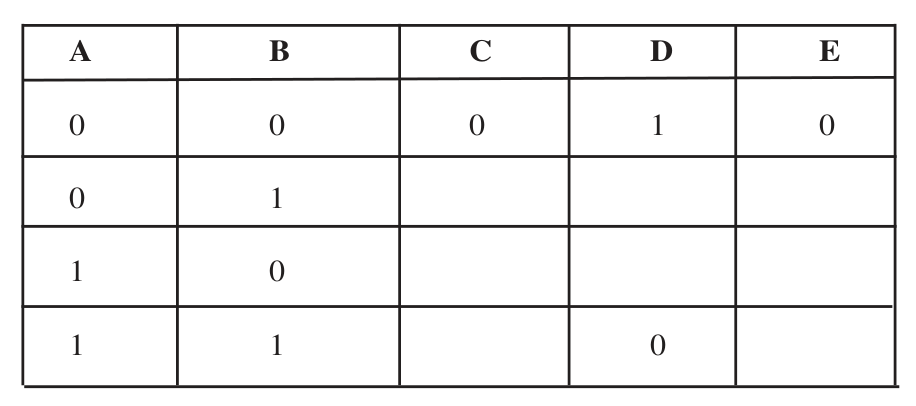
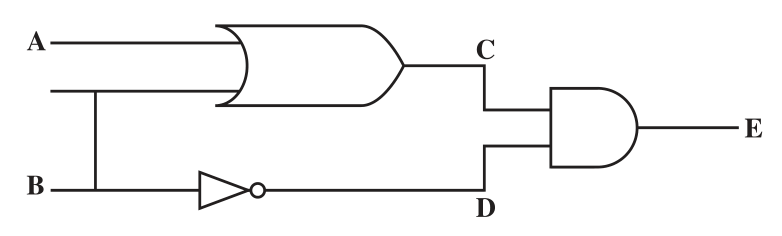
Complete the truth table for the following logic circuit.
[8 marks]
SECTION B Answer ALL questions. You MUST write your answers in the space provided after each question.
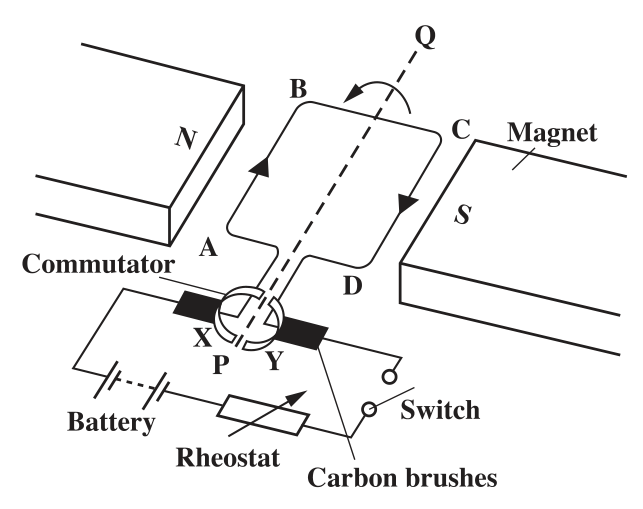
With reference to the diagram of a simple d.c. motor shown in Figure 2
[6 marks]
explain how this motor works
[5 marks]
give the purpose of the commutator.
[1 mark]
A 24 V d.c. motor was used to lift a small appliance of mass 25 kg from the ground to the second floor of a multi-storey carpark. The floor is 30 m above the ground. The motor, operating at 100% efficiency, works at a steady rate and takes 5 s to complete the activity.
[9 marks]
Calculate the power provided by the motor.
[4 marks]
Calculate the current drawn from the d.c. supply.
[4 marks]
If the power required to lift the appliance was greater, what effect would this have on the value of the current?
Assume the voltage rating remains constant.
[1 mark]
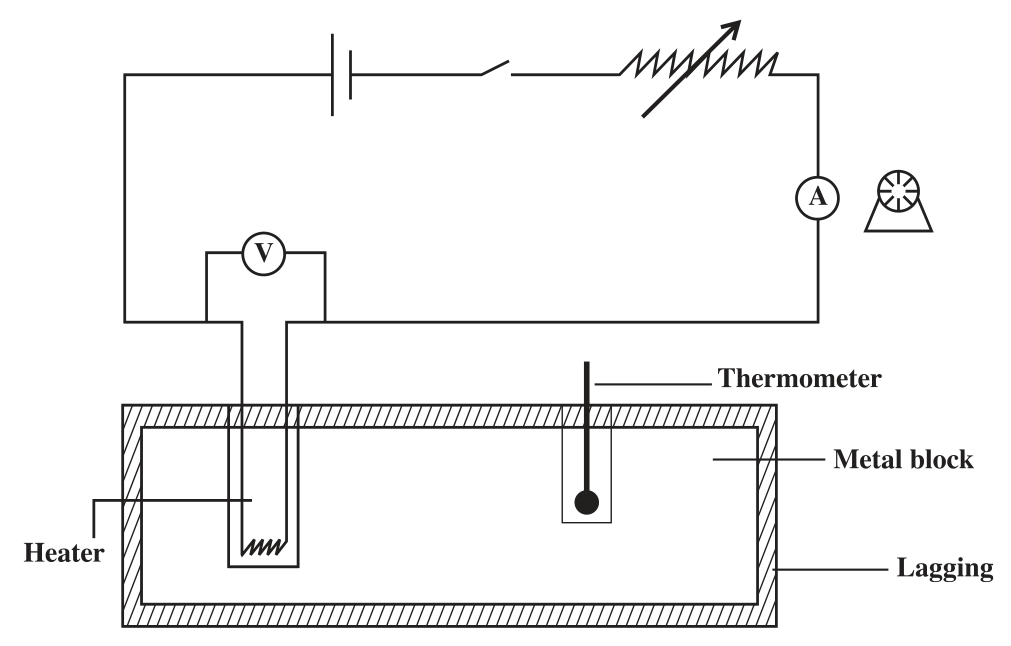
A CSEC Physics teacher gave two groups of students projects on Specific Heat Capacity. One group used an electrical method to calculate the specific heat capacity of a metal block. The circuit used in this method is shown in Figure 3.
Describe the method used by this group to determine the specific heat capacity of the metal block.
[6 marks]
The second group of students determined the specific heat capacity of a liquid. One set of results is described below:
It took 300 s for the temperature of 0.1 kg of the liquid to be elevated from to . The energy supplied was 13.6 kJ during this period.
Assuming that no heat was lost and ignoring the heat capacity of the container, determine the value of the specific heat capacity of the liquid.
[6 marks]
If the liquid was heated twice as long, what impact, if any, would this have on the specific heat capacity of the liquid?
[1 mark]
Justify your response in part (ii).
[2 marks]
You were asked to present to your class, a comparison of alpha () with gamma () radiation. Compare these two types of radiation in terms of their (i) range in air (ii) behaviour in an electric field (iii) type of track in a cloud chamber.
[6 marks]
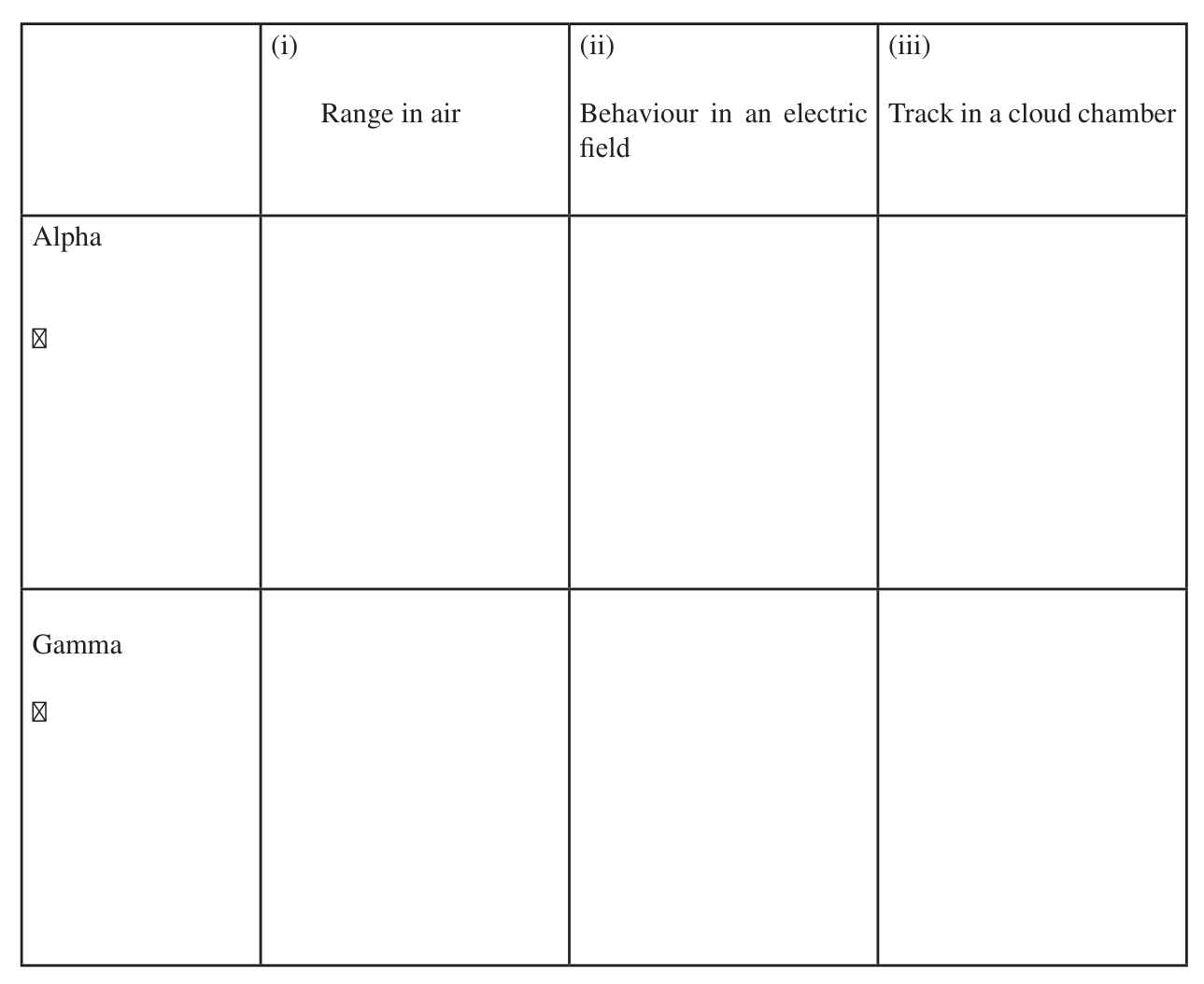
range in air
[2 marks]
behaviour in an electric field
[2 marks]
type of track in a cloud chamber.
[2 marks]
A nuclear scientist proposed the following nuclear reaction based on an artificial radioactive decay process to produce energy.
Calculate the number of neutrons in Xenon (Xe).
[2 marks]
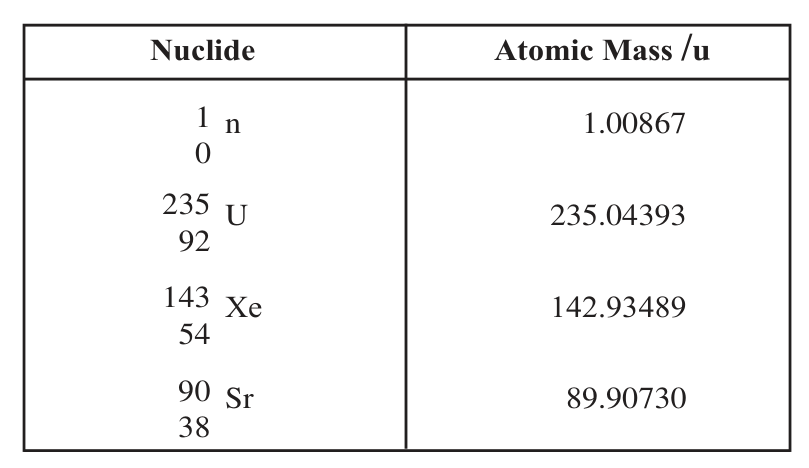
Determine the energy released in the proposed nuclear reaction.
[4 marks]
If the energy released in an alternative, natural decay reaction is J, which would be the preferred method for the production of a nuclear power station? Justify your choice.
[2 marks]
Give the reason for your decision in (iii).
[1 mark]
Table 2 below gives the atomic mass for each nuclide. ( Kg.)
| Nuclide | Atomic Mass /u |
|---|---|
| 1.00867 | |
| 235.04393 | |
| 142.93489 | |
| 89.90730 |
[9 marks]