Free CXC Chemistry Paper 2 May/June 2006 past paper from 2006. Includes a worked answer key. Open the PDF, take a timed test, and study with AI on Caribbean AI.
Answer keys are free on Caribbean AI. View the answers to every past-paper question at no cost - no payment needed - with step-by-step worked solutions and instant AI marking available on Premium.
CSEC Chemistry Paper 2 May/June 2006 - Free CXC Past Paper with Answers
Free CXC Chemistry Paper 2 May/June 2006 past paper from 2006. Includes a worked answer key. Open the PDF, take a timed test, and study with AI on Caribbean AI.
Opening the interactive papers…
Every question from this paper as text. See the answers and worked solutions. Questions are the property of the Caribbean Examinations Council; Caribbean AI is not affiliated with CXC.
< ![CDATA[Do not spend more than 30 minutes on Question 1.
[30 marks]
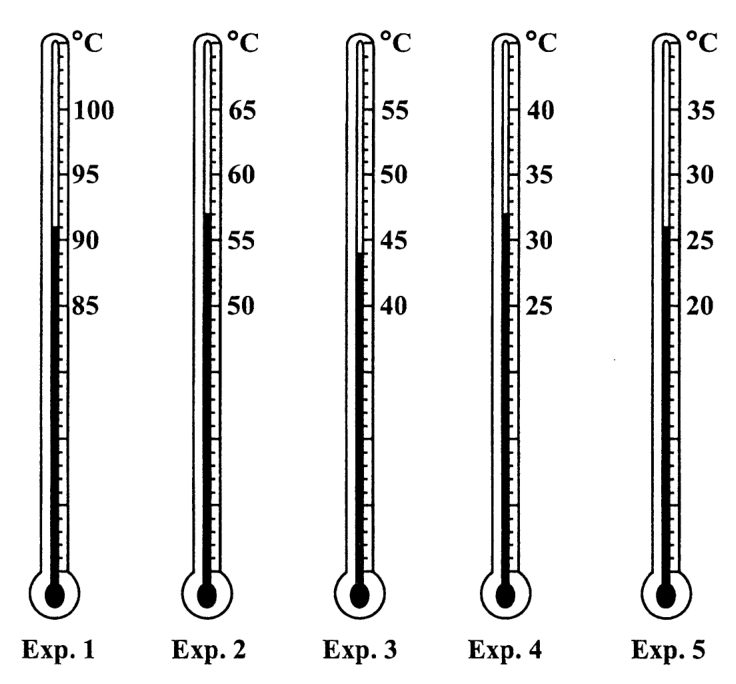
The following procedure is used to determine the solubility of X in water at various temperatures. In Experiment 1 (Table 1) , 2g of X is added to 4 cm³ water in a boiling tube. The tube is heated while stirring in a water bath until all of solid X has dissolved. The solution is then allowed to cool and the temperature at which crystals of X first reappear is noted. Experiments 2 to 5 are carried out using 2g of X in each case but different volumes of water as shown in Table 1. The temperatures at which crystals of X reappear are shown in Figure 1.
TABLE 1: DETERMINATION OF THE SOLUBILITY OF X AT VARIOUS TEMPERATURES
Figure 1. Temperatures at which crystals of X first reappear
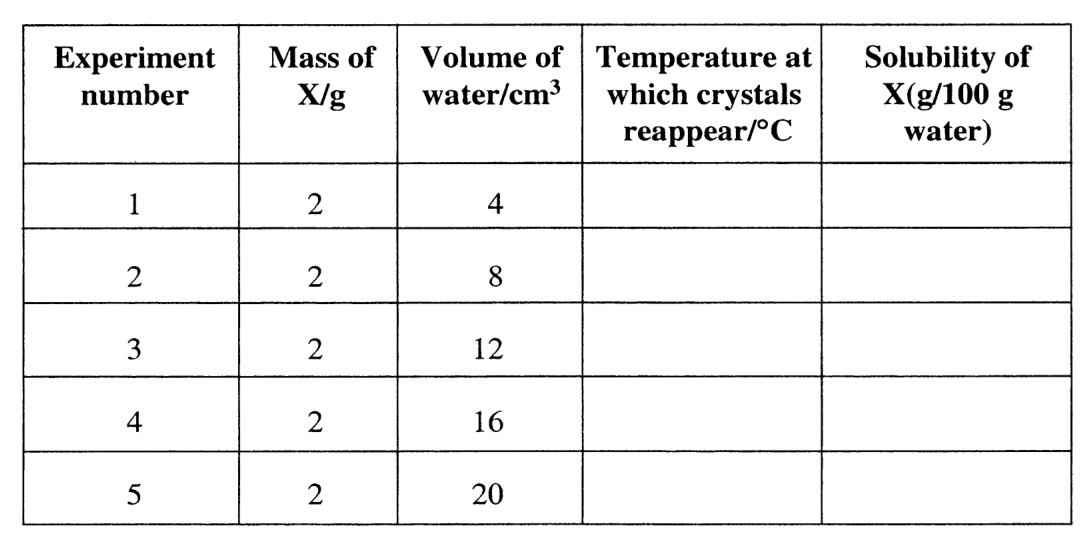
< ![CDATA[Complete Table 1 by filling in: a) The temperatures at which crystals of X reappear in EACH experiment using the information in Figure 1. b) The corresponding solubilities of X (g/100 g water). Use the following equation to calculate the solubility of X at each temperature: Solubility of X (g/100 g water) = (Equation 1) Assume 1 cm³ water = 1 g.
[5 marks]
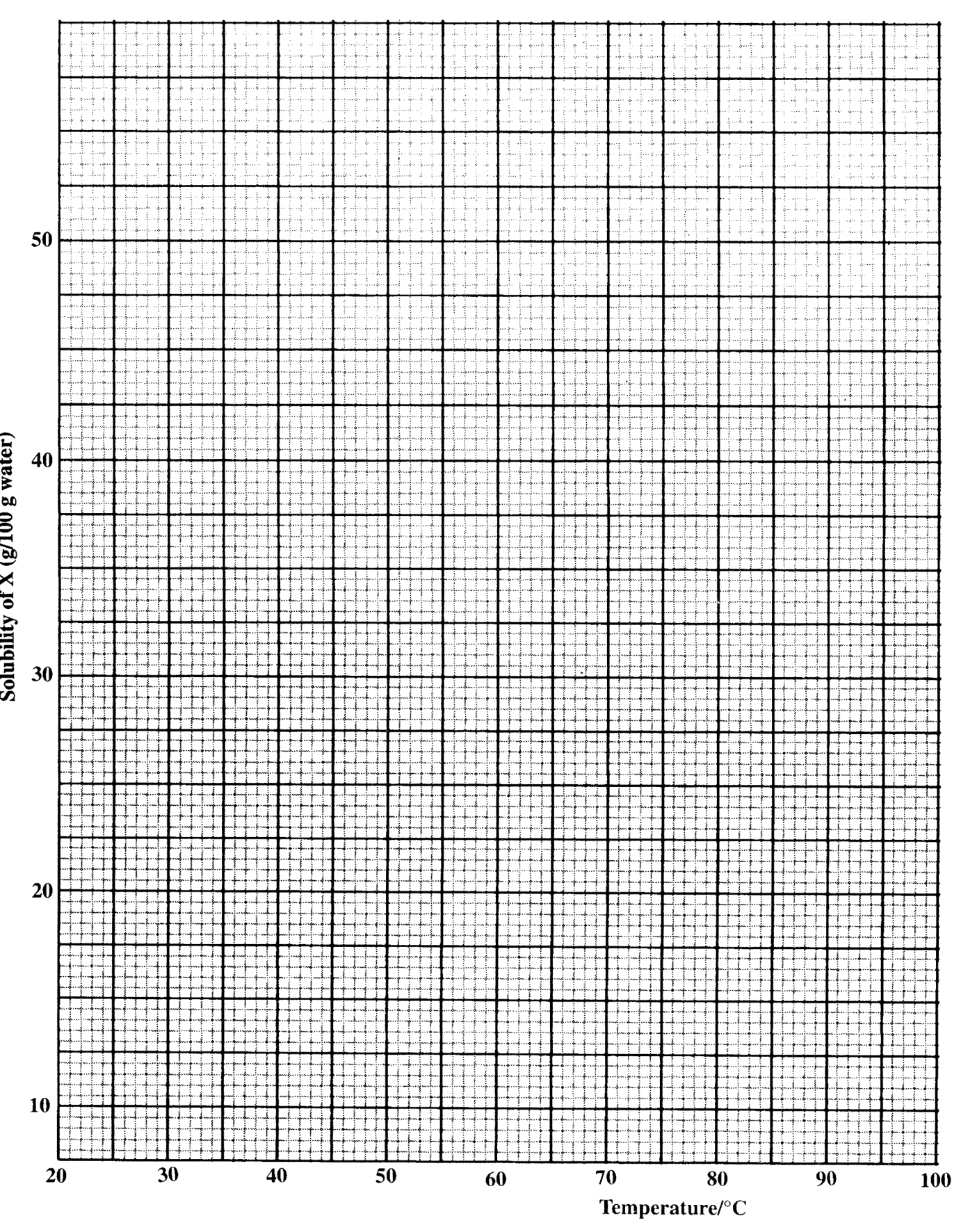
< ![CDATA[Using the graph paper provided on page 4, plot a graph of solubility of X (g/100 g water) against temperature in °C.
[4 marks]
< ![CDATA[What deduction about the solubility of X can be made from the graph drawn in Figure 2?
[2 marks]
Using Equation 1 and the graph drawn in Figure 2, calculate the volume of water which is required to just dissolve 2 g of X at 60 °C.
[3 marks]
Based on the graph in Figure 2, calculate the mass of X which would be deposited when 100 g of a solution of X at 60 °C is cooled to 40 °C.
[1 mark]
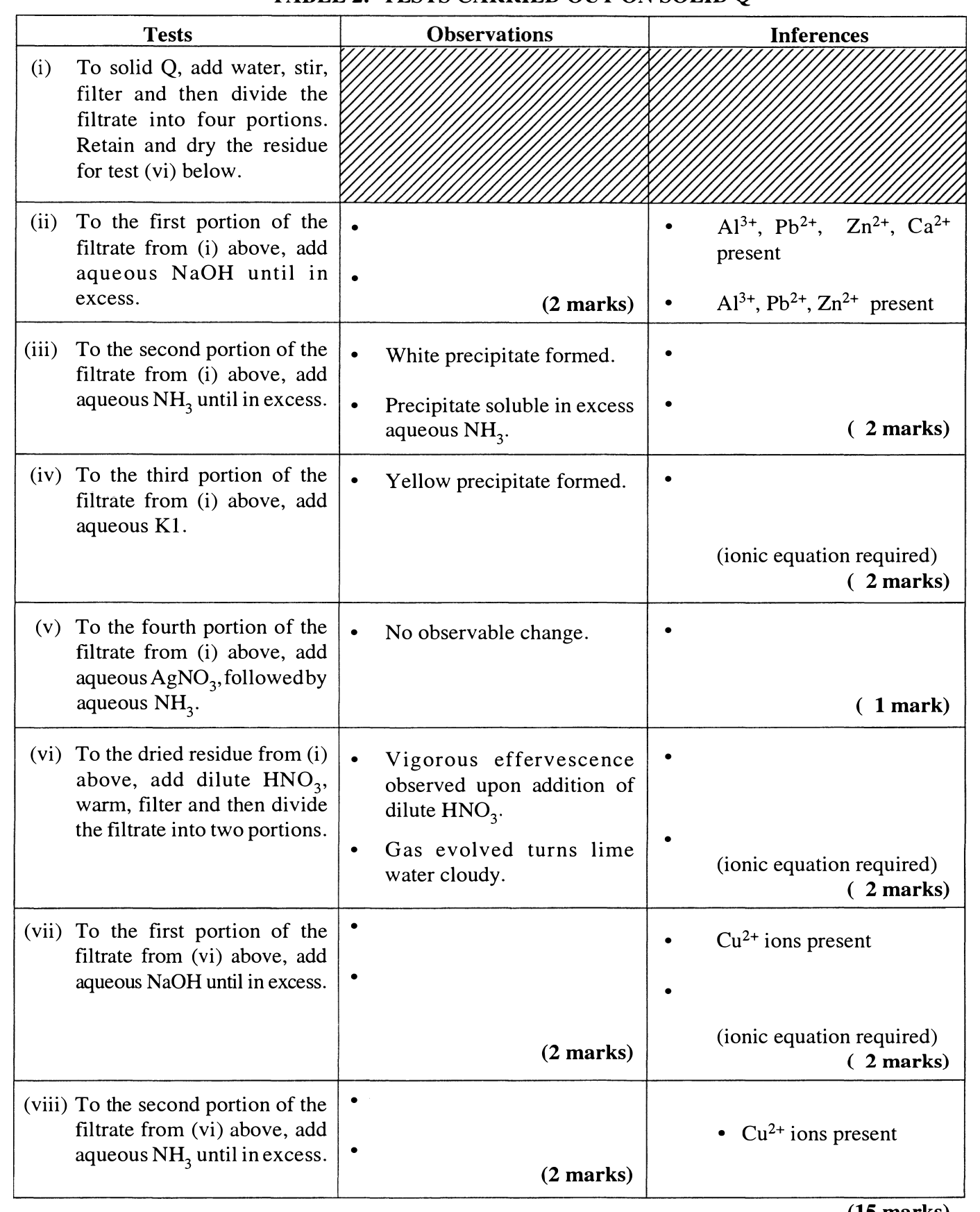
Complete Table 2 below for tests carried out on Solid Q.
TABLE 2: TESTS CARRIED OUT ON SOLID Q
[15 marks]
Test: To solid Q, add water, stir, filter and then divide the filtrate into four portions. Retain and dry the residue for test (vi) below.
< ![CDATA[Test: To the first portion of the filtrate from (i) above, add aqueous NaOH until in excess. Inference: Al³⁺, Pb²⁺, Zn²⁺, Ca²⁺ present
[2 marks]
< ![CDATA[Test: To the second portion of the filtrate from (i) above, add aqueous NH₃ until in excess. Observation: White precipitate formed. Precipitate soluble in excess aqueous NH₃. Inference: Al³⁺, Pb²⁺, Zn²⁺ present
[2 marks]
< ![CDATA[Test: To the third portion of the filtrate from (i) above, add aqueous KI. Observation: Yellow precipitate formed. (ionic equation required)
[2 marks]
< ![CDATA[Test: To the fourth portion of the filtrate from (i) above, add aqueous AgNO₃ followed by aqueous NH₃. Observation: No observable change.
[1 mark]
< ![CDATA[Test: To the dried residue from (i) above, add dilute HNO₃, warm, filter and then divide the filtrate into two portions. Observation: Vigorous effervescence observed upon addition of dilute HNO₃. Gas evolved turns lime water cloudy. (ionic equation required)
[2 marks]
< ![CDATA[Test: To the first portion of the filtrate from (vi) above, add aqueous NaOH until in excess. Inference: Cu²⁺ ions present (ionic equation required)
[4 marks]
< ![CDATA[Test: To the second portion of the filtrate from (vi) above, add aqueous NH₃ until in excess. Inference: Cu²⁺ ions present
[2 marks]
< ![CDATA[Chlorine has two isotopic forms with mass numbers 35 and 37 respectively. Chlorine has an atomic number of 17.
What differences, if any, are expected between the chemical reactions of chlorine 35 and chlorine 37? Explain your answer.
[2 marks]
Determine the number of electrons, protons and neutrons in the anion formed from the chlorine 37 atom. Number of: Electrons Protons Neutrons
[3 marks]
Explain the term 'ionic crystal'.
[2 marks]
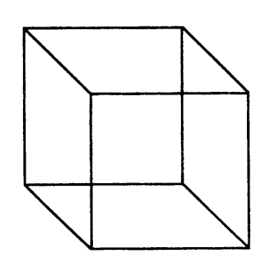
Using the symbols, ⚫ for sodium ions and ⚪ for chloride ions, fill in on the diagram in Figure 3, the positions occupied by these ions in the sodium chloride crystal.
Figure 3. Diagram representing sodium chloride crystal
[3 marks]
The melting points of chlorine, sodium chloride and magnesium oxide are C, C and C respectively.
Explain why the melting point of sodium chloride is much higher than that of chlorine.
[3 marks]
The crystal structures of magnesium oxide and sodium chloride are similar. Suggest why the melting point of magnesium oxide is much higher than that of sodium chloride.
[3 marks]
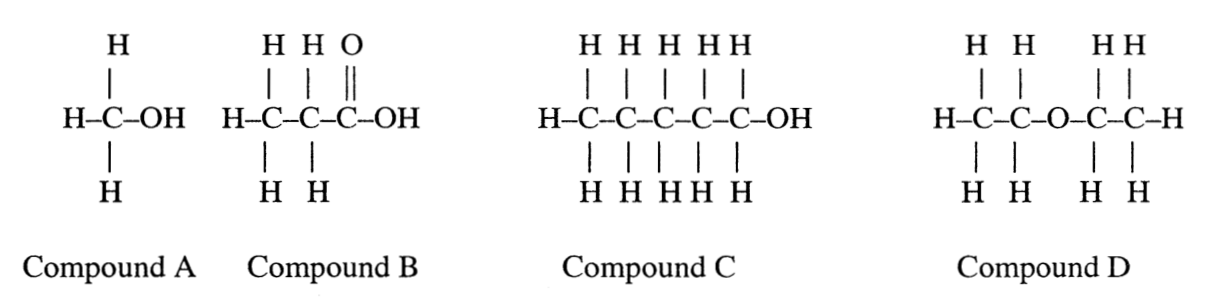
Below are four organic compounds, A, B, C and D.
[15 marks]
Which compounds belong to the same homologous series?
[1 mark]
State the homologous series to which the compounds you named in (a) (i) belong, and give a reason for placing them in the same homologous series.
[2 marks]
< ![CDATA[Draw fully displayed structures of ANY TWO structural isomers of Compound C. Give the name of EACH isomer you have drawn.
[4 marks]
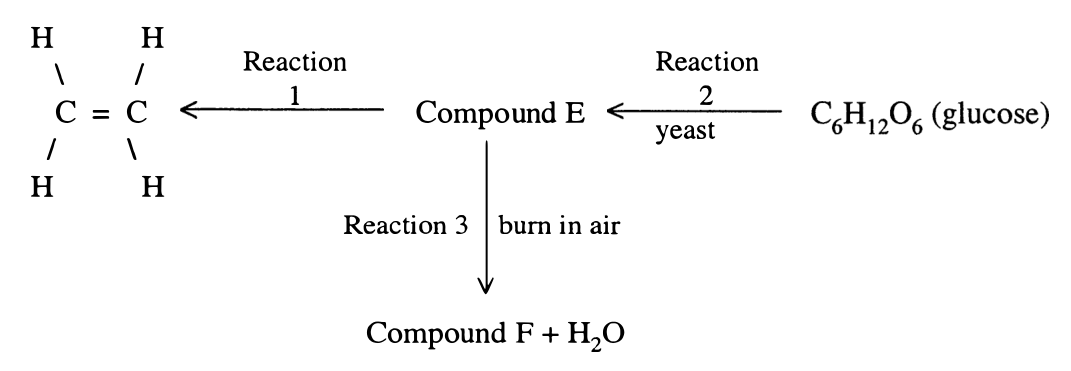
Figure 4 shows some reactions of Compound E. Use the information in Figure 4 to answer the questions which follow.
Figure 4. Some reactions of Compound E
State the reagent(s) and condition(s) for Reaction 1.
Reagent(s): .................................... Reaction condition(s): ....................................
[2 marks]
< ![CDATA[State the name of the process occurring during Reaction 2.
[1 mark]
Draw the correct formulae for Compounds E and F and hence write a balanced equation for Reaction 3.
[3 marks]
Draw the full structural formula of the organic product that is formed when Compound E reacts with Compound B, the structure of which is shown on page 8.
Structure:
[2 marks]
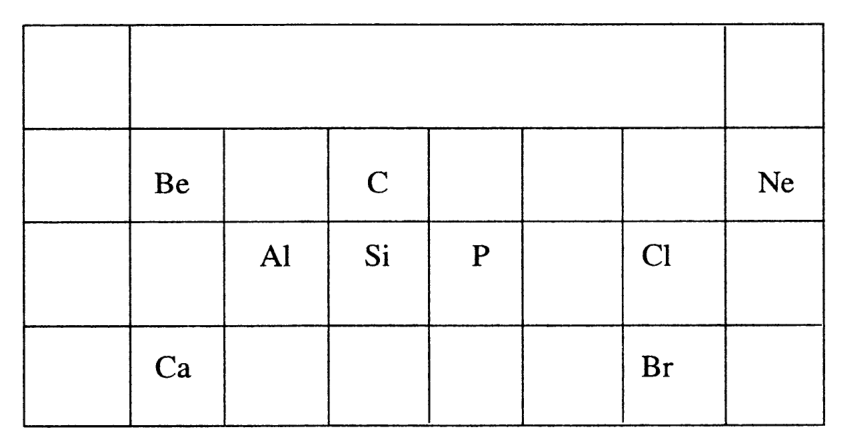
Table 3 shows part of the periodic table.
Use only the elements indicated in Table 3 to answer the questions which follow. Each element may be used once, more than once or not at all.
Which element reacts most readily with dilute hydrochloric acid?
[1 mark]
Write a balanced equation to illustrate the reaction occurring in (a) (i) above.
[2 marks]
Describe any difference(s) that may be observed in the reaction indicated in (a) (i) above, if dilute sulphuric acid were to be used instead of dilute hydrochloric acid. Give a reason for your answer.
[4 marks]
Identify TWO different elements in Table 3 which will combine by covalent bonding.
[1 mark]
Draw dot-cross diagrams to illustrate the bonding in b (i) above.
[3 marks]
An element X (not the actual symbol) has an atomic number of 19. Place element X in the correct position in Table 3.
[1 mark]
Give a reason for your answer in (c) (i).
[2 marks]
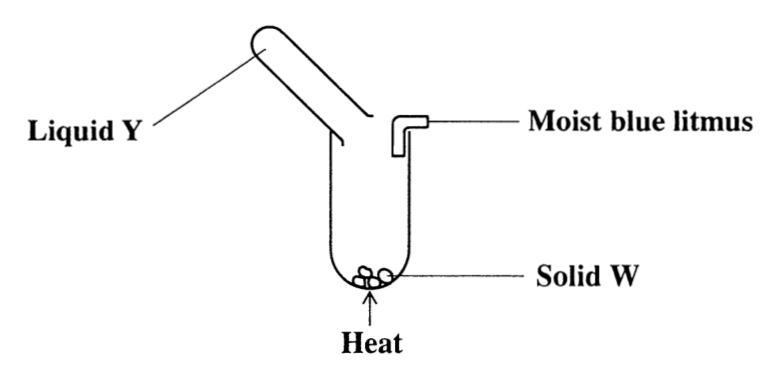
A student produces ammonia in the laboratory by adding Liquid Y to Solid W and warming as shown in Figure 5. He uses damp blue litmus in seeking to identify the ammonia produced.
Figure 5. Apparatus used to prepare ammonia
Suggest ONE suitable reagent that can be used as Y and ONE as W for the experiment.
[2 marks]
Identify the process by which the ammonia gas is produced at the bottom of the test tube comes in contact with the litmus paper at the mouth of the test tube.
[1 mark]
Comment on the suitability of using the moist blue litmus paper to identify ammonia gas.
[2 marks]
Instead of the litmus test used above, describe ONE OTHER chemical test that can be used to identify ammonia gas. Write a balanced equation to represent the chemical test you have described.
[4 marks]
Ammonia is prepared industrially by the Haber process. In this process nitrogen and hydrogen are allowed to react in the presence of a catalyst at approximately 200 atm and 400°C. The reaction is exothermic.
Name the catalyst used in the Haber process.
[1 mark]
Explain the importance of using relatively high pressure in this process.
[2 marks]
Draw a fully labelled energy profile diagram of the reaction for the production of ammonia during the Haber process. You should name the reactants and products on your diagram.
[3 marks]