Free CXC Chemistry Paper 2 May/June 2010 past paper from 2010. Includes a worked answer key. Open the PDF, take a timed test, and study with AI on Caribbean AI.
Answer keys are free on Caribbean AI. View the answers to every past-paper question at no cost - no payment needed - with step-by-step worked solutions and instant AI marking available on Premium.
CSEC Chemistry Paper 2 May/June 2010 - Free CXC Past Paper with Answers
Free CXC Chemistry Paper 2 May/June 2010 past paper from 2010. Includes a worked answer key. Open the PDF, take a timed test, and study with AI on Caribbean AI.
Opening the interactive papers…
Every question from this paper as text. See the answers and worked solutions. Questions are the property of the Caribbean Examinations Council; Caribbean AI is not affiliated with CXC.
< ![CDATA[Do NOT spend more than 30 minutes on Question 1.
[25 marks]
The catalyst manganese(IV) oxide can be used to alter the rate of decomposition of hydrogen peroxide.
Jonathan carried out an experiment at RTP (room temperature and pressure) to determine the rate of decomposition of hydrogen peroxide using manganese(IV) oxide as the catalyst. He did this by measuring the volume of oxygen given off at different time intervals. Water is also produced during the decomposition and the reaction is exothermic.
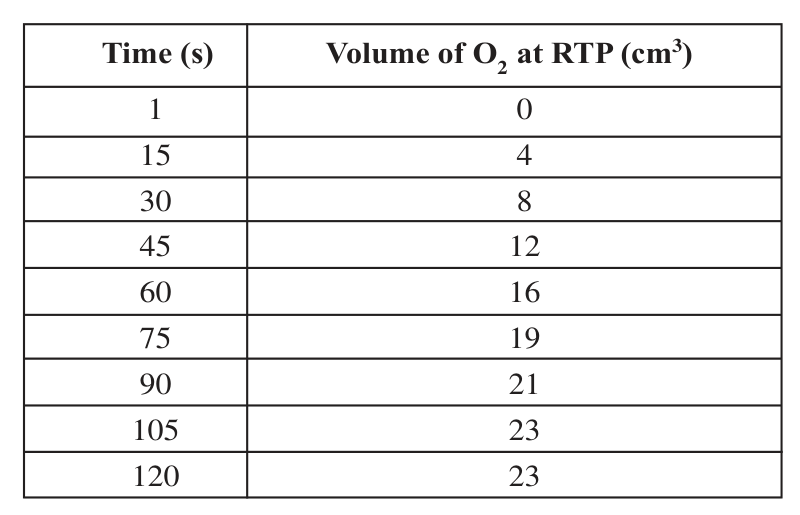
Table 1 records Jonathan's results using manganese(IV) oxide and 100 cm³ of 0.80 mol dm⁻³ hydrogen peroxide.
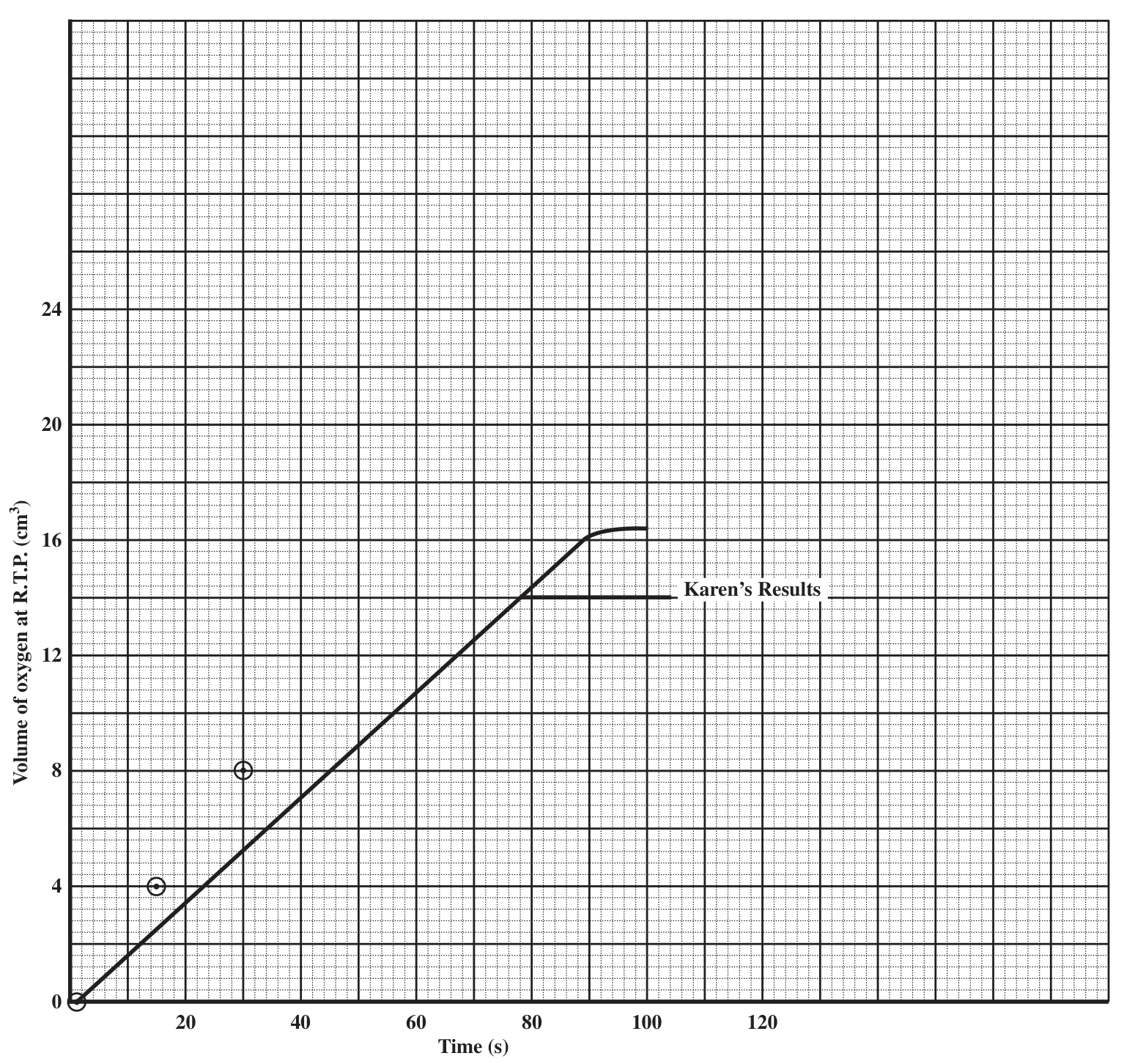
Karen carried out a similar experiment to Jonathan using 100 cm³ of 0.40 mol dm⁻³ hydrogen peroxide solution. Figure 1 on page 3 shows a graph of the data obtained by Karen.
TABLE 1: RESULTS OF JONATHAN'S EXPERIMENT (Table 1 is provided as an image)
Figure 1. Graph of results (Figure 1 is provided as an image)
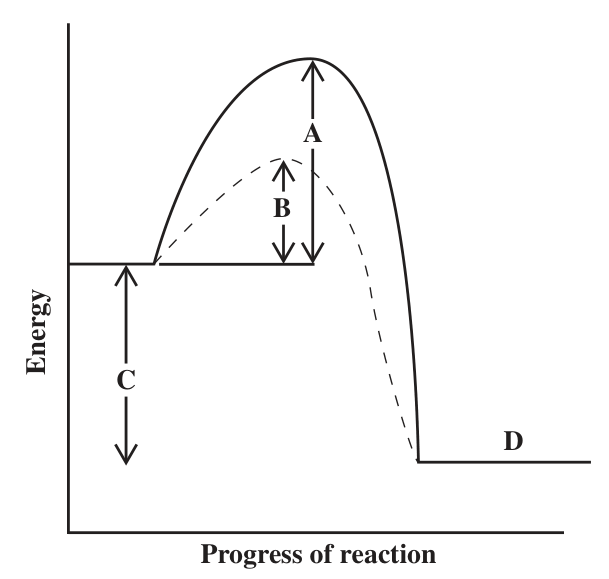
Figure 2. Enthalpy change for an exothermic reaction (Figure 2 is provided as an image)
< ![CDATA[Identify the parts labelled A, B, C, D on the diagram.
[4 marks]
Write a balanced equation to show the decomposition of hydrogen peroxide by manganese(IV) oxide (MnO₂).
[2 marks]
< ![CDATA[Using the same axes as the graph (Figure 1) on page 3, plot a graph of the volume of oxygen against time using the data in Table 1. The first three points have been plotted for you on the graph.
[3 marks]
< ![CDATA[Compare the plots obtained from Jonathan's and Karen's results in terms of the slope of the graph and the volume of oxygen produced. Account for the differences between Jonathan's and Karen's results.
[4 marks]
the number of moles of oxygen produced in 45 seconds at RTP (room temperature and pressure) . (1 mole of gas occupies 24 dm³ at RTP; Relative Atomic Mass O = 16)
[2 marks]
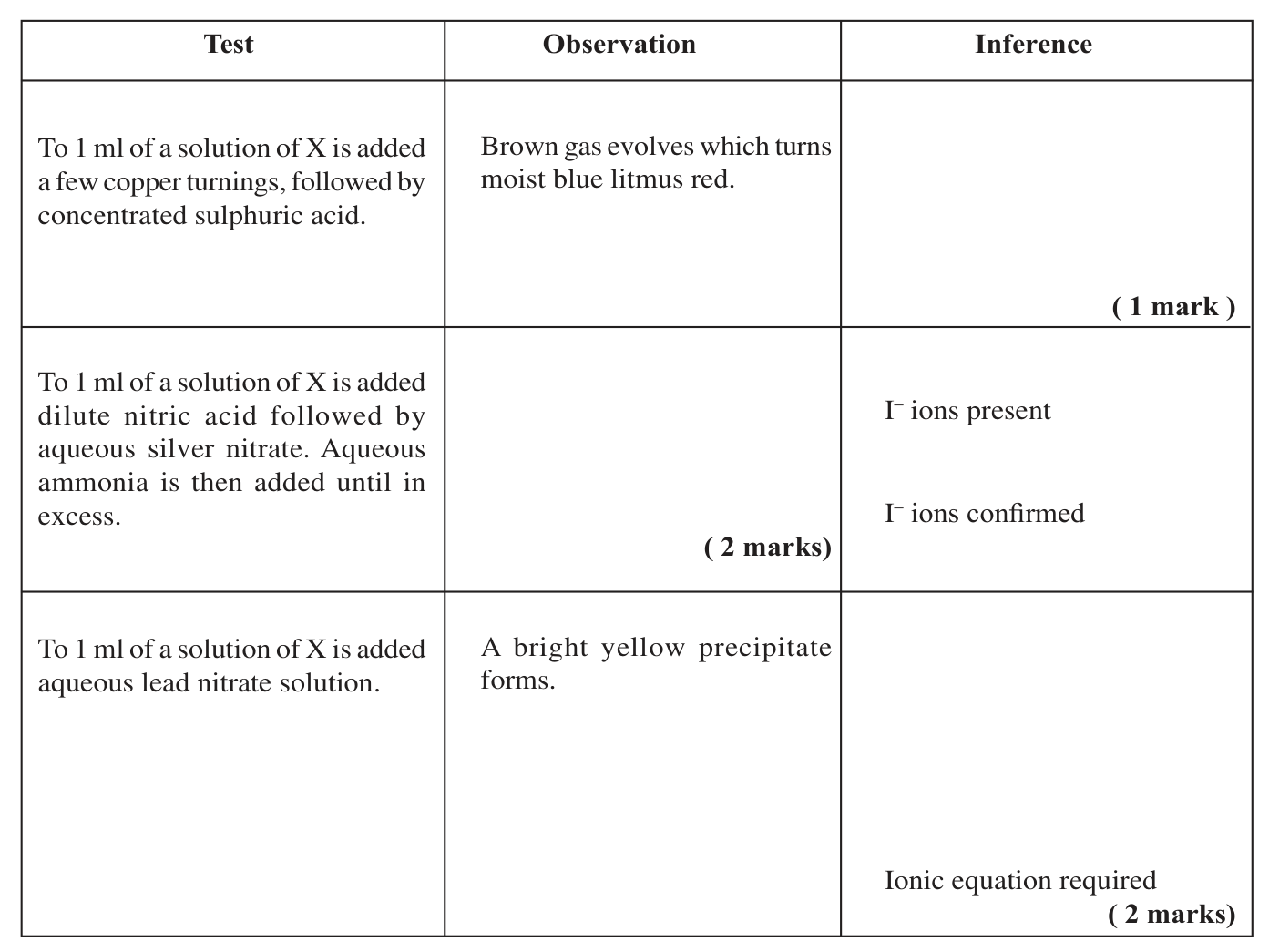
< ![CDATA[A student conducts a number of tests on an aqueous solution of Compound X. Some of the inferences and observations made are recorded in Table 2. Complete Table 2 by filling in the missing observations and inferences.
TABLE 2: TESTS ON COMPOUND X (Table 2 is provided as an image)
[5 marks]
You are required to plan and design an experiment to compare the effects of the catalysts manganese(IV) oxide and catalase on the rate of decomposition of hydrogen peroxide.
< ![CDATA[Draw a CLEARLY labelled diagram of a suitable experimental arrangement for carrying out the investigation in the laboratory.
[2 marks]
State TWO variables that should be controlled during the experiment.
[2 marks]
The following statements were taken from a student's notebook. These statements are INCORRECT. In each case, you should state why the statement is incorrect and give the correct statement.
Sodium, magnesium, aluminium, silicon and chlorine are found in the same group in the periodic table. (Give your answer in terms of electron configuration.)
Reason:
Correct statement:
[2 marks]
< ![CDATA[Of the elements magnesium and copper, magnesium will more readily oxidize an aqueous solution of zinc ions than copper will.
Reason:
Correct statement:
[4 marks]
P and Q both have an electron configuration of 2, 8, 1. The mass numbers of P and Q are 23 and 24 respectively.
P reacts with water to produce a solution of its hydroxide and hydrogen gas. Write a balanced equation for the reaction between P and water.
[2 marks]
Both P and Q give similar products when reacted with water. Account for this observation.
[2 marks]
Q is radioactive. Radioactive substances are widely used in medicine, agriculture and industry. What is meant by the term 'radioactive'?
[1 mark]
Give TWO uses of radioactive elements in medicine, agriculture or industry.
Use 1 Use 2
[2 marks]
Using dot-and-cross diagrams, show the bonding between Q and oxygen. [ O ]
[2 marks]
But-1-ene (1-butene) and but-2-ene (2-butene) are structural isomers of molecular formula .
[15 marks]
Define 'structural isomerism'.
[1 mark]
Draw fully displayed structures of but-1-ene and but-2-ene. But-1-ene But-2-ene
[2 marks]
Draw and name ONE OTHER structural isomer of .
[3 marks]
State ONE physical property of .
[1 mark]
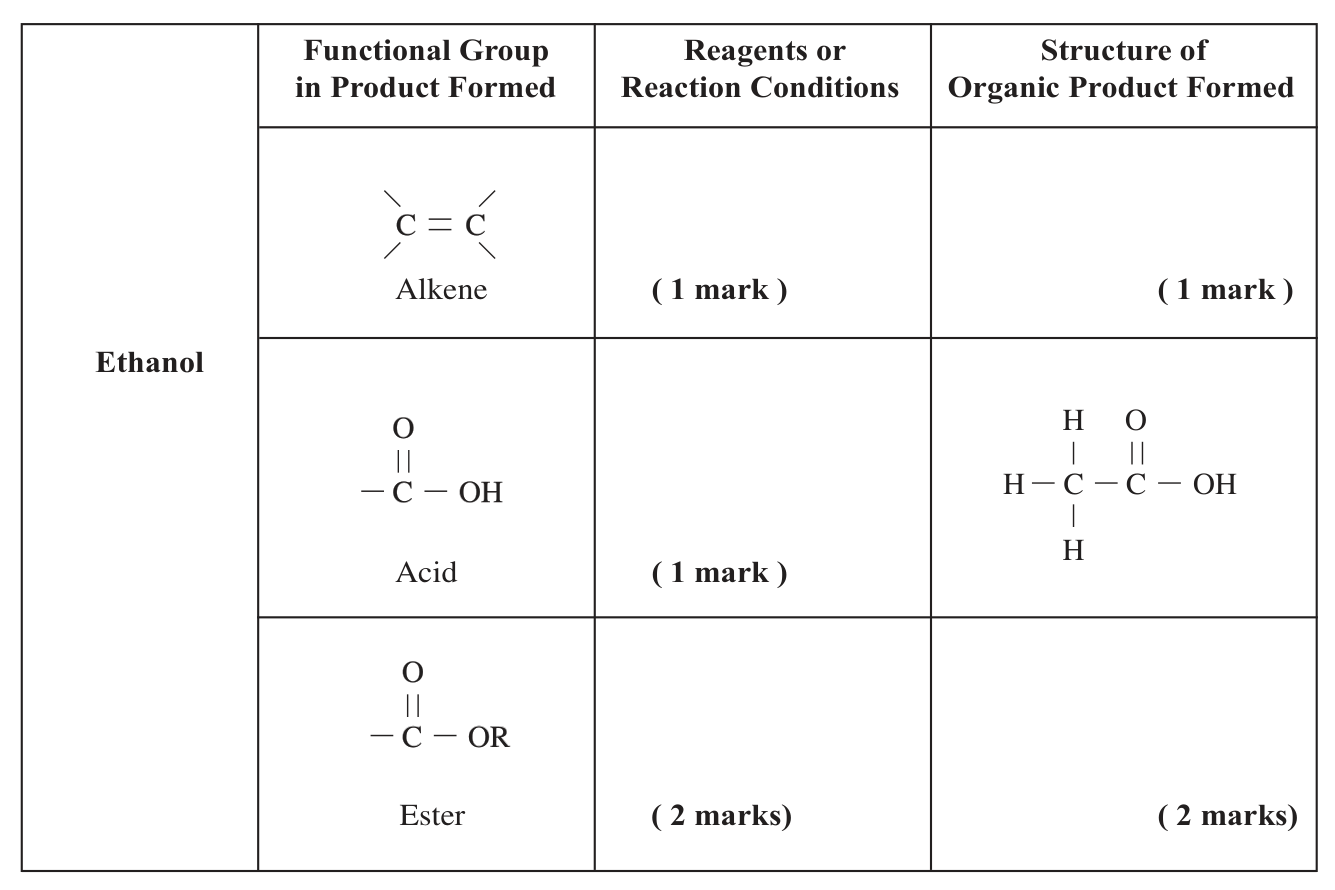
Ethanol reacts with different reagents to form products with the functional groups shown in Table 3.
[8 marks]
What is meant by a 'functional group'?
[1 mark]
Complete Table 3 by a) identifying the reagents or reaction conditions b) drawing the fully displayed structures of the products.
| Functional Group in Product Formed | Reagents or Reaction Conditions | Structure of Organic Product Formed |
|---|---|---|
| Alkene | (1 mark) | (1 mark) |
| O | H O | |
| $ | $ | |
| H |
Answer ALL questions in this section. Write your answers in the spaces provided at the end of EACH question in this booklet.
[15 marks]
A pink solution of aqueous acidified potassium manganate(VII) is decolourised by the addition of ferrous() ions. The chemical equation for the reaction is . Identify the oxidizing and reducing agents in the equation, and explain your answer.
[4 marks]
Iron(II) oxide reacts with dilute sulphuric acid to give a pale green solution. Write the equation for the reaction between iron(II) oxide and dilute sulphuric acid.
[2 marks]
State whether the reaction in (ii) above is acid-base or redox, and explain your answer.
[3 marks]
What is meant by 'fermentation,' as it relates to the manufacture of rum?
[2 marks]
Write the equation for the fermentation process defined in (i).
[2 marks]
Suggest ONE material that could be used to produce wine by fermentation, and give a reason for your suggestion.
[2 marks]
The raw materials necessary for the extraction of iron from its ore are an iron ore, coke and limestone.
[15 marks]
Write the chemical formula for ONE ore of iron.
[1 mark]
Outline the steps involved in the extraction of iron from its ore. Write a balanced chemical equation for EACH step.
[8 marks]
Stainless steel, an alloy of iron, is used to make cooking utensils. Suggest TWO reasons why stainless steel is used instead of iron for making cooking utensils.
[2 marks]
Besides cooking utensils, state ONE other use of iron or its alloys.
[1 mark]
Name the compound of iron that is found in the blood and explain how a lack of iron would affect the human body.
[3 marks]
Almost all animals eat their food raw, whereas humans tend to cook their food. Give TWO reasons why humans may need to cook their food.
[15 marks]
Egg white is a transparent liquid in its natural state.
What does egg white look like when it is cooked?
[1 mark]
What is the effect of heat on the protein of the egg?
[1 mark]
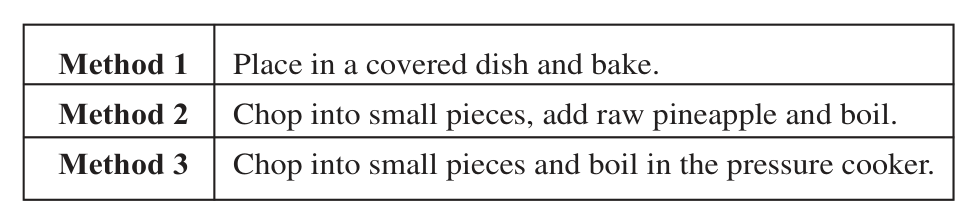
Table 4 shows three different methods which can be used to cook a leg of lamb.
| Method 1 | Place in a covered dish and bake. |
|---|---|
| Method 2 | Chop into small pieces, add raw pineapple and boil. |
| Method 3 | Chop into small pieces and boil in the pressure cooker. |
Select the method by which the lamb will take the LONGEST to cook.
[1 mark]
Outline the principles involved in the functioning of the pressure cooker.
[2 marks]
Suggest TWO benefits of using the pressure cooker in Method 3.
[2 marks]
Explain how the pineapple functions in cooking the lamb in Method 2.
How does this differ from the use of the pressure cooker in Method 3?
[4 marks]
Explain how heat affects the Vitamin C in the pineapple.
[2 marks]
| Acid | (1 mark) | H |
| O |
| $ | $ |
| Ester | (2 marks) | (2 marks) |
[7 marks]