Free CXC Biology Paper 2 May/June 2005 past paper from 2005. Includes a worked answer key. Open the PDF, take a timed test, and study with AI on Caribbean AI.
Answer keys are free on Caribbean AI. View the answers to every past-paper question at no cost - no payment needed - with step-by-step worked solutions and instant AI marking available on Premium.
CSEC Biology Paper 2 May/June 2005 - Free CXC Past Paper with Answers
Free CXC Biology Paper 2 May/June 2005 past paper from 2005. Includes a worked answer key. Open the PDF, take a timed test, and study with AI on Caribbean AI.
Opening the interactive papers…
Every question from this paper as text. See the answers and worked solutions. Questions are the property of the Caribbean Examinations Council; Caribbean AI is not affiliated with CXC.
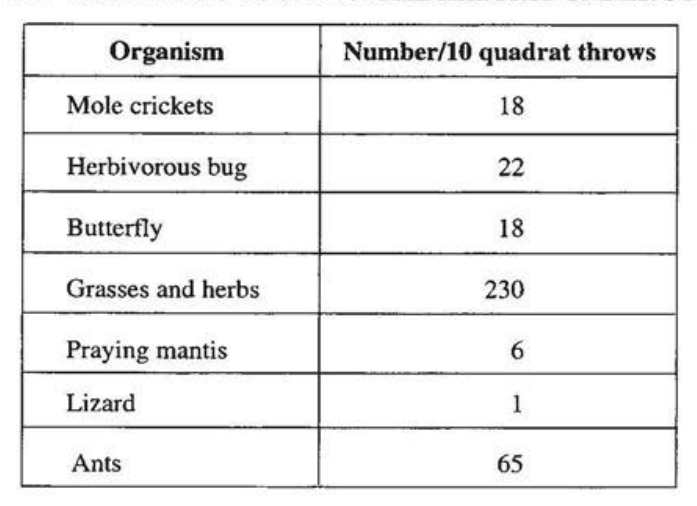
In studying a particular habitat, a group of students finds the distribution of organisms shown in Table 1 below:
TABLE 1: ORGANISMS FOUND IN THE HABITAT UNDER STUDY
| Organism | Number/10 quadrat throws |
|---|---|
| Mole crickets | 18 |
| Herbivorous bug | 22 |
| Butterfly | 18 |
| Grasses and herbs | 230 |
| Praying mantis | 6 |
| Lizard | 1 |
| Ants | 65 |
In the space provided below, construct a pie chart to show the relative proportions of the organisms the students found occupying the habitat.
[4 marks]
What is the advantage of using a pie chart to represent the data in Table 1?
[2 marks]
Identify another means besides a table and pie chart to represent the data in Table 1.
[1 mark]
Identify TWO carnivores from the data contained in Table 1 and the pie chart.
[2 marks]
From the organism's the students find in the habitat, identify a food chain with at least FOUR organisms.
[2 marks]
Suggest TWO long-term effects on the habitat, if a pair of flycatchers (insect-eating birds) suddenly enter the habitat under study.
[2 marks]
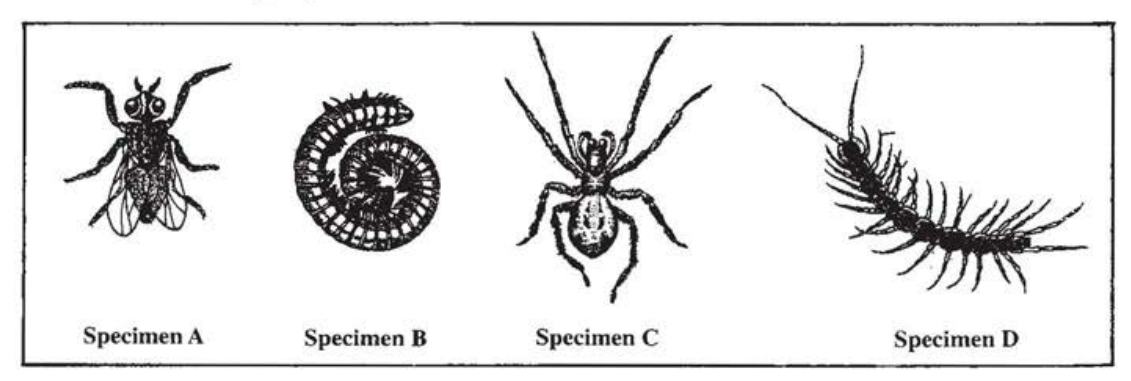
In another study undertaken by the same group of students, they find Specimens A to D represented in Figure 2 below. The students claim that the specimens belong to the same group.
Identify TWO features shown in the drawings that can be used to classify the specimens.
[2 marks]
In the space provided below, accurately draw Specimen B twice the size shown in Figure 2. State the magnification of your drawing.
[4 marks]
The students observe that a particular species of plant in the original study area occurs in two varieties, one with completely green leaves and the other with leaves that are mainly red. The students suggest that the green variety is a more efficient plant than the red variety and therefore wish to compare the rates at which they would photosynthesise. They propose a hypothesis and decide on an investigation to test that hypothesis.
Based on the students' observation, suggest a hypothesis for the investigation.
[2 marks]
Describe the investigation you would undertake to test the hypothesis you suggested in (d) (i). Include in your description the apparatus, materials and method you would use.
Apparatus and Materials:
Method:
[4 marks]
State TWO environmental factors that affect the rate of photosynthesis.
[2 marks]
Write an equation to adequately represent the processes involved in photosynthesis.
[3 marks]
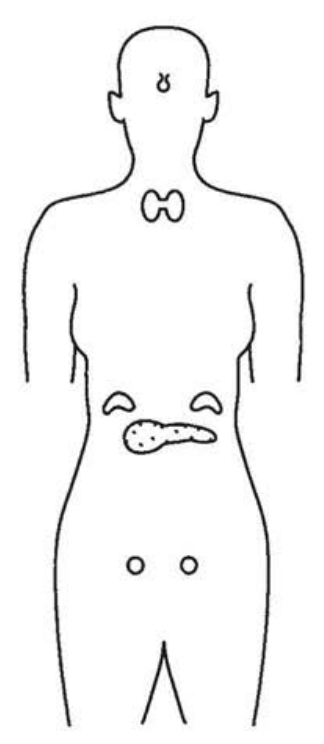
Figure 3 below shows the location of selected glands in the female human body.
Label Figure 3 to show the position of THREE glands that produce hormones involved in growth and development in humans.
[3 marks]
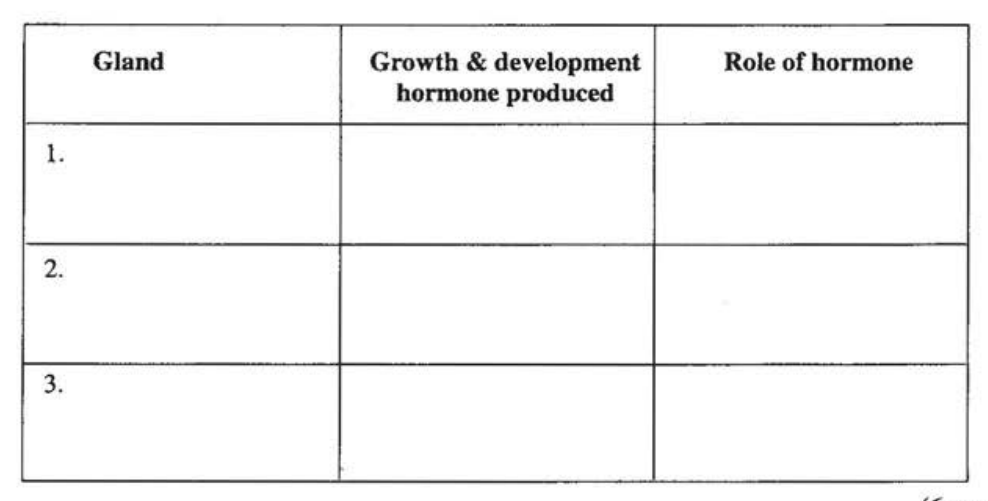
Complete the table below to identify and give the role of the hormones of growth and development produced by the glands you located in (a) (i).
| Gland | Growth & development hormone produced | Role of hormone |
|---|---|---|
| 1. | ||
| 2. | ||
| 3. |
[6 marks]
The glands involved in growth and development are all examples of endocrine glands.
Give ONE example of the type of gland you identified in (b) (i) a) above.
[1 mark]
Give ONE similarity and ONE difference between endocrine glands and the type of gland identified in (b) (i).
Similarity:
Difference:
[2 marks]
If the gene for insulin production is transferred from a human pancreatic cell to a certain bacterium, it produces human insulin within the bacterium.
Give the name of the process of transfer of the gene.
[1 mark]
State ONE advantage of the process you mentioned in (c) (i) above.
[2 marks]
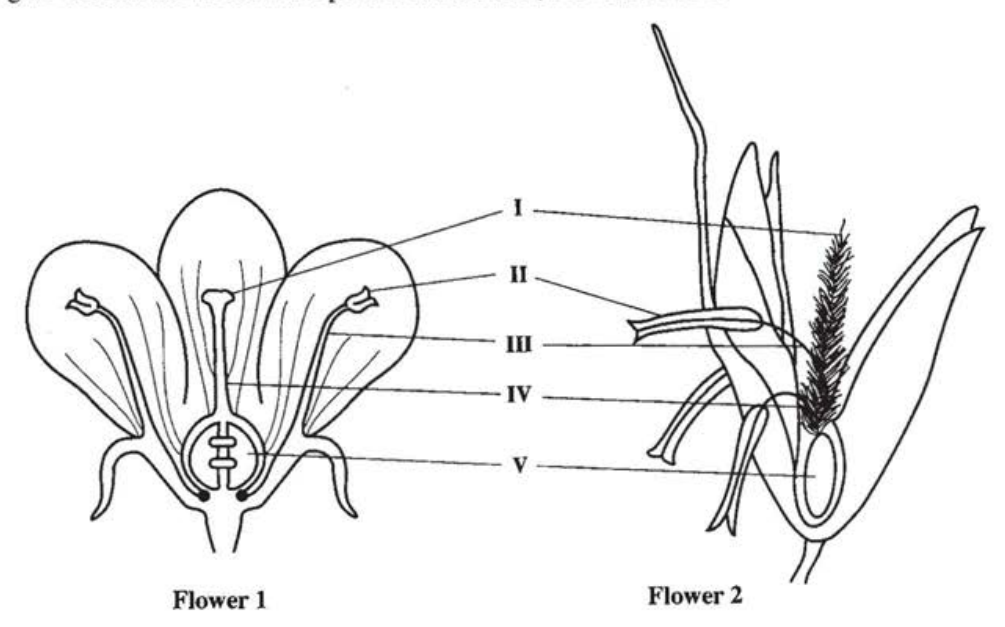
Figure 4 below shows the basic plan of two flowers, Flowers 1 and 2.
[15 marks]
Figure 4 below shows the basic plan of two flowers, Flowers 1 and 2.
Name the parts of Flowers 1 and 2, labelled I to V, in Figure 4 above.
I II III IV V
[5 marks]
The flower structures labelled in Figure 4 are sometimes referred to as 'essential' structures.
Suggest ONE reason for the use of the term 'essential' to describe the labelled structures.
[2 marks]
Identify the pollinating agent for EACH flower in Figure 4.
Flower 1: Flower 2:
[6 marks]
Identify the pollinating agent for EACH flower in Figure 4.
Flower 1:
Flower 2:
[2 marks]
Identify TWO characteristics of EACH flower that are useful in pollination.
Characteristics in Flower 1:
Characteristics in Flower 2:
[4 marks]
In the space provided below, draw in outline TWO simple diagrams to represent the shape of the fruit EACH flower is likely to produce.
Fruit of Flower 1
Fruit of Flower 2
[2 marks]
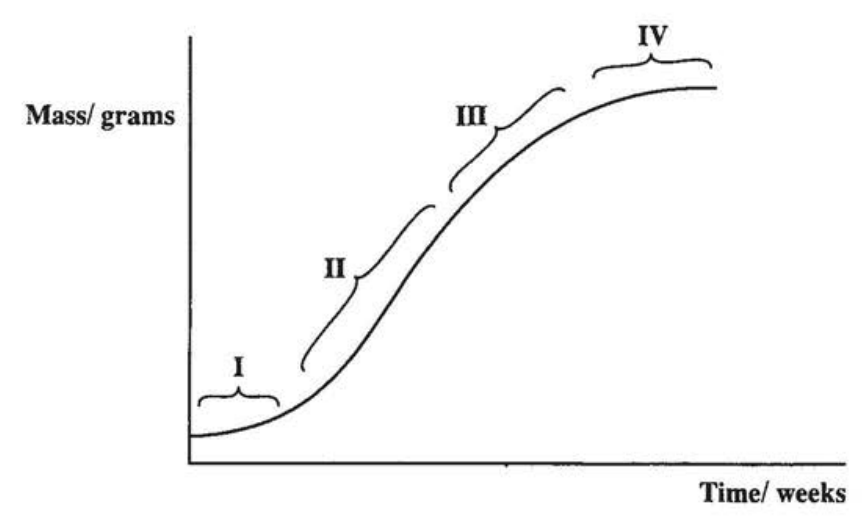
Some seedlings are transplanted onto garden beds and the changes in their mass are noted over a period of time. The changes are recorded in the graph below.
[16 marks]
Describe the changes taking place at stages II and IV.
Stage II: Stage IV:
[4 marks]
Identify TWO mineral salts found in garden soil and explain the role of EACH salt.
Mineral salt 1: Role: Mineral salt 2: Role:
[4 marks]
During their life cycle plants may store large amounts of excess food.
[8 marks]
Explain TWO advantages to the plant of storing food in its seeds.
[4 marks]
Describe TWO situations in the life cycle of a plant when stored food is used.
[4 marks]
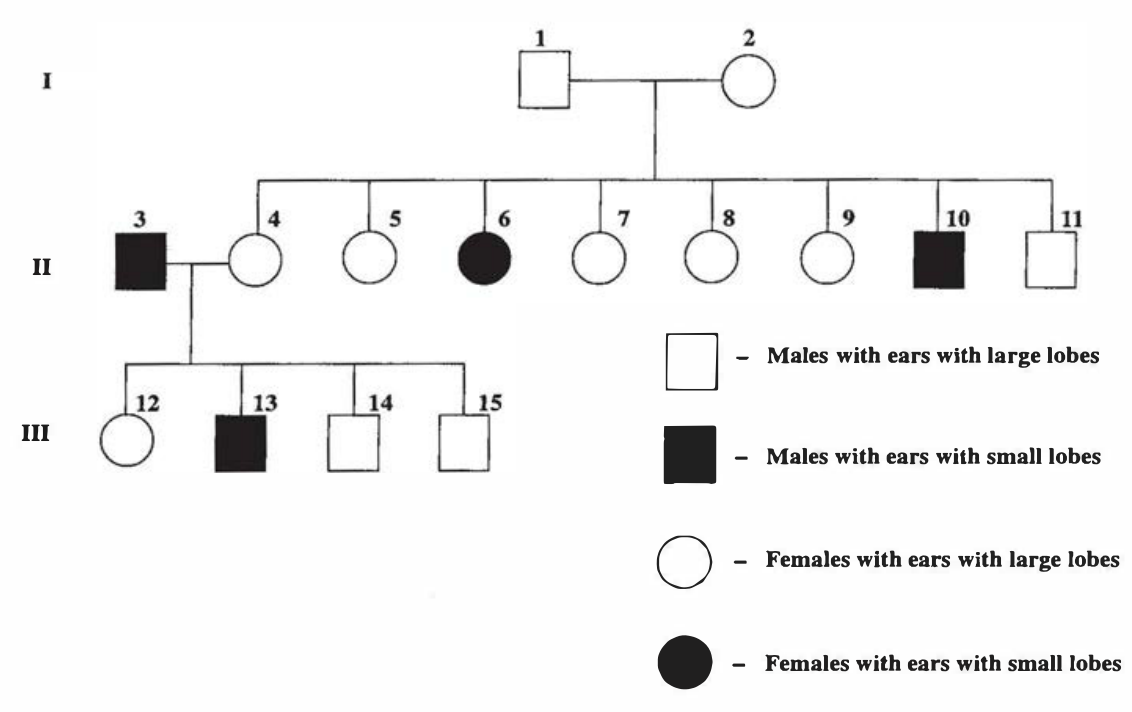
Figure 6 below shows the inheritance of earlobe size in a human family.
Using the chart in Figure 6 above, state the genotypes of family members, 1, 2 and 6.
Family member 1: Family member 2: Family member 6:
[3 marks]
Using the chart in Figure 6 above, state the genotypes of family members, 1, 2 and 6.
Family member 1: Family member 2: Family member 6:
[3 marks]
Identify the type of variation involved in the inheritance of earlobe size in humans shown in Figure 6 above.
[1 mark]
Give ONE reason for the importance of variation among living things.
[1 mark]
There are various blood group systems, but the one most commonly used is the ABO system.
Account for the fact that in the ABO system, although there are FOUR different blood groups in existence, only THREE alleles determine these blood groups.
[3 marks]
Name ONE inherited disease.
[1 mark]
How do the treatment and control of an inherited disease differ from the treatment and control of a deficiency disease?
Treatment: Control:
[4 marks]