Free CXC Biology Paper 2 January 2025 past paper from 2025. Includes a worked answer key. Open the PDF, take a timed test, and study with AI on Caribbean AI.
Answer keys are free on Caribbean AI. View the answers to every past-paper question at no cost - no payment needed - with step-by-step worked solutions and instant AI marking available on Premium.
CSEC Biology Paper 2 January 2025 - Free CXC Past Paper with Answers
Free CXC Biology Paper 2 January 2025 past paper from 2025. Includes a worked answer key. Open the PDF, take a timed test, and study with AI on Caribbean AI.
Opening the interactive papers…
Every question from this paper as text. See the answers and worked solutions. Questions are the property of the Caribbean Examinations Council; Caribbean AI is not affiliated with CXC.
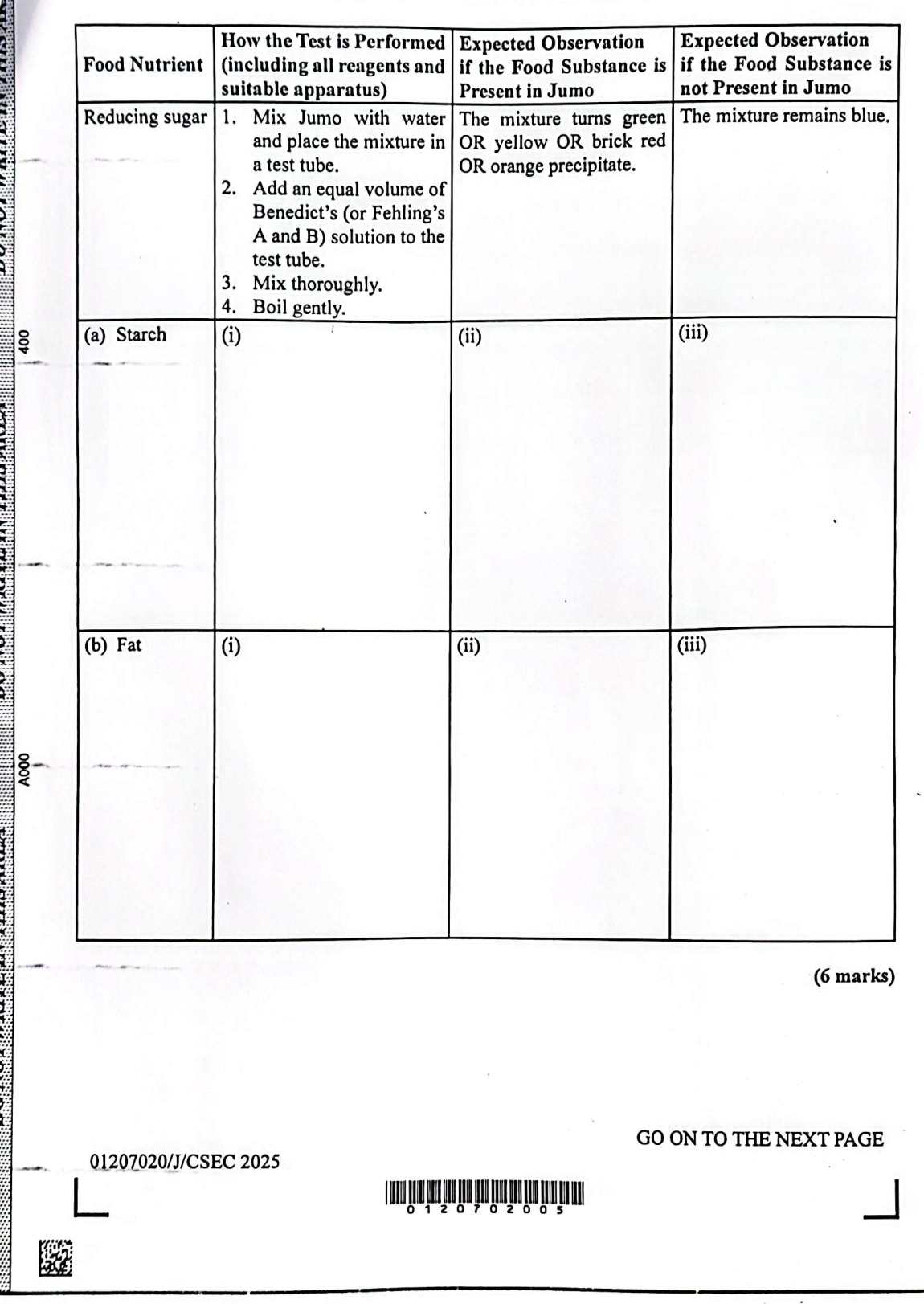
Your friend has just returned from a tour of South America and brought you a bag of Jumo, a powdered food item. She told you that Jumo's ingredients include starch, reducing sugar and fat, but you would like to verify this by performing some food tests on the powdered item.
Complete Table 1 below to show the following:
An example has been provided for you.
| Food Nutrient | How the Test is Performed (including all reagents and suitable apparatus) | Expected Observation if the Food Substance is Present in Jumo | Expected Observation if the Food Substance is not Present in Jumo |
|---|---|---|---|
| Reducing sugar | 1. Mix Jumo with water and place the mixture in a test tube. <br/> 2. Add an equal volume of Benedict's (or Fehling's A and B) solution to the test tube. <br/> 3. Mix thoroughly. <br/> 4. Boil gently. | OR yellow OR brick red OR orange precipitate. | The mixture remains blue. |
| (a) Starch | (i) | (ii) | (iii) |
| (b) Fat | (i) | (ii) | (iii) |
[10 marks]
Starch
[6 marks]
Fat
[6 marks]
State THREE precautions that should be taken while conducting the food tests on Jumo.
[3 marks]
Name TWO diseases that a person may develop if Jumo is consumed in excess over a long period of time.
[2 marks]
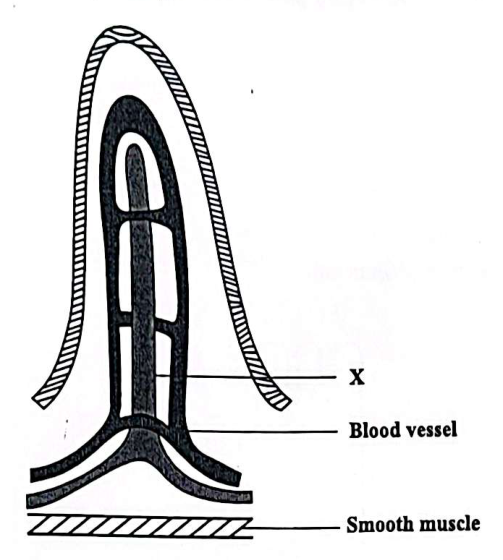
Figure 1 shows a simple diagram of a villus in the digestive system.
[1 mark]
Name the organ in which the villus is located.
[1 mark]
State the function of the villus.
[1 mark]
Name the structure labelled X in Figure 1.
[1 mark]
Jon discovered that the structure labelled X in his digestive system is not working properly. Suggest ONE adjustment that he should make to his diet because of this malfunction.
[1 mark]
Give ONE reason for your answer in (e) (iv).
[1 mark]
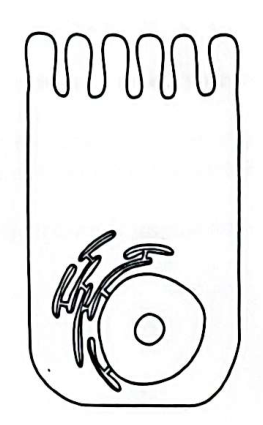
Figure 2 shows an epithelial cell of the villus in the digestive system.
[3 marks]
Outline ONE way in which the epithelial cell of the villus differs from a typical animal cell.
[2 marks]
Name the structure in Figure 2 which carries genetic information in the form of DNA.
[1 mark]
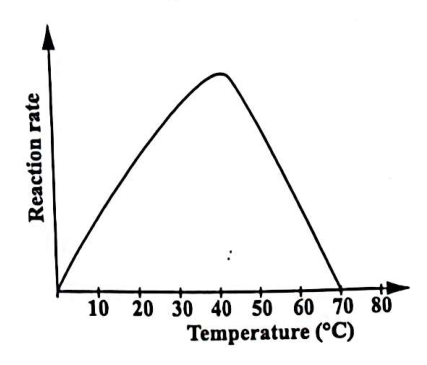
Figure 3 shows the effect of temperature on the rate of an enzyme-catalyzed reaction.
Figure 3. Effect of temperature on an enzyme-catalyzed reaction
[6 marks]
Indicate, by placing the letter A on the graph in Figure 3, the point where the optimal temperature of this enzyme-catalyzed reaction occurs.
[1 mark]
State the optimal temperature of the enzyme.
[1 mark]
Explain the shape of the graph between 0 and 25 °C and between 50 and 70 °C.
Between 0 and 25 °C
Between 50 and 70 °C
[4 marks]
Two scientists visited a rain forest and noticed orchids growing on a large healthy tree.
[5 marks]
Name the type of relationship that exists between the orchid and the large tree.
[1 mark]
The scientists later found an unknown organism in a body of water. They were undecided about whether it was an amphibian or a fish. Suggest how the structural features of the organism may be used by the scientists to determine its identity. Your answer should include TWO comparisons.
[4 marks]
(i) Define the term 'decomposer'. (ii) State TWO functions of decomposers. (iii) Outline ONE way in which fungi can be beneficial to a homeowner or a builder of wooden homes and ONE way in which they can be destructive.
[6 marks]
Define the term 'decomposer'.
[2 marks]
State TWO functions of decomposers.
[2 marks]
Outline ONE way in which fungi can be beneficial to a homeowner or a builder of wooden homes and ONE way in which they can be destructive.
[2 marks]
Write the balanced chemical equation for photosynthesis and include the conditions.
[3 marks]
State FOUR ways in which a leaf is adapted for the process of photosynthesis.
[4 marks]
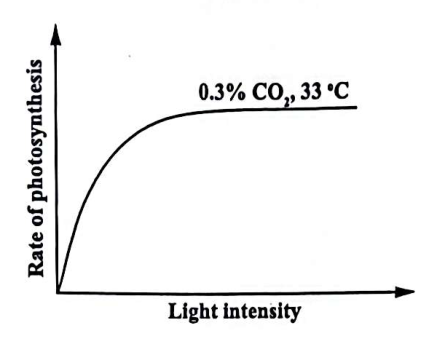
A farmer who is growing his tomato crop in a greenhouse is concerned that the yield will be too low to supply the expected market demand. The farmer therefore monitors the rate of photosynthesis of several plants and the results are shown in Figure 4 below.
Figure 4. Average rate of photosynthesis of plants grown in a greenhouse
[10 marks]
Explain the shape of the graph in Figure 4.
[4 marks]
Indicate, by drawing a new curve on Figure 4 the change in the rate of photosynthesis expected if carbon dioxide is pumped into the greenhouse.
[2 marks]
Plants do not photosynthesize when left in a completely dark environment. In the greenhouse, the farmer notices that the shaded plants are taller and have smaller leaves than the plants located in sunny locations. Explain why the plants left in the shade did not die immediately.
[4 marks]
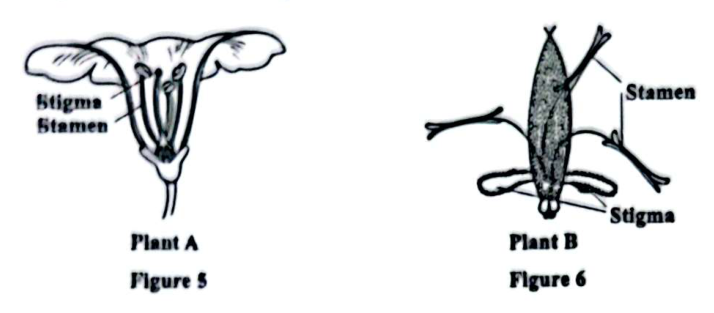
Figures 5 and 6 are images of flowers obtained from two different species of plants. Carefully examine the figures and answer the questions that follow.
Figure 5 Figure 6
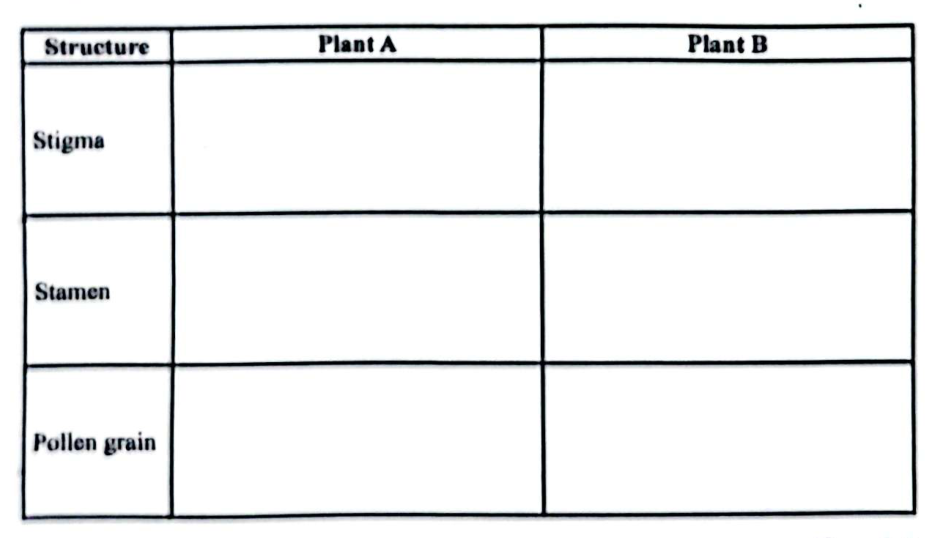
Complete the table below by comparing the structures associated with the flowers of Plants A and B.
TABLE 2: COMPARISON OF FLOWERS OF PLANT A AND PLANT B
| Structure | Plant A | Plant B |
|---|---|---|
| Stigma | ||
| Stamen | ||
| Pollen grain |
[8 marks]
Indicate the MOST likely agent of pollination for EACH flower.
Plant A Plant B
[2 marks]
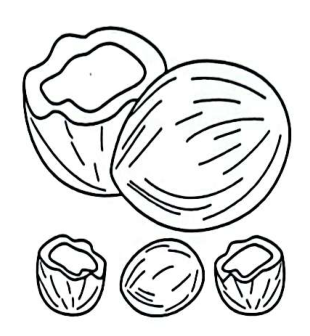
Figure 7 is a diagram of whole and half pieces of coconut. Carefully examine Figure 7 and answer the questions that follow.
Use the diagram to identify the method by which the seeds of coconuts are dispersed.
[1 mark]
Suggest TWO ways in which the seeds of coconut are adapted for the method of dispersal identified in (c) (i).
[2 marks]
Plants are capable of both sexual and asexual reproduction. However, plants typically only reproduce asexually when they are damaged or are not within proximity of other members of their species. Explain how these two types of reproduction impact the genetic composition of the offspring.
[4 marks]
Define the term 'genetic engineering'.
[2 marks]
The first genetically engineered, synthetic 'human' insulin was produced from bacteria. State the name of the medical condition which is managed with insulin therapy.
[1 mark]
There are FOUR broad categories of diseases. A pathogenic disease is an example of one of these categories. List the THREE other categories of diseases.
[3 marks]
Which of the four categories of diseases is the medical condition named in (b) (i) an example of?
[1 mark]
Explain how insulin therapy is used to manage the medical condition named in (b) (i).
[2 marks]
The measles virus is an example of a pathogenic disease. Patrice has contracted the measles virus and has a high fever, cough and runny nose. Name the process which prevents Patrice from catching the measles virus again and explain how this process works.
[6 marks]
Jacob experienced headaches and eye strain while reading. He visited an optometrist and discovered that he was long-sighted.
Define the term 'long-sighted'.
[1 mark]
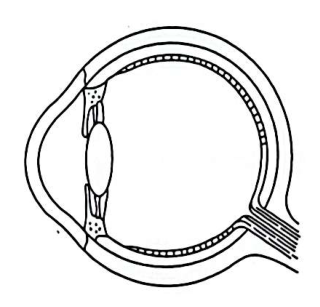
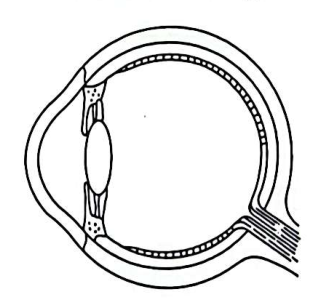
Jacob received glasses and no longer experiences headaches or eye strain while reading. Figures 8 and 9 show his vision before and after receiving corrective lens.
Figure 8. Vision before receiving corrective lens
Figure 9. Vision after receiving corrective lens
Draw appropriate lines on Figure 9 to show Jacob's vision before receiving the corrective lens.
[2 marks]
on Figure 9 to show what occurs after the use of corrective lens. Ensure that you draw the corrective lens.
[3 marks]
Explain how the use of the corrective lens drawn in (b) (i) on page 22 corrects Jacob's long-sightedness. In your answer state the type of lens used.
[3 marks]
Colour blindness is a sex-linked disease. Jacob is not affected; however, his wife, while not affected, is a carrier for this disease. Using a genetic diagram, show the cross between Jacob and his wife.
Define the alleles.
Parents' phenotype
Parents' genotype
Cross
[6 marks]
Based on the results of the cross in (c) (i), state the probability of Jacob and his wife having a boy who is colour blind.
[5 marks]