Free CXC Biology Paper 2 January 2008 past paper from 2008. Includes a worked answer key. Open the PDF, take a timed test, and study with AI on Caribbean AI.
Answer keys are free on Caribbean AI. View the answers to every past-paper question at no cost - no payment needed - with step-by-step worked solutions and instant AI marking available on Premium.
CSEC Biology Paper 2 January 2008 - Free CXC Past Paper with Answers
Free CXC Biology Paper 2 January 2008 past paper from 2008. Includes a worked answer key. Open the PDF, take a timed test, and study with AI on Caribbean AI.
Opening the interactive papers…
Every question from this paper as text. See the answers and worked solutions. Questions are the property of the Caribbean Examinations Council; Caribbean AI is not affiliated with CXC.
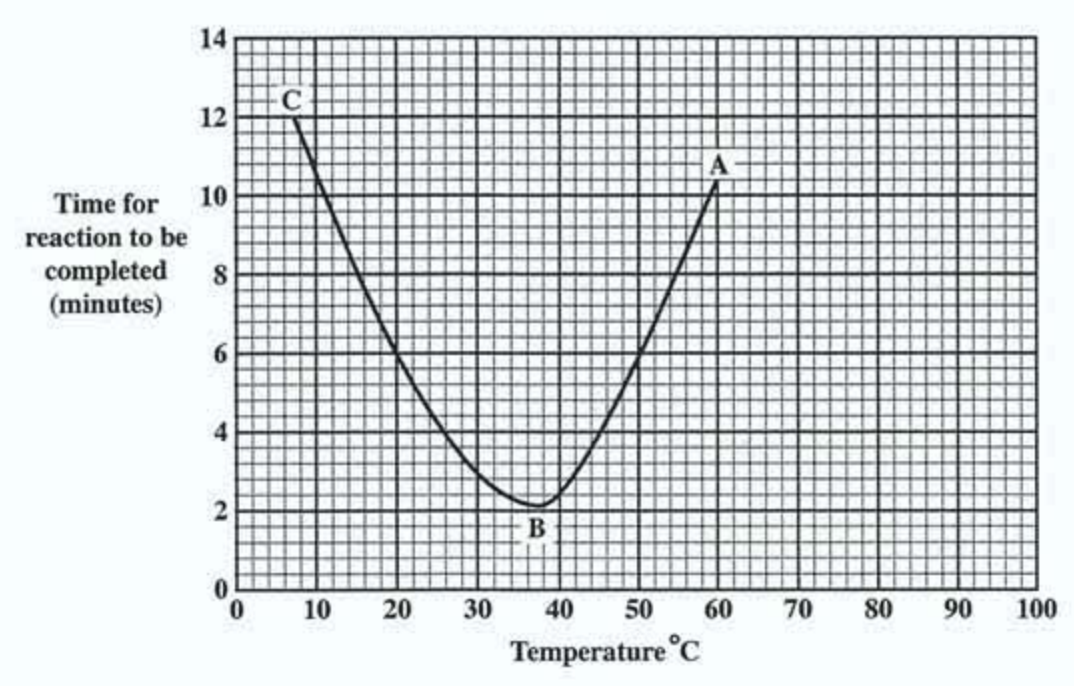
A student plotted the graph shown in Figure 1 after carrying out an investigation on the effect of temperature on the rate of enzyme reaction.
Figure 1. Graph showing the effect of temperature on the rate of enzyme activity
[30 marks]
Describe the reaction rate between points A and B, and between points B and C in Figure 1.
Between A and B
Between B and C
[2 marks]
What is the optimum temperature for the enzyme in this reaction?
[1 mark]
Using information in Figure 1, construct in the space provided below, a table to show the data obtained by the student in investigating the rate of enzyme reaction. Your table should contain six rows of data/information.
[8 marks]
If the enzyme used in this investigation were amylase, describe fully the method you would use to obtain the data for the graph. Identify the materials and apparatus.
Materials and apparatus
Method
[7 marks]
Identify ONE source of error in the investigation.
[1 mark]
Green papaya (paw paw) fruits may be used as a means of softening meat. The green papaya is crushed and rubbed on the meat and then left for a few hours before cooking.
What process might be taking place to soften the meat?
[1 mark]
If the crushed papaya is added to the meat while cooking has started, the cooking time for the meat is not significantly shorter.
Suggest why this may be so.
[2 marks]
In order to germinate, seeds also require a softening agent. In this case they are softened by water.
Suggest TWO ways in which water helps the process of germination.
[2 marks]
Apart from water, state TWO environmental conditions needed for germination.
[2 marks]
Environmental conditions impact not only on germination of seeds but also on the functioning of soil inhabitants, including microorganisms.
Name TWO important groups of microorganisms whose activities are influenced by environmental conditions.
[2 marks]
Identify ONE cycle which depends on the activities of microorganisms.
[1 mark]
Explain the importance of the microorganisms named in (f)(i) in natural cycles.
[2 marks]
In conducting an ecology study, a group of Biology students investigates gaseous exchange in pond snails and in waterweed species. The students set up five test tubes as shown in Figure 2. All tubes are filled with an indicator solution, stoppered with rubber bungs and exposed to light for one hour.
Figure 2. Set up of test tubes for investigating gaseous exchange in two species
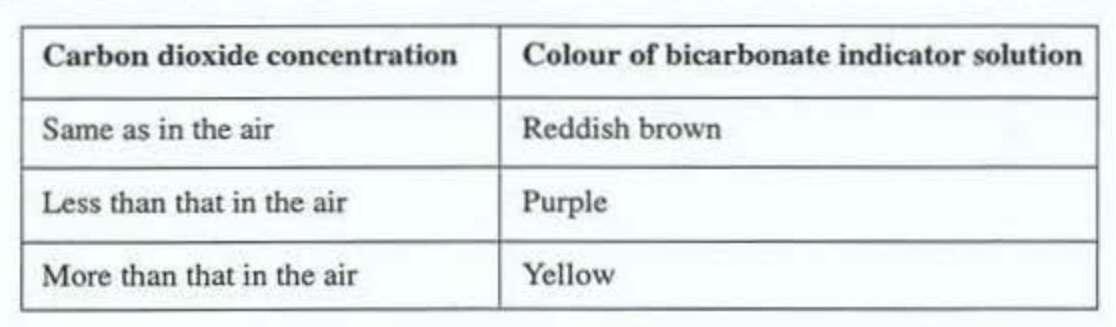
The students use the colour changes in hydrogen carbonate indicator solution as shown in Table 1 to determine the carbon dioxide concentration in each tube.
TABLE 1 CARBON DIOXIDE CONCENTRATION AND BICARBONATE INDICATOR
| Carbon dioxide concentration | Colour of bicarbonate indicator solution |
|---|---|
| Same as in the air | Reddish brown |
| Less than that in the air | Purple |
| More than that in the air | Yellow |
Identify ONE tube in which, after one hour, the colour of the hydrogen carbonate indicator becomes yellow and ONE in which the solution becomes purple. In each case explain your answer.
Tube with yellow indicator:
Explanation:
Tube with purple indicator:
Explanation:
[4 marks]
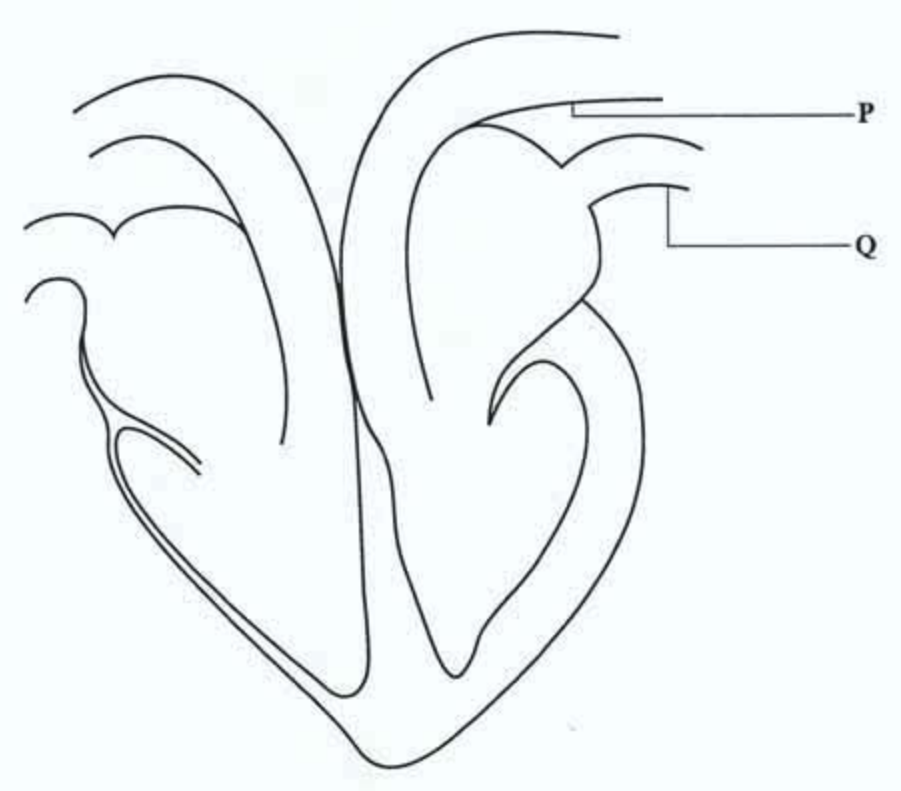
Figure 3 shows a longitudinal section through the human heart.
Figure 3. Diagram of a longitudinal section through the human heart
Using FOUR arrows ONLY show the direction of flow of blood into and out of the human heart illustrated in Figure 3.
[4 marks]
Name the blood vessels labelled P and Q respectively.
Blood vessel P:
Blood vessel Q:
[2 marks]
Some babies are born with a small opening in the wall/septum between the two upper chambers of the heart. Suggest how this condition would affect the functioning of the heart when the atria contract.
[2 marks]
Heart muscle cells obtain their requirements from blood transported in the coronary arteries.
Name TWO substances that the heart muscle cells will receive in this blood supply.
[2 marks]
Identify ONE substance found in the blood supply that can cause the walls of the coronary artery to thicken.
[1 mark]
How does the thickening of the coronary arterial wall affect the heart?
[2 marks]
Plant cells obtain their requirements from transport vessels with which they are associated. Identify TWO types of transport vessels in plants and for EACH identify ONE substance which it transports.
Transport vessel 1: Substance transported:
Transport vessel 2: Substance transported:
[4 marks]
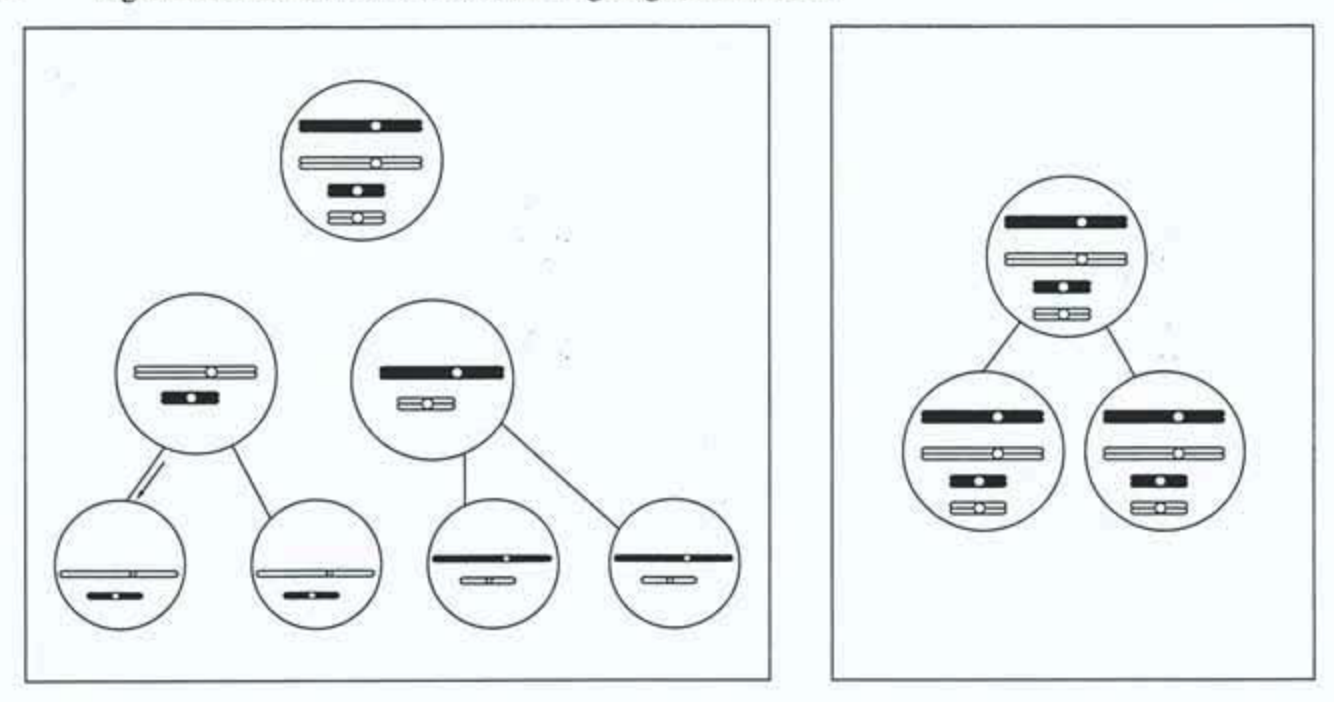
Figure 4 below shows two cells undergoing cell division.
[10 marks]
Name EACH type of cell division illustrated in Figure 4.
Cell division I: Cell division II:
[2 marks]
Identify TWO differences between the processes observed in the illustrations in Figure 4.
[2 marks]
Name TWO specific locations in a plant where EACH type of cell division illustrated in Figure 4 occurs.
Cell division I: Cell division II:
[2 marks]
Give TWO reasons why BOTH types of cell division are important in the life cycle of a plant.
Cell division I:
Cell division II:
[4 marks]
After egg cells from a female rabbit had undergone one form of cell division their nuclei were replaced with nuclei from somatic (body cells) of the rabbit. These cells produced offspring that were identical to the female rabbit.
[3 marks]
After egg cells from a female rabbit had undergone one form of cell division their nuclei were replaced with nuclei from somatic (body cells) of the rabbit. These cells produced offspring that were identical to the female rabbit.
What is the name given to this process?
[1 mark]
Suggest ONE advantage and ONE disadvantage of this process.
Advantage:
Disadvantage:
[2 marks]
Egg cells are found in both plants and animals. Egg cells in plants are protected within an ovule.
[3 marks]
Egg cells are found in both plants and animals. Egg cells in plants are protected within an ovule.
Into what structure will the ovule develop?
[1 mark]
Name TWO features which will show that the structure you identified at (c)(i) developed from an ovule.
[2 marks]
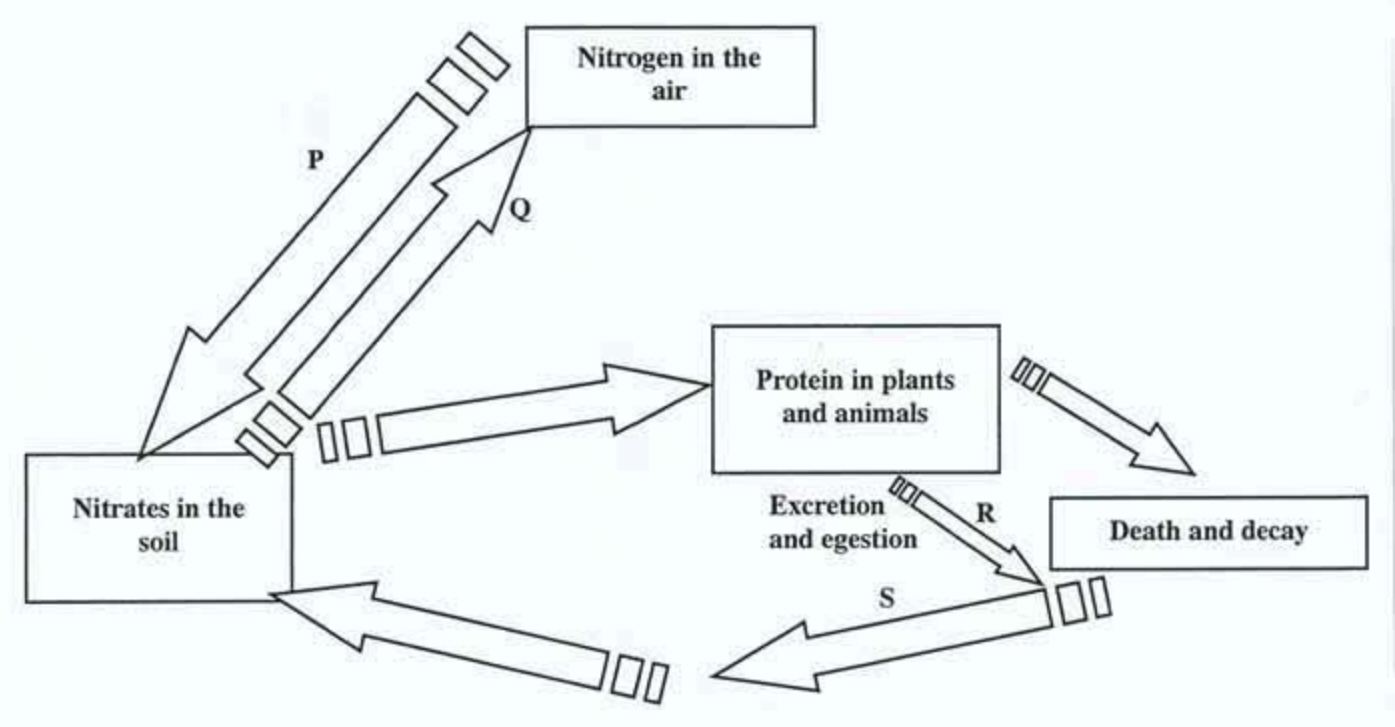
Figure 5 below shows the nitrogen cycle.
[13 marks]
Figure 5 below shows the nitrogen cycle.
[7 marks]
Name the process carried out by bacteria at EACH of the stages indicated by P, Q, R and S.
P: Q: R: S:
[4 marks]
Explain how nitrates from the soil become protein in plants and animals.
[3 marks]
Leguminous plants have bacteria in their root nodules, which are involved in the nitrogen cycle. The relationship between the legumes and the bacteria is described as mutualistic. Explain why this description is appropriate.
[2 marks]
Apart from mutualism, identify TWO OTHER types of relationships that occur among living organisms. Give ONE example of each relationship you identify.
Relationship: Example: Relationship: Example:
[4 marks]