Free CXC Biology Paper 2 May/June 2020 past paper from 2020. Includes a worked answer key. Open the PDF, take a timed test, and study with AI on Caribbean AI.
Answer keys are free on Caribbean AI. View the answers to every past-paper question at no cost - no payment needed - with step-by-step worked solutions and instant AI marking available on Premium.
CSEC Biology Paper 2 May/June 2020 - Free CXC Past Paper with Answers
Free CXC Biology Paper 2 May/June 2020 past paper from 2020. Includes a worked answer key. Open the PDF, take a timed test, and study with AI on Caribbean AI.
Opening the interactive papers…
Every question from this paper as text. See the answers and worked solutions. Questions are the property of the Caribbean Examinations Council; Caribbean AI is not affiliated with CXC.
The role of respiration is the (A) release of energy (B) absorption of oxygen (C) liberation of carbon dioxide (D) breakdown of carbohydrates
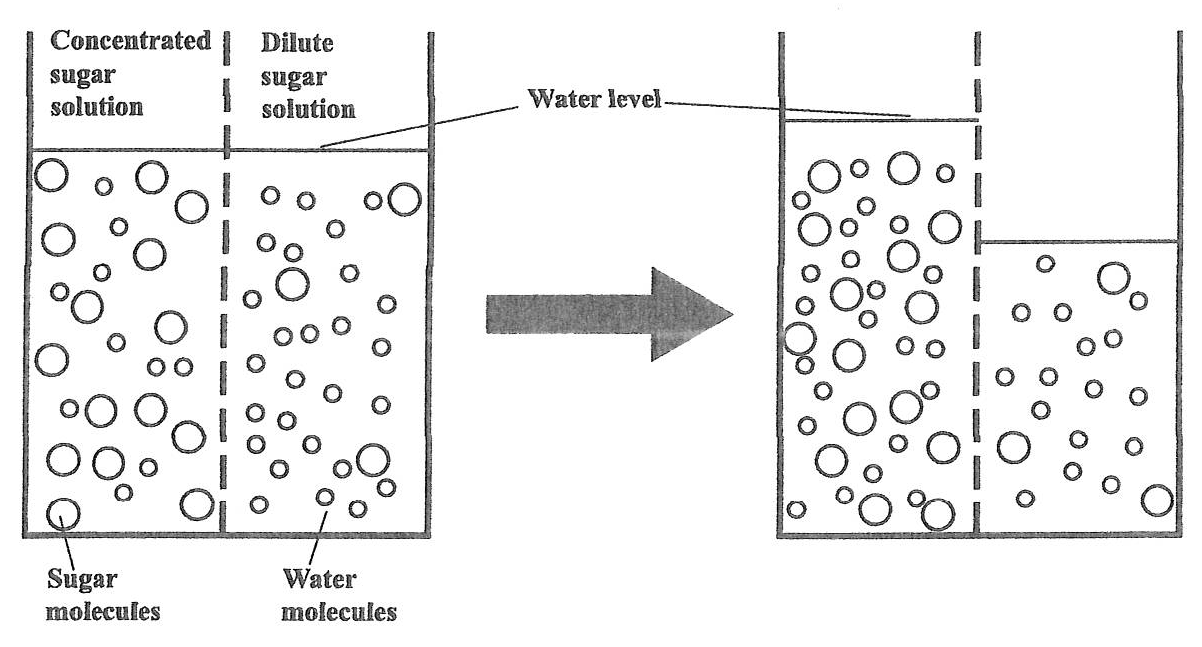
Item 15 refers to the following diagram which shows a process by which substances are moved into and out of cells.
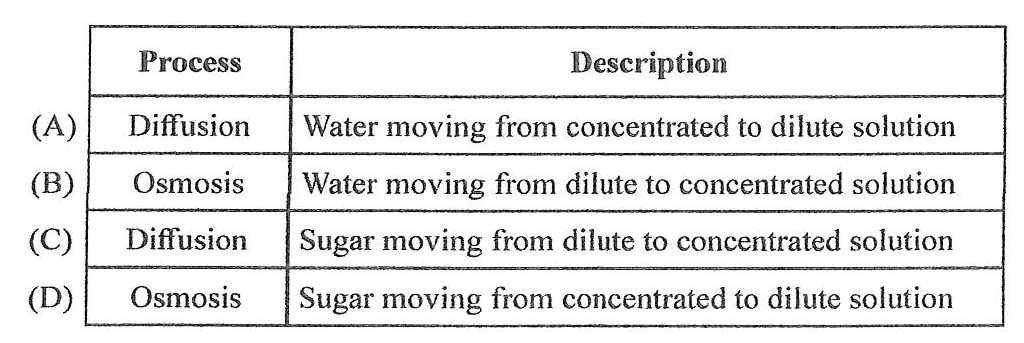
Which of the following correctly identifies and describes the process occurring above?
| Process | Description | |
|---|---|---|
| (A) | Diffusion | Water moving from concentrated to dilute solution |
| (B) | Osmosis | Water moving from dilute to concentrated solution |
| (C) | Diffusion | Sugar moving from dilute to concentrated solution |
| (D) | Osmosis | Sugar moving from concentrated to dilute solution |
Which of the following BEST describes the nucleus of a cell? (A) It is not permeable. (B) It contains starch grains. (C) It contains mitochondria. (D) It stores genetic information in the form of DNA.
Which of the following substances is NOT necessary for photosynthesis to take place? (A) Water (B) Energy (C) Oxygen (D) Chlorophyll
After absorption by the ileum, excess glucose is immediately converted to (A) energy during cellular respiration (B) glycogen by the liver and muscles (C) fat in the liver and muscles (D) fat by the liver and stored under the skin
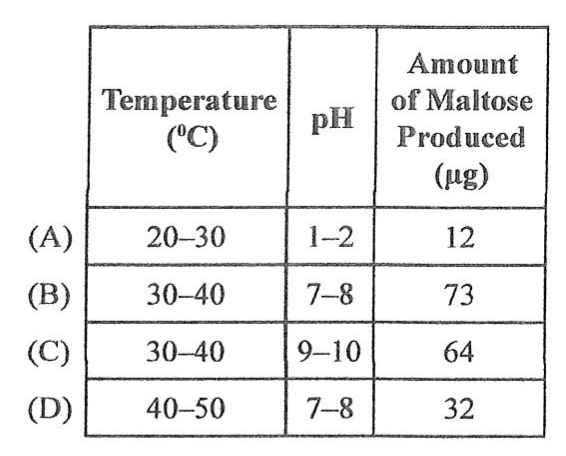
Which of the following is optimum for the action of salivary amylase?
| Temperature (C) | pH | Amount of Maltose Produced (g) | |
|---|---|---|---|
| (A) | 20–30 | 1–2 | 12 |
| (B) | 30–40 | 7–8 | 73 |
| (C) | 30–40 | 9–10 | 64 |
| (D) | 40–50 | 7–8 | 32 |
An athlete suffered muscle cramps following his race. The muscle cramps are MOST likely caused by an accumulation of (A) urea (B) oxygen (C) lactic acid (D) excess glucose
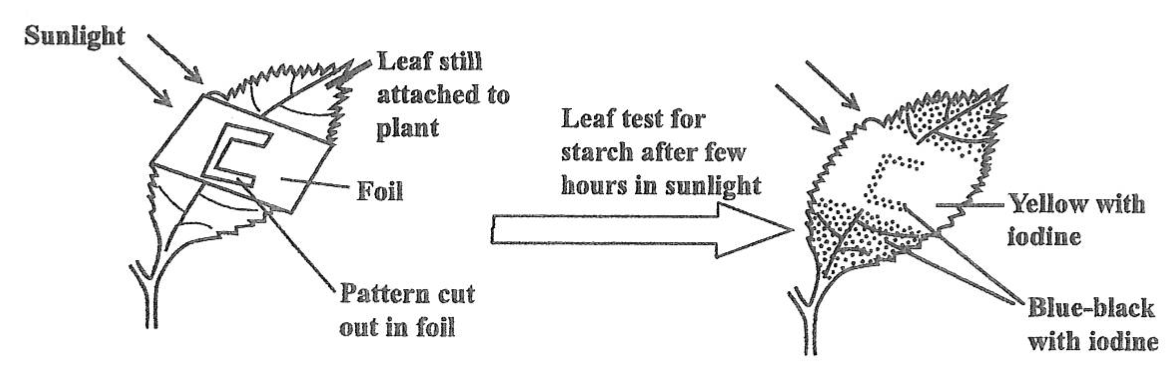
Item 21 refers to the following diagram which illustrates the result of an investigation on a well-watered, de-starched plant which was left for a few hours in sunlight.
A likely explanation of this result is that the (A) covered part of the leaf died (B) soil around the plant dried out (C) foil prevented light from entering the leaf (D) foil prevented carbon dioxide from entering the leaf
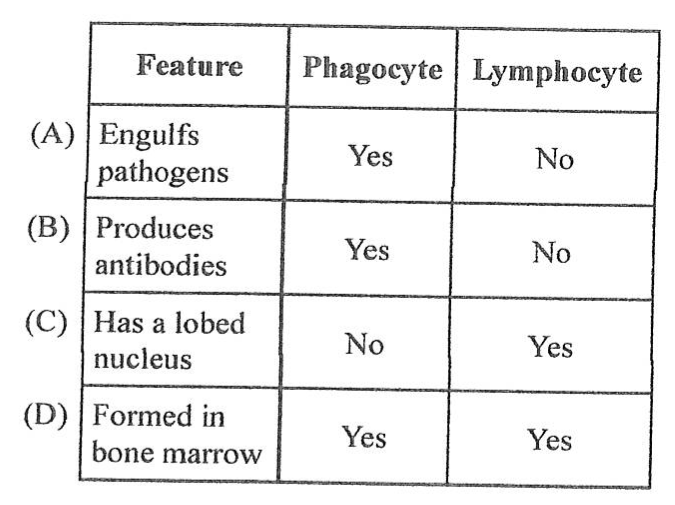
Which feature correctly distinguishes a phagocyte from a lymphocyte?
| Feature | Phagocyte | Lymphocyte | |
|---|---|---|---|
| (A) | Engulfs pathogens | Yes | No |
| (B) | Produces antibodies | Yes | No |
| (C) | Has a lobed nucleus | No | Yes |
| (D) | Formed in bone marrow | Yes | Yes |
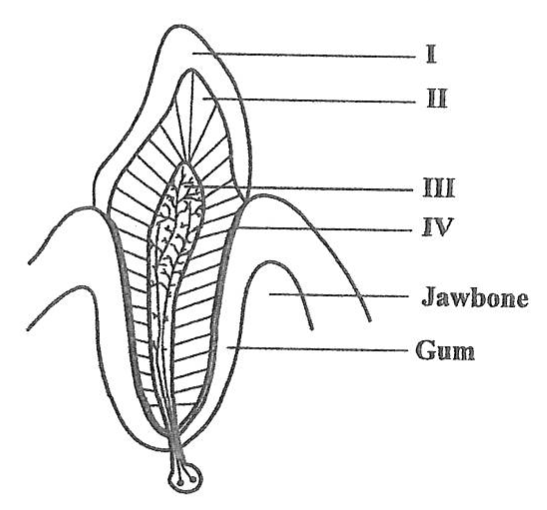
Item 23 refers to the following diagram of a section through an incisor tooth.
The region of the tooth sensitive to temperature is labelled (A) I (B) II (C) III (D) IV
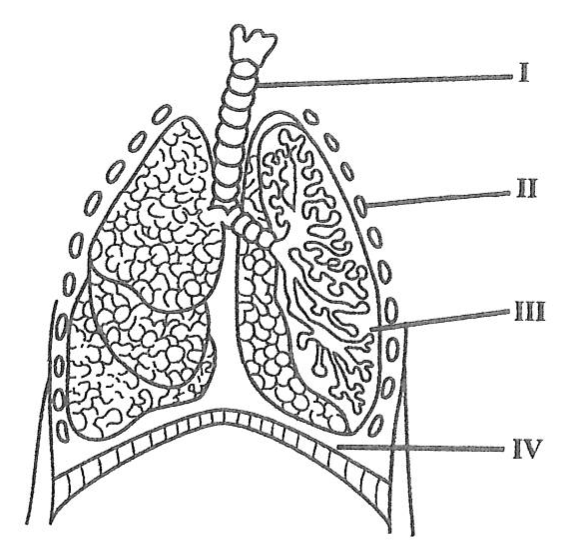
Item 24 refers to the following diagram of the respiratory system.
Which of the labelled parts represents the rib? (A) I (B) II (C) III (D) IV
Which of the following activities is NOT correct for the process of inhalation? (A) Ribs move down and in. (B) Air moves into lungs. (C) Diaphragm muscles flatten. (D) Volume of thoracic cavity increases.
Which of the following options BEST identifies some of the transport substances in animals? I. Amino acids II. Hormones III. Sucrose (A) I and II only (B) I and III only (C) II and III only (D) I, II and III
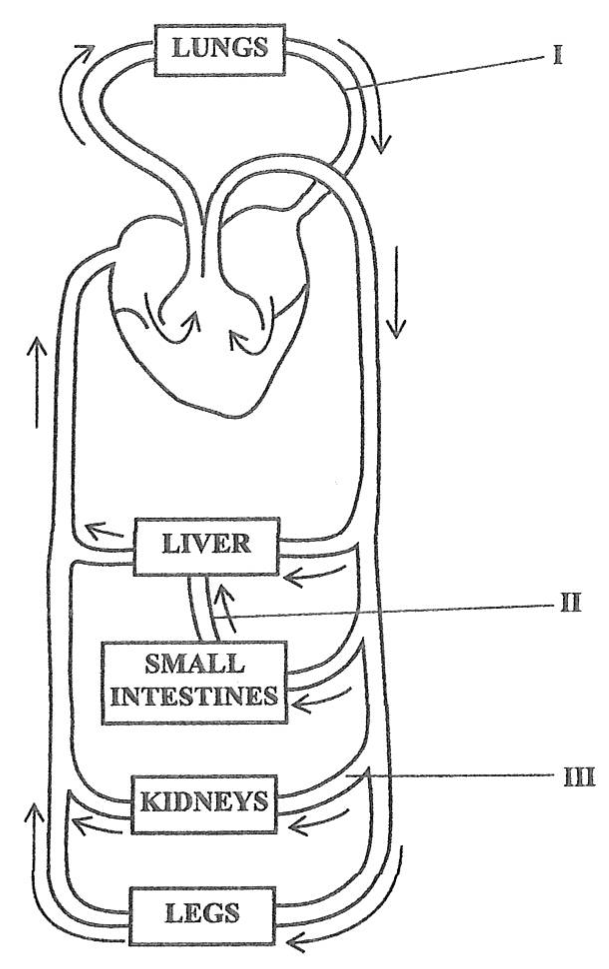
Item 27 refers to the following diagram.
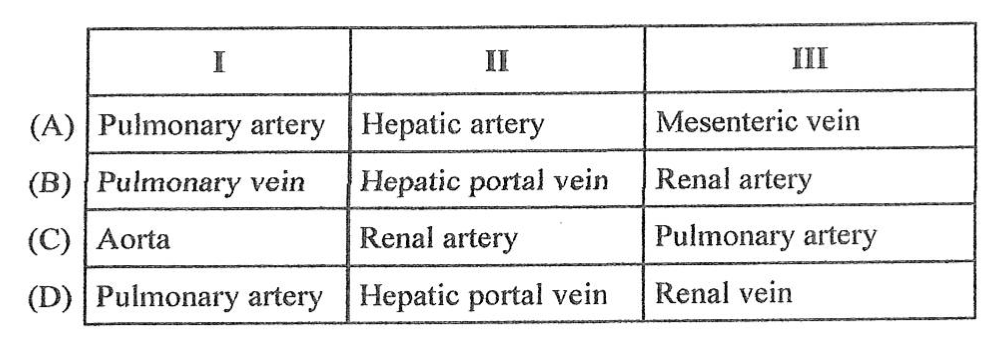
Which of the following correctly identifies the vessels labelled I, II and III in the diagram above?
| I | II | III | |
|---|---|---|---|
| (A) | Pulmonary artery | Hepatic artery | Mesenteric vein |
| (B) | Pulmonary vein | Hepatic portal vein | Renal artery |
| (C) | Aorta | Renal artery | Pulmonary artery |
| (D) | Pulmonary artery | Hepatic portal vein | Renal vein |
A person whose kidneys have failed must undergo a process by which excretory materials are removed from the blood regularly. This is because excretory materials (A) raise blood pressure (B) make the blood dilute (C) are not gotten rid of by any other means (D) would otherwise accumulate and poison the person
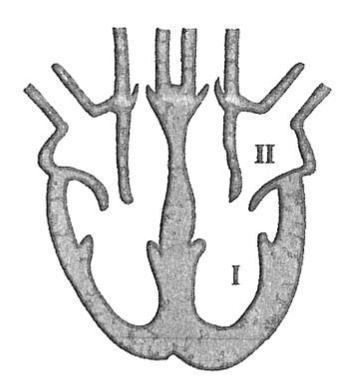
Item 29 refers to the following diagram of a mammalian heart.
In a patient with a certain defective heart condition, it was found that blood flowed from Section I to Section II in the diagram above. This was MOST likely due to malfunction of the (A) left atrium (B) left ventricle (C) semi-lunar valve (D) bicuspid valve
The following statements describe some of the stages of the clotting of blood. I. Platelets are activated. II. Thrombin converts fibrinogen to fibrin. III. Prothrombin converted to thrombin. IV. A clot is formed.
Which of the following correctly identifies the sequence of events in the process of clotting? (A) I II III IV (B) I III II IV (C) II I III IV (D) III II I IV
Why is it difficult to develop a vaccine for the common cold? (A) The antibodies for the common cold are difficult to produce. (B) The antigens on the common cold virus remain the same. (C) The antigens on the common cold virus change frequently. (D) Human beings cannot produce antibodies for the common cold.
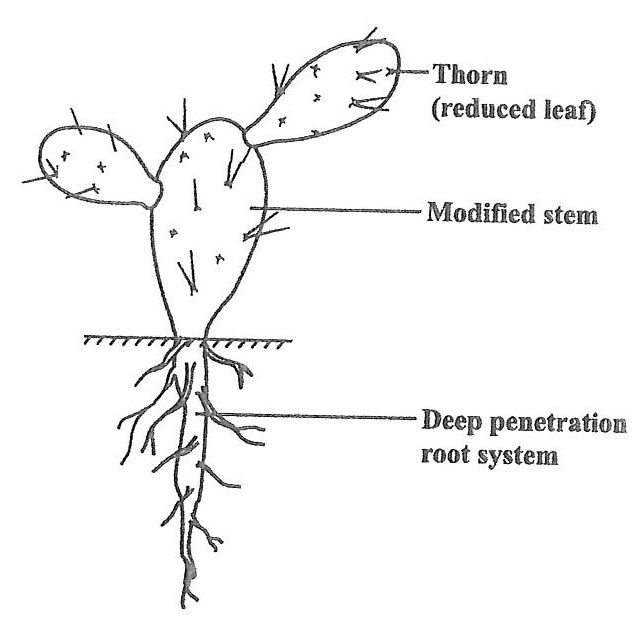
Item 32 refers to the following diagram of a cactus.
Which of the following describes the function of the thorns? (A) Aid in dispersal (B) Increase surface area (C) Reduce transpiration (D) Ward off carnivores
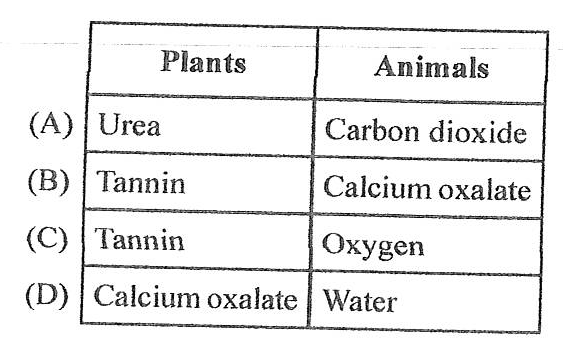
Which of the following rows correctly shows the metabolic substances that are excreted by plants and animals?
| Plants | Animals | |
|---|---|---|
| (A) | Urea | Carbon dioxide |
| (B) | Tannin | Calcium oxalate |
| (C) | Tannin | Oxygen |
| (D) | Calcium oxalate | Water |
Which of the following is LEAST likely to be an example of a growth movement in a plant? (A) The closing of the leaves of a sensitive plant (B) The downward movement of the roots in the soil (C) The crawling movement of runners like grasses (D) The upward movement of a vine on a rod
Which of the following statements about the skeletal system is NOT correct? (A) It protects delicate organs such as the heart and lungs. (B) It is made up of hard non-living tissues. (C) It produces red and white blood cells. (D) It gives the body its shape.
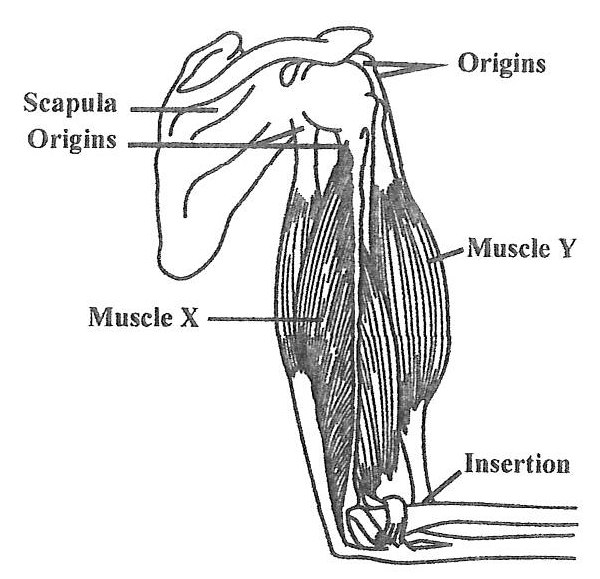
Item 36 refers to the following diagram which shows flexing of the arm.
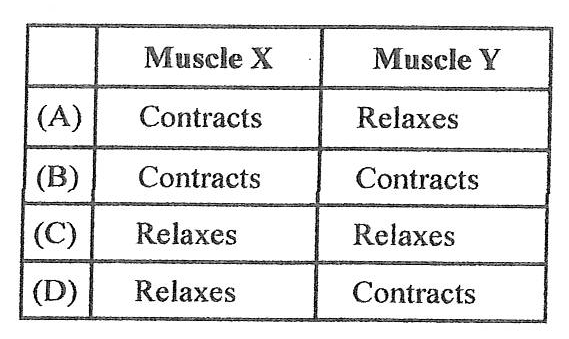
Which of the following occurs when the arm is flexed?
| Muscle X | Muscle Y | |
|---|---|---|
| (A) | Contracts | Relaxes |
| (B) | Contracts | Contracts |
| (C) | Relaxes | Relaxes |
| (D) | Relaxes | Contracts |
A detectable change in the internal or external environment of an organism is called (A) a stimulus (B) a response (C) a receptor (D) an effector
A girl smells a hamburger that is being cooked by her mother and she salivates. Which of the following is the effector which brings about her response? (A) Cells in the nose (B) Salivary glands (C) Smell of food (D) Secretion of saliva
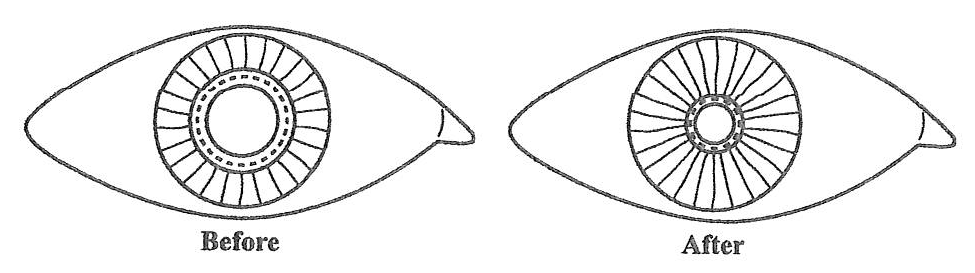
Item 39 refers to the following diagram showing an eye's response to looking at an object.
The response is MOST likely brought about by (A) an increase in the light intensity (B) a decrease in the light intensity (C) the object being brought nearer (D) the object being moved further away
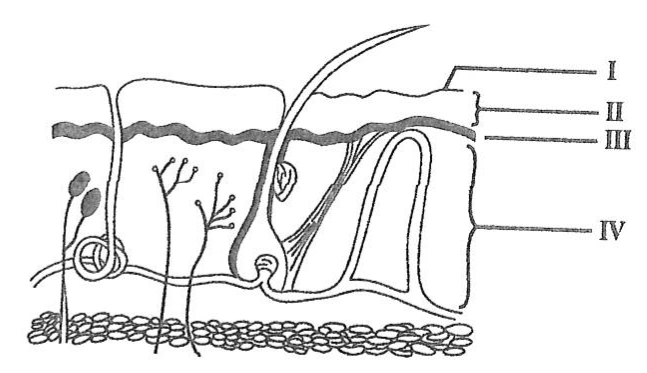
Item 40 refers to the following diagram of the skin.
The region which acts in a similar manner to SPF (sun protection factor) creams is (A) I (B) II (C) III (D) IV
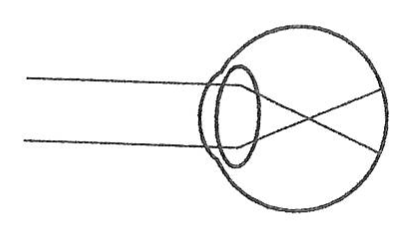
Item 41 refers to the following diagram of an eye which shows nearsightedness.
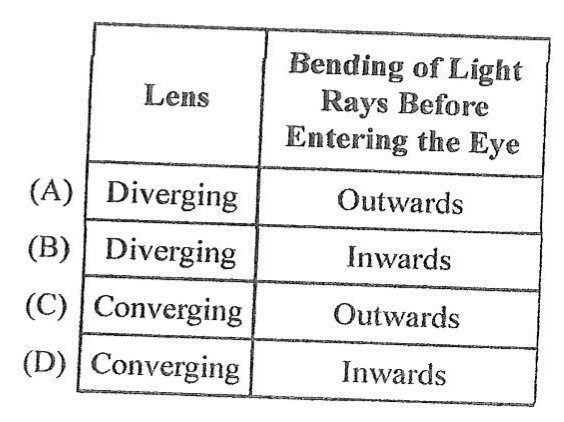
Which of the following shows how the defect can be corrected?
| Lens | Bending of Light Rays Before Entering the Eye | |
|---|---|---|
| (A) | Diverging | Outwards |
| (B) | Diverging | Inwards |
| (C) | Converging | Outwards |
| (D) | Converging | Inwards |
The following statements describe the processes taking place within a seed during germination. I. Embryo uses food to develop radicle and plumule. II. Enzymes break down proteins into amino acids. III. Soluble products move into the embryo.
Which of the following correctly identifies the sequence of events during the germination of the seed? (A) I II III (B) I III II (C) II I III (D) II III I
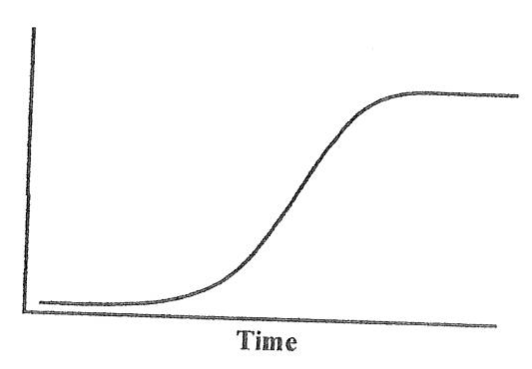
Item 43 refers to the following diagram which illustrates a measurement of growth in living organisms.
Which of the following would be INCORRECT on the y-axis? (A) Mass (B) Length (C) Units of time (D) Number of leaves
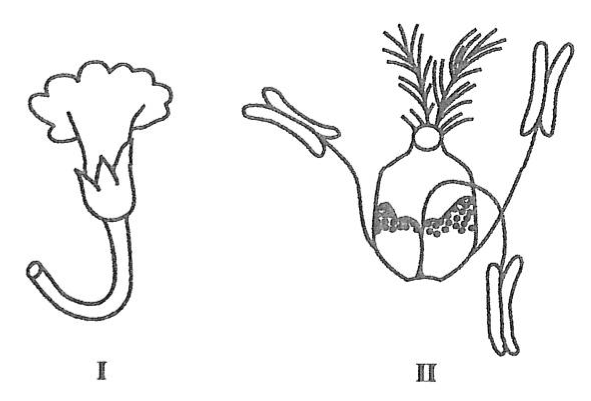
Item 44 refers to the following diagrams of flowers from two different types of plants.
Which of the following statements is TRUE for both flowers? (A) Both are wind pollinated. (B) Petals are absent from both I and II. (C) Both are pollinated by a humming-bird. (D) I is pollinated by a hummingbird; II is pollinated by the wind.
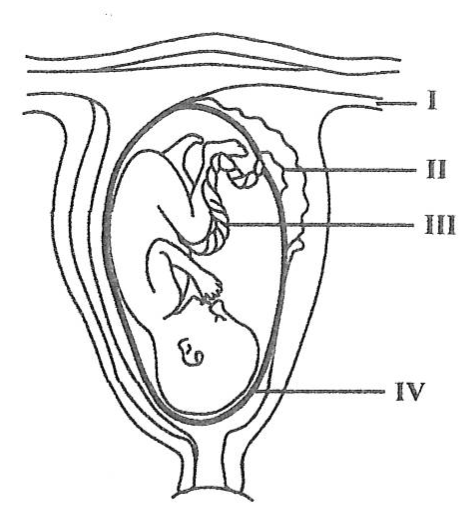
Items 45–46 refer to the following diagram.
The amnion is labelled (A) I (B) II (C) III (D) IV
The placenta is labelled (A) I (B) II (C) III (D) IV
Which of the following is NOT a consequence of a plant or human disease? (A) Decrease in food prices (B) Loss of productivity (C) Higher absenteeism from school (D) Larger part of national budget used to buy medications
One method of controlling the population of mosquitoes is by getting rid of all stagnant water. Which stages of the life cycle does this method control? (A) Egg, larva, adult (B) Egg, larva, pupa (C) Larva, pupa, adult (D) Egg, pupa, adult
Production of new organisms from one parent only is known as (A) sexual reproduction (B) asexual reproduction (C) mitosis (D) meiosis
Which of the following forms of birth control is likely to be the MOST effective? (A) Condom (B) Diaphragm (C) Tubal ligation (D) Birth control pill
Two alleles of a gene are situated at (A) the same locus on a homologous pair of chromosomes (B) different loci on a homologous pair of chromosomes (C) the same locus on a different homologous pair of chromosomes (D) different loci on a different homologous pair of chromosomes
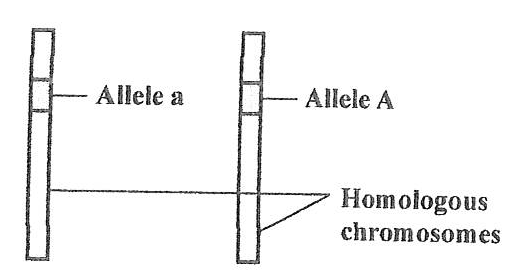
Item 52 refers to the following diagram which shows a section of a pair of homologous chromosomes that codes for hair colour.
Which of the following describes the genotype shown above? (A) Homozygous (B) Heterozygous (C) Homozygous recessive (D) Homozygous dominant
Which of the following statements about meiosis is NOT true? (A) It allows for genetic variation. (B) It results in the production of gametes. (C) It causes haploid cells to form from diploid cells. (D) It doubles the number of chromosomes in gametes.
Two goats, heterozygous for fast growth rate, are crossbred. The percentage of the F1 population which possesses homozygous alleles is (A) 25 (B) 75 (C) 50 (D) 100
Albinism is caused by a single recessive allele. Two normal parents have an albino child. This is because (A) both parents were heterozygous for the gene (B) both parents were homozygous recessive for the gene (C) one parent was homozygous dominant for the trait and the other heterozygous (D) one parent was homozygous dominant for the trait and the other homozygous recessive
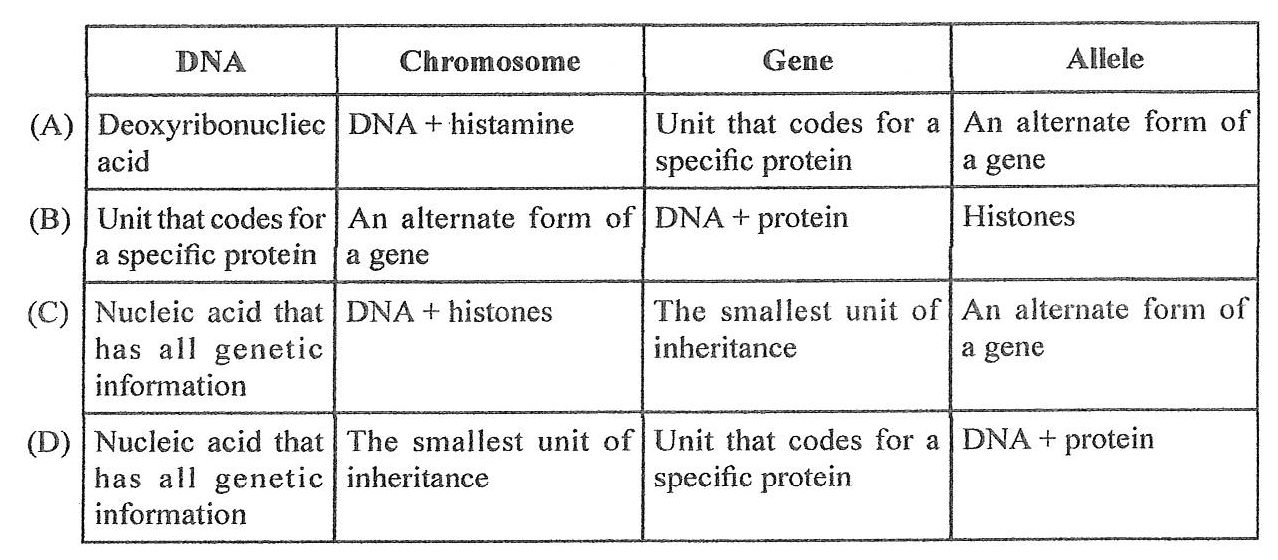
Which of the following options correctly describes DNA, chromosome, gene and allele?
| DNA | Chromosome | Gene | Allele | |
|---|---|---|---|---|
| (A) | Deoxyribonucleic acid | DNA + histamine | Unit that codes for a specific protein | An alternate form of a gene |
| (B) | Unit that codes for a specific protein | An alternate form of a gene | DNA + protein | Histones |
| (C) | Nucleic acid that has all genetic information | DNA + histones | The smallest unit of inheritance | An alternate form of a gene |
| (D) | Nucleic acid that has all genetic information | The smallest unit of inheritance | Unit that codes for a specific protein | DNA + protein |
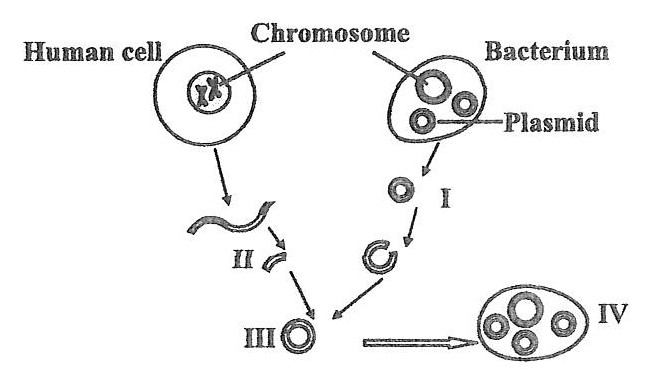
Item 57 refers to the following diagram which shows the production of insulin by genetic engineering.
In which of the stages shown in the diagram can insulin be produced by the bacterium? (A) I (B) II (C) III (D) IV
A species is BEST defined as a group of organisms that (A) cannot interbreed (B) are physically similar (C) can interbreed and produce many offspring (D) can interbreed and produce fertile offspring
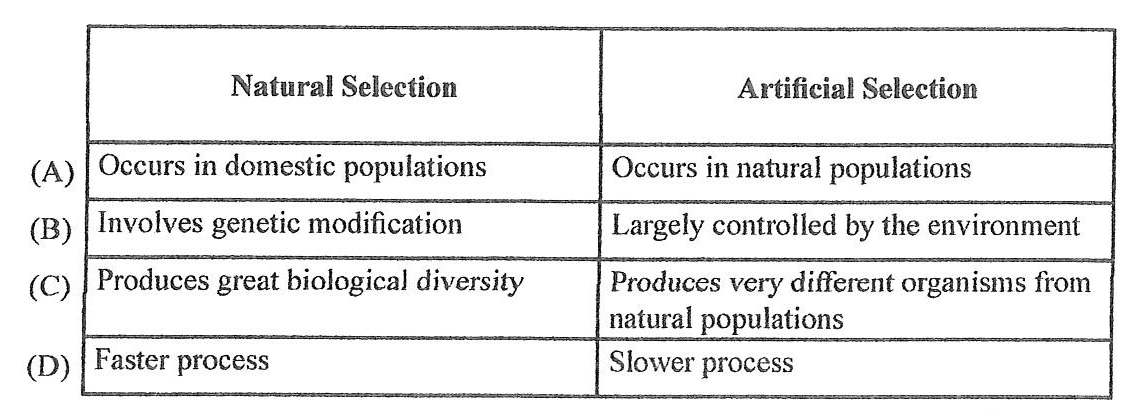
Which of the following is TRUE about natural selection and artificial selection?
| Natural Selection | Artificial Selection | |
|---|---|---|
| (A) | Occurs in domestic populations | Occurs in natural populations |
| (B) | Involves genetic modification | Largely controlled by the environment |
| (C) | Produces great biological diversity | Produces very different organisms from natural populations |
| (D) | Faster process | Slower process |
Which of the following statements about genetic engineering and natural selection is CORRECT? (A) Genetic engineering can change the phenotype of an organism faster than natural selection. (B) Genetic engineering does not change the phenotype whereas natural selection does. (C) Genetic engineering does not change the genotype whereas natural selection does. (D) Both genetic engineering and natural selection do not change the genotype.