CSEC Biology Paper 2 May/June 2019 - Free CXC Past Paper with Answers
Free CXC Biology Paper 2 May/June 2019 past paper from 2019. Includes a worked answer key. Open the PDF, take a timed test, and study with AI on Caribbean AI.
Answer keys are free on Caribbean AI. View the answers to every past-paper question at no cost - no payment needed - with step-by-step worked solutions and instant AI marking available on Premium.
- All CSEC Past Papers
- CSEC Biology Past Papers
- CSEC Biology Paper 2 May/June 2026
- CSEC Biology Paper 2 May/June 2025
- CSEC Biology Paper 2 January 2025
- CSEC Biology Paper 2 May/June 2024
- CSEC Biology Paper 2 January 2024
- CSEC Biology Paper 2 May/June 2023
- CSEC Biology Paper 2 January 2023
- CSEC Biology Paper 2 May/June 2022
- CSEC Biology Paper 2 May/June 2021
- CSEC Biology Paper 2 January 2021
- CSEC Biology Paper 2 May/June 2020
- CSEC Biology Paper 2 January 2020
- CSEC Biology Paper 2 January 2019
- CSEC Biology Paper 2 May/June 2018
- CSEC Biology Paper 2 January 2018
- CSEC Biology Paper 2 January 2017
- CSEC Biology Paper 2 May/June 2017
- CSEC Biology Paper 2 May/June 2016
- CSEC Biology Paper 2 May/June 2015
- CSEC Biology Paper 2 January 2015
- CSEC Biology Paper 2 May/June 2014
- CSEC Biology Paper 2 May/June 2013
- CSEC Biology Paper 2 May/June 2012
- CSEC Biology Paper 2 May/June 2011
- CSEC Biology Paper 2 May/June 2010
- CSEC Biology Paper 2 May/June 2009
- CSEC Biology Paper 2 January 2008
- CSEC Biology Paper 2 May/June 2008
- CSEC Biology Paper 2 January 2007
- CSEC Biology Paper 2 May/June 2007
- CSEC Biology Paper 2 May/June 2006
- CSEC Biology Paper 2 May/June 2005
CSEC Biology Paper 2 May/June 2019 - Free CXC Past Paper with Answers
Free CXC Biology Paper 2 May/June 2019 past paper from 2019. Includes a worked answer key. Open the PDF, take a timed test, and study with AI on Caribbean AI.
Opening the interactive papers…
- All CSEC Past Papers
- CSEC Biology Past Papers
- CSEC Biology Paper 2 May/June 2026
- CSEC Biology Paper 2 May/June 2025
- CSEC Biology Paper 2 January 2025
- CSEC Biology Paper 2 May/June 2024
- CSEC Biology Paper 2 January 2024
- CSEC Biology Paper 2 May/June 2023
- CSEC Biology Paper 2 January 2023
- CSEC Biology Paper 2 May/June 2022
- CSEC Biology Paper 2 May/June 2021
- CSEC Biology Paper 2 January 2021
- CSEC Biology Paper 2 May/June 2020
CSEC Biology Paper 2 May/June 2019 Questions
Every question from this paper as text. See the answers and worked solutions. Questions are the property of the Caribbean Examinations Council; Caribbean AI is not affiliated with CXC.
Question 1 (25 marks)
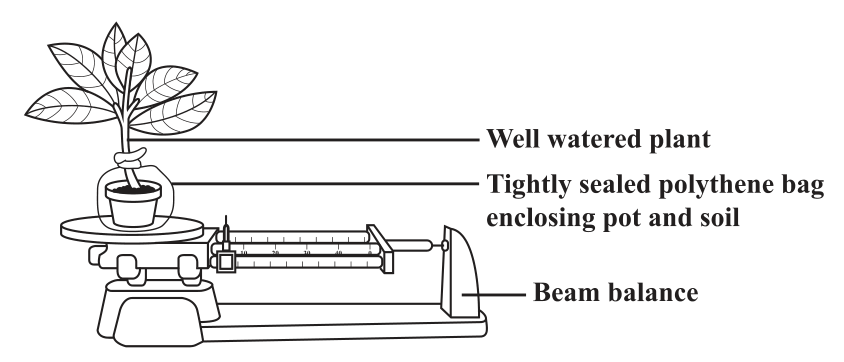
Figure 1 shows apparatus that was set up to measure the rate of transpiration of a potted plant located in a room beside an open window, over 12-hour period.
Describe the procedure that uses the apparatus shown in Figure 1 to investigate the rate of transpiration of the potted plant within the 12-hour period.
[4 marks]
State ONE precaution that should be taken to ensure that the results are accurate.
[1 mark]
Suggest TWO factors that may affect the rate of transpiration of the potted plant.
[2 marks]
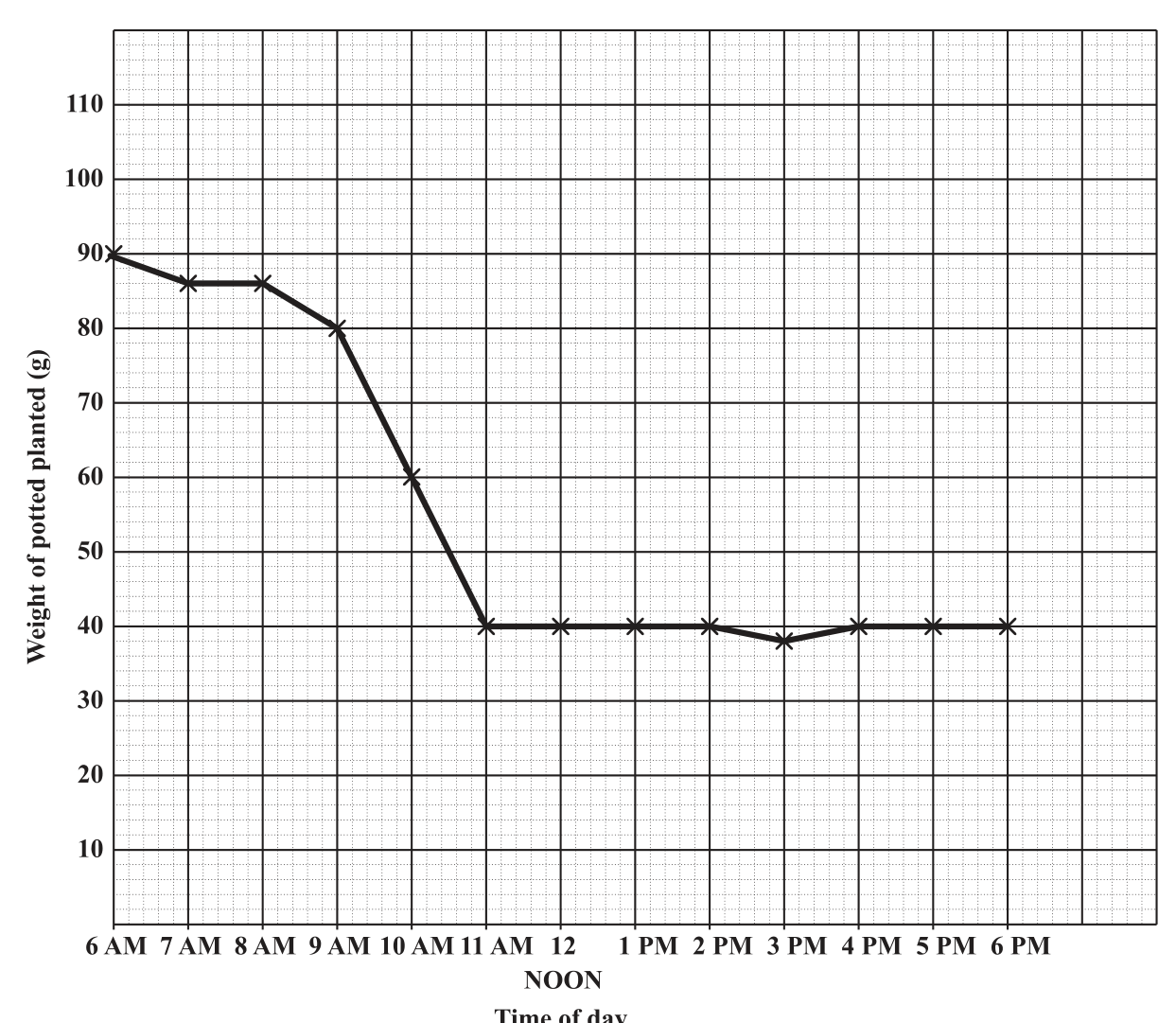
The graph in Figure 2 was constructed using the results obtained from the investigation in (a) which measured the rate of transpiration over a 12-hour period.
[11 marks]