CSEC Biology Paper 2 January 2015 - Free CXC Past Paper with Answers
Free CXC Biology Paper 2 January 2015 past paper from 2015. Includes a worked answer key. Open the PDF, take a timed test, and study with AI on Caribbean AI.
Answer keys are free on Caribbean AI. View the answers to every past-paper question at no cost - no payment needed - with step-by-step worked solutions and instant AI marking available on Premium.
- All CSEC Past Papers
- CSEC Biology Past Papers
- CSEC Biology Paper 2 May/June 2026
- CSEC Biology Paper 2 May/June 2025
- CSEC Biology Paper 2 January 2025
- CSEC Biology Paper 2 May/June 2024
- CSEC Biology Paper 2 January 2024
- CSEC Biology Paper 2 May/June 2023
- CSEC Biology Paper 2 January 2023
- CSEC Biology Paper 2 May/June 2022
- CSEC Biology Paper 2 May/June 2021
- CSEC Biology Paper 2 January 2021
- CSEC Biology Paper 2 May/June 2020
- CSEC Biology Paper 2 January 2020
- CSEC Biology Paper 2 May/June 2019
- CSEC Biology Paper 2 January 2019
- CSEC Biology Paper 2 May/June 2018
- CSEC Biology Paper 2 January 2018
- CSEC Biology Paper 2 January 2017
- CSEC Biology Paper 2 May/June 2017
- CSEC Biology Paper 2 May/June 2016
- CSEC Biology Paper 2 May/June 2015
- CSEC Biology Paper 2 May/June 2014
- CSEC Biology Paper 2 May/June 2013
- CSEC Biology Paper 2 May/June 2012
- CSEC Biology Paper 2 May/June 2011
- CSEC Biology Paper 2 May/June 2010
- CSEC Biology Paper 2 May/June 2009
- CSEC Biology Paper 2 January 2008
- CSEC Biology Paper 2 May/June 2008
- CSEC Biology Paper 2 January 2007
- CSEC Biology Paper 2 May/June 2007
- CSEC Biology Paper 2 May/June 2006
- CSEC Biology Paper 2 May/June 2005
CSEC Biology Paper 2 January 2015 - Free CXC Past Paper with Answers
Free CXC Biology Paper 2 January 2015 past paper from 2015. Includes a worked answer key. Open the PDF, take a timed test, and study with AI on Caribbean AI.
Opening the interactive papers…
- All CSEC Past Papers
- CSEC Biology Past Papers
- CSEC Biology Paper 2 May/June 2026
- CSEC Biology Paper 2 May/June 2025
- CSEC Biology Paper 2 January 2025
- CSEC Biology Paper 2 May/June 2024
- CSEC Biology Paper 2 January 2024
- CSEC Biology Paper 2 May/June 2023
- CSEC Biology Paper 2 January 2023
- CSEC Biology Paper 2 May/June 2022
- CSEC Biology Paper 2 May/June 2021
- CSEC Biology Paper 2 January 2021
- CSEC Biology Paper 2 May/June 2020
CSEC Biology Paper 2 January 2015 Questions
Every question from this paper as text. See the answers and worked solutions. Questions are the property of the Caribbean Examinations Council; Caribbean AI is not affiliated with CXC.
Question 1 (11 marks)
Figure 1 shows two plant organs.
Figure 1. Plant organs
(i) Identify the type of reproduction carried out by EACH of the plant organs shown in Figure 1. A: B:
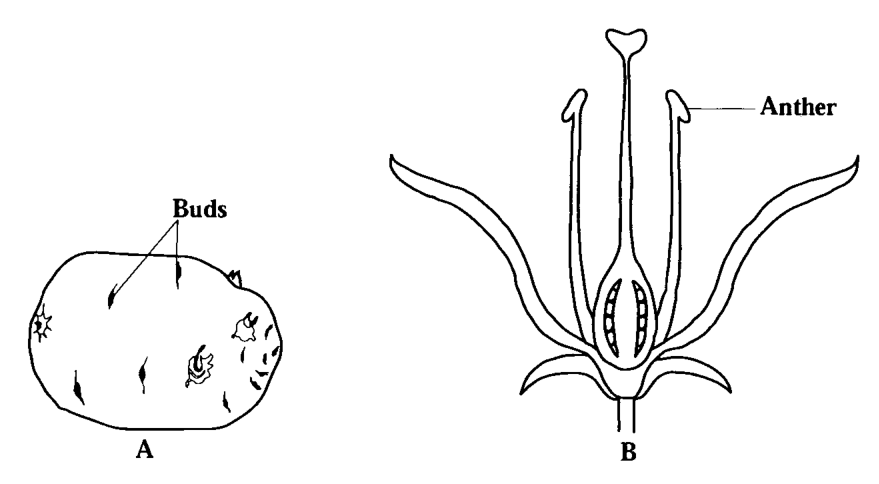
A:
[1 mark]
Outline the sequence of events that would take place from pollination to the formation of the seed/fruit from the organ shown in Figure 1B.
[3 marks]
Mitosis and meiosis occur at different points in the life cycle of a typical flowering plant. Describe TWO differences between the outcomes of cell division by mitosis and cell division by meiosis.
[4 marks]
The plant from which the flower shown in Figure 1B comes, exists in two varieties: one produces blue flowers while the other produces white flowers. A cross between two blue-flowered plants produces 100 seeds. Seventy-four of the plants that develop from these 100 seeds have blue flowers while 26 have white flowers.