Free CXC Biology Paper 2 January 2021 past paper from 2021. Includes a worked answer key. Open the PDF, take a timed test, and study with AI on Caribbean AI.
Answer keys are free on Caribbean AI. View the answers to every past-paper question at no cost - no payment needed - with step-by-step worked solutions and instant AI marking available on Premium.
CSEC Biology Paper 2 January 2021 - Free CXC Past Paper with Answers
Free CXC Biology Paper 2 January 2021 past paper from 2021. Includes a worked answer key. Open the PDF, take a timed test, and study with AI on Caribbean AI.
Opening the interactive papers…
Every question from this paper as text. See the answers and worked solutions. Questions are the property of the Caribbean Examinations Council; Caribbean AI is not affiliated with CXC.
State TWO reasons why enzymes are referred to as 'biological catalysts'.
[2 marks]
Figure 1 shows the results obtained from an investigation of the effect of pH on the action of the enzyme amylase.
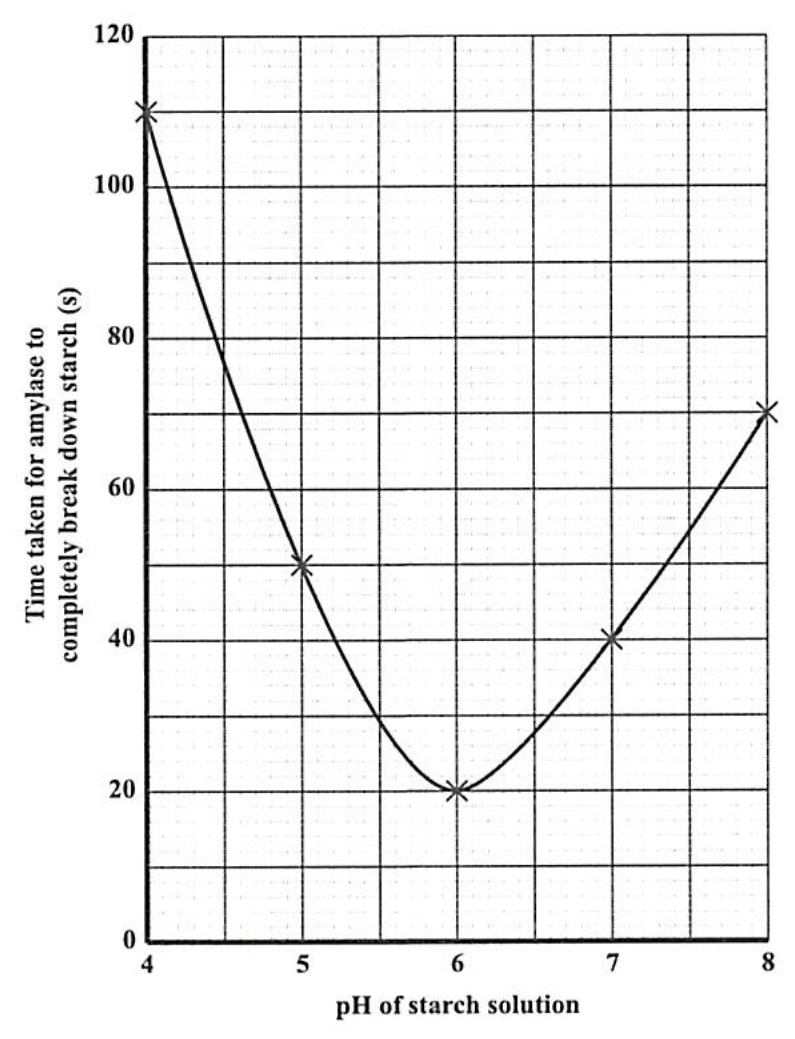
Record the results presented on the graph in Figure 1 in a suitable table.
[4 marks]
With reference to the rate of enzyme activity, suggest TWO reasons for the shape of the graph during EACH of the following pH ranges:
pH 4–5
pH 6–8
[4 marks]
Suggest ONE reason why the graph has a 'U' shape.
[1 mark]
Use the graph in Figure 1 on page 4 to predict how many seconds it would take for amylase to completely break down starch at pH 5.5
[1 mark]
determine the optimum pH of amylase
[1 mark]
predict the pH at which amylase would completely break down starch in 80 seconds.
[1 mark]
With reference to Figure 1 on page 4, describe a suitable procedure that can be used to investigate the effect of pH on the time taken for amylase to digest starch.
[5 marks]
If the food molecule is too large, salivary amylase will take a longer time to break down the food molecule. Considering this statement, suggest TWO ways in which mammals can decrease the time they take to break down food molecules.
[2 marks]
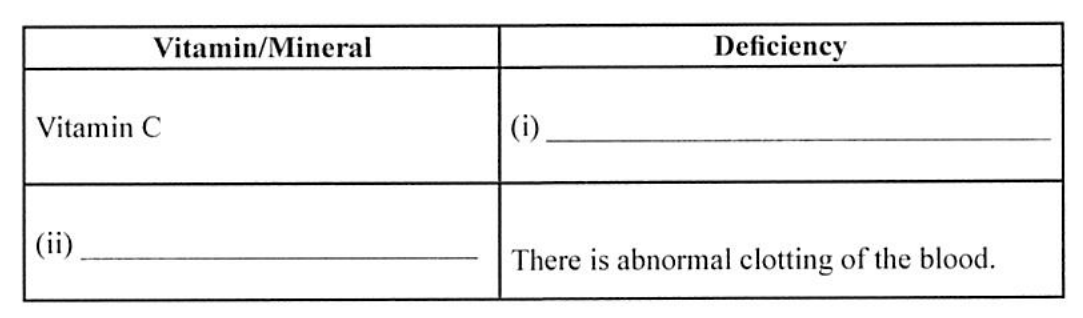
Carbohydrates are an essential part of a balanced diet, along with vitamins and minerals. Complete Table 1 below which shows important vitamins in the diet and their related deficiency diseases.
| Vitamin/Mineral | Deficiency |
|---|---|
| Vitamin C | (i) |
| (ii) | There is abnormal clotting of the blood. |
[2 marks]
Explain ONE way in which EACH of the following cells defend the body against disease: (i) White blood cell (ii) Platelet
[2 marks]
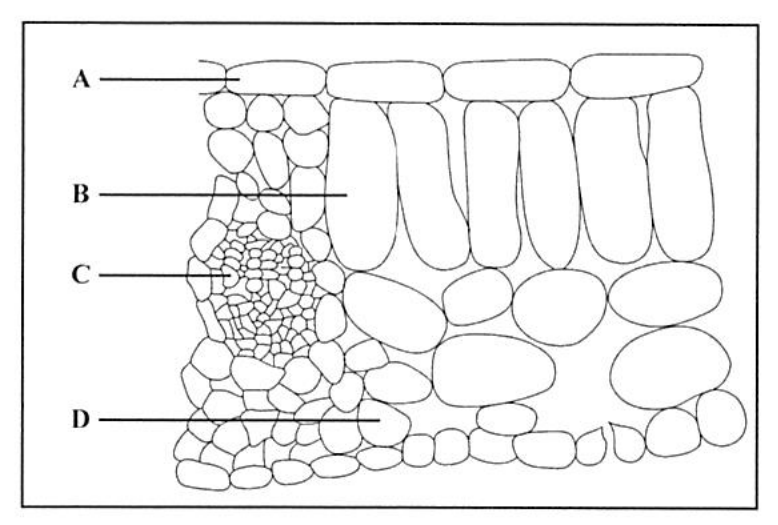
Figure 2 shows the diagram of a cross-section through the leaf of a flowering plant.
Name the structures labelled A, B, C and D.
[4 marks]
A
[1 mark]
B
[1 mark]
C
[1 mark]
D
[1 mark]
Suggest ONE way in which photosynthesis would be affected if ALL of the air spaces in the leaf of the flowering plant were filled with cells.
[1 mark]
State if there is any difference between the function of plant chromosomes and the function of animal chromosomes.
[1 mark]
State if there is any difference between the function of plant chromosomes and the function of animal chromosomes.
[1 mark]
State ONE reason for your answer in (c) (i).
[1 mark]
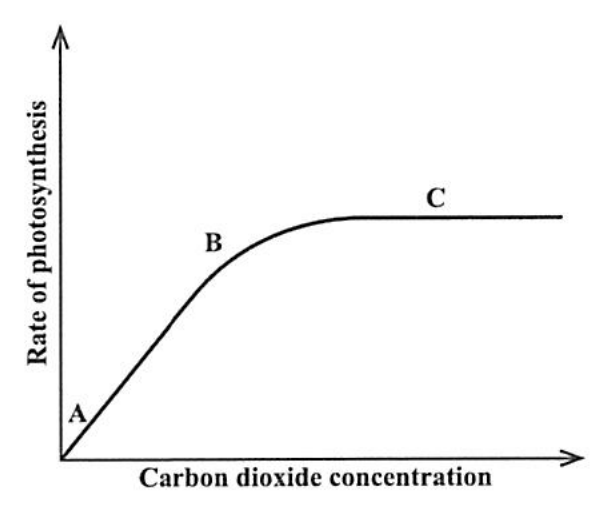
Figure 3 is a graph showing the rate of photosynthesis against carbon dioxide concentration.
Figure 3. Rate of photosynthesis against carbon dioxide concentration
Describe the region of the line of the graph labelled A in Figure 3.
[1 mark]
Use the principles of photosynthesis to suggest ONE reason for the shape of the graph in the region A.
[1 mark]
Describe the region of the line of the graph labelled A–B in Figure 3.
[1 mark]
Despite the increase in the global concentrations of atmospheric carbon dioxide, there is no corresponding increase in the rate of photosynthesis in flowering plants. Suggest ONE reason for this observation.
[2 marks]
List FOUR structures that are common to both plant and animal cells.
[4 marks]
Define EACH of the following terms: (i) Diffusion (ii) Osmosis (iii) Active transport
[3 marks]
Diffusion
[1 mark]
Osmosis
[1 mark]
Active transport
[1 mark]
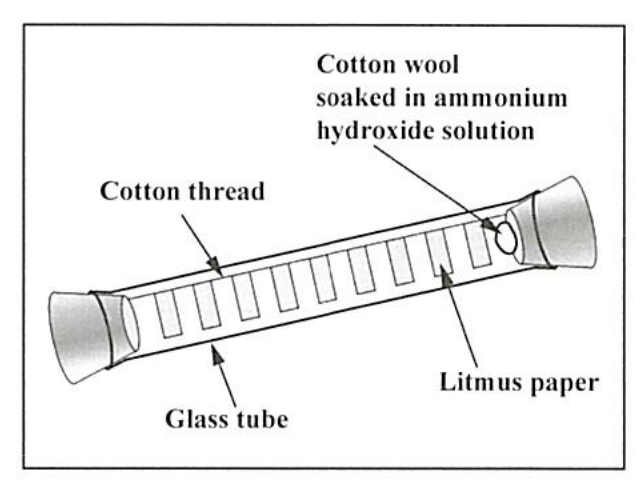
The apparatus in Figure 4 below was used to investigate the effect of concentration on the rate of diffusion.
Several small pieces of damp litmus paper were placed along a glass tube. A piece of cotton wool with one drop of dilute ammonium solution was placed in the tube and the length of time it takes for each piece of litmus paper to change colour was recorded. The experiment was repeated using one drop of concentrated ammonium solution.
(i) State the expected result of this experiment.
[4 marks]
Explain the expected results stated in your answer in (c) (i).
[3 marks]
Diffusion is a vital process in living organisms. Discuss FOUR ways in which diffusion is important to mammals.
[4 marks]
SECTION B
Answer ALL questions.
(a) Mitosis is the cell division which occurs in all body cells. Sequentially describe the process of mitosis.
[6 marks]
Animal cloning farming practices ensure many benefits to farmers and consumers worldwide. According to the European Food Safety Authority (2007), "there is an increased frequency of health risks to animals involved in the cloning process".
State TWO advantages and ONE disadvantage of animal cloning.
[3 marks]
Animal cloning is an important mitotic process for living organisms. Explain THREE other ways in which the process of mitosis is important for organisms.
[6 marks]
Symbiotic relationships may occur when different species of organisms live together and have a close relationship. List the THREE types of symbiotic relationships.
[3 marks]
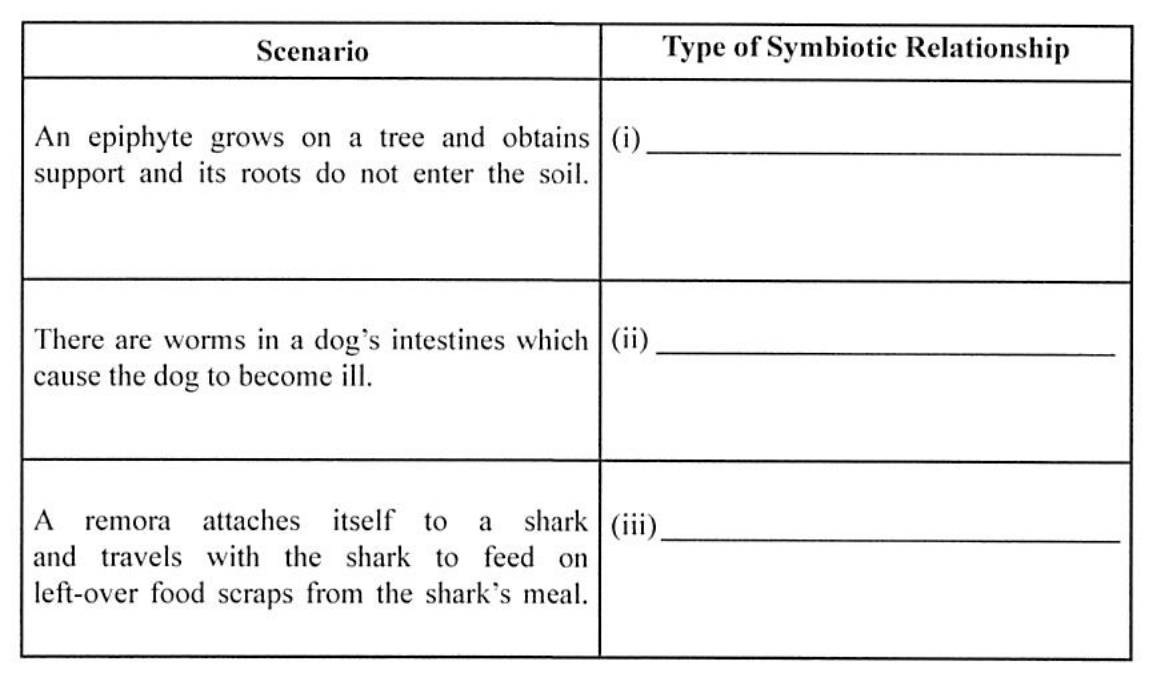
For each of the scenarios listed in Table 2, complete the table by stating the type of symbiotic relationship which exists in the scenario.
[3 marks]
An epiphyte grows on a tree and obtains its roots do not enter the soil.
[1 mark]
There are worms in a dog's intestines which cause the dog to become ill.
[1 mark]
A remora attaches itself to a shark and travels with the shark to feed on left-over food scraps from the shark's meal.
[1 mark]
Anna has many pet birds which were recently ill with the 'bird flu'. Anna lives next door to Mr Brown who has many cattle, pigs and vegetables, which he supplies to the community.
Anna is not able to keep her birds contained and they sometimes roam over to Mr Brown's farm. Mr Brown became very upset when he noticed that the contaminated faecal droppings of the infected birds were affecting his livestock and plants.
The 'bird flu' may result in social, economic or environmental implications for Mr Brown. Explain any THREE implications that the spread of the 'bird flu' infection may have on Mr Brown's livestock and vegetables. (Implications can be either positive or negative.)
[6 marks]
If Mr Brown's animals were not contained on the farm, they would have been able to move from place to place and might not have become ill. List THREE other reasons why animals on a farm should be allowed to move from place to place.
[3 marks]
Joy is a one-month old baby who was found to have abnormal heart valves at birth.
Name THREE valves found in the heart.
[3 marks]
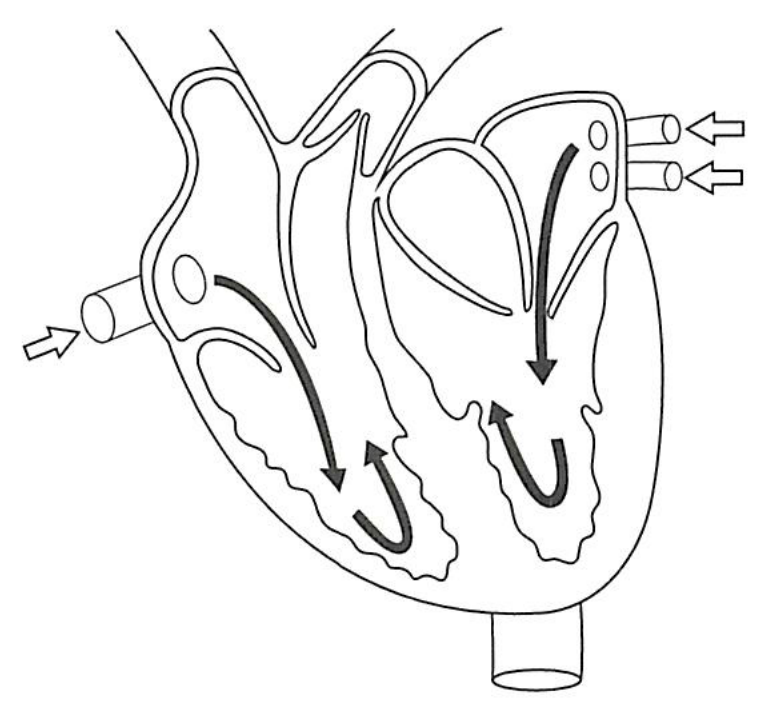
Figure 5 is a diagram of the heart. On Figure 5, label the THREE valves named in (a) (i), to show their location.
[3 marks]
State ONE difficulty that Joy may experience as a result of having an abnormal heart valve.
[1 mark]
Hypertension and diabetes are two different physiological conditions. Outline how the cause of diabetes is different from the cause of hypertension.
[2 marks]
Compare the methods used to manage diabetes and hypertension by outlining TWO similarities and TWO differences in these methods.
Similarities
Differences
[6 marks]